1. Global Market Dynamics & Emerging Non-Tariff Regulatory Barriers
The procurement of custom printed plastic bags wholesale from Southeast Asian manufacturing hubs, particularly Vietnam, has evolved from a simple cost-arbitrage exercise into a complex exercise in international trade compliance and intellectual property (IP) asset management. Global enterprise procurement desks managing high-volume SKU portfolios face an increasingly stringent regulatory landscape. Environmental directives such as the European Union’s Packaging and Packaging Waste Regulation (PPWR), extended producer responsibility (EPR) mandates, and aggressive post-consumer recycled (PCR) content thresholds require absolute transparency in polymer sourcing.
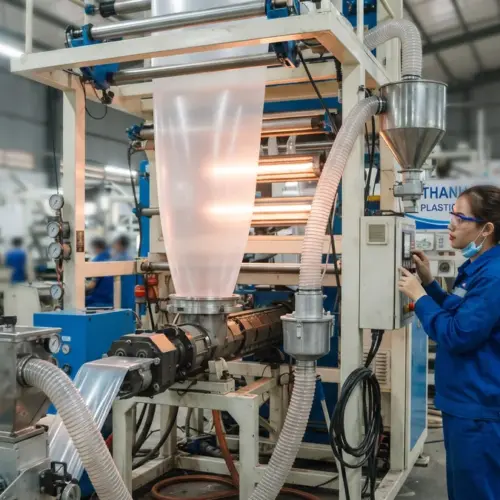
Vietnamese manufacturers operating within export processing zones are shifting rapidly from generic low-density polyethylene (LDPE) and high-density polyethylene (HDPE) film production to sophisticated multi-layer co-extrusion and biodegradable alternatives (such as PBAT/PLA blends). However, international buyers sourcing customized packaging face profound non-tariff barriers. Customs authorities across the EU, North America, and Japan demand granular traceability documentation, including detailed resin specification sheets, heavy metal testing reports under ASTM F963 or EN 71-3, and verified Certificates of Origin (C/O Form D or Form E). Failure to secure robust legal frameworks around design custody exposes multinational brands to severe supply chain disruptions, gray-market leakage of proprietary packaging molds, and brand dilution.
2. Quantitative Impact on Operational Margins & Freight Cost Structures
When scaling OEM manufacturing agreements for custom printed flexible packaging, landed cost modeling must account for volatile raw material indices and fluctuating ocean freight economics. Virgin petrochemical resin—predominantly Linear Low-Density Polyethylene (LLDPE) and Metallocene-catalyzed resins (mLLDPE)—accounts for 55% to 68% of the total cost of goods sold (COGS) in blown film extrusion and stretch film production. (Compliance verified under International ISO Trade Quality Standards).
| Cost Component | Percentage of Total COGS | Key Price Determinant & Volatility Driver |
|---|---|---|
| Virgin Polymer Resin (LDPE/HDPE/LLDPE) | 58% – 65% | Brent crude oil trends, regional cracker shutdowns, naphtha pricing. |
| Masterbatch & Specialized Printing Inks | 8% – 12% | Pigment availability, titanium dioxide ($TiO_2$) spot prices, solvent costs. |
| Cylinder Engraving & Setup (Amortized) | 3% – 5% | Cylinder sizing, chrome plating thickness, color separation complexity. |
| Energy & Factory Overhead | 10% – 15% | Industrial electricity tariffs set by Vietnam Electricity (EVN), shift labor rates. |
| Outbound Logistics & Ocean Freight | 12% – 20% | Shanghai Containerized Freight Index (SCFI), bunker adjustment factors (BAF). |
Fluctuations in the Shanghai Containerized Freight Index (SCFI) and regional port congestion across Haiphong and Cai Mep-Thi Vai directly impact landed margins. Sourcing executives must negotiate dynamic pricing formulas tied directly to ICIS (Independent Chemical Information Service) regional resin benchmarks rather than fixed-price long-term contracts that expose suppliers to default risks or force hidden quality compromises on film thickness (micron tolerance deviations).
3. Mandatory Inspection Standards & Compliance Documentation Protocols
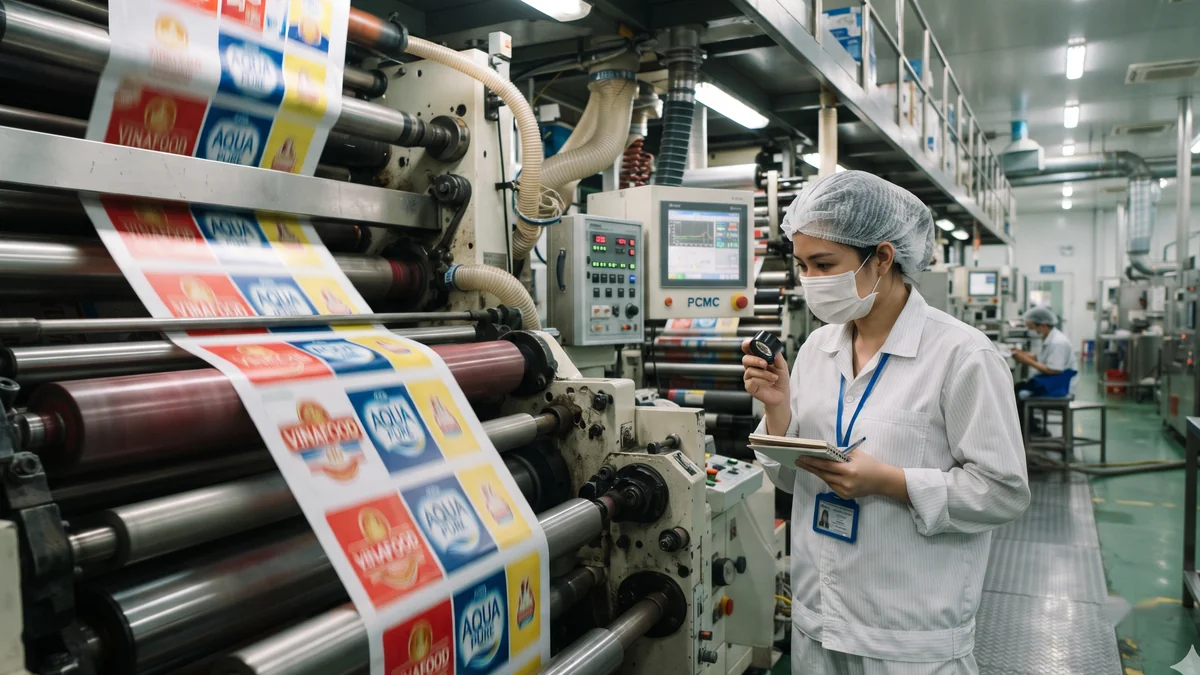
Enforcing strict quality assurance (QA) protocols during high-speed flexographic or rotogravure printing runs is vital to protect proprietary brand assets. When procuring custom printed plastic bags wholesale, standard commercial tolerances often allow for a $\pm 10\%$ variance in film thickness and color alignment discrepancies if not strictly bound by Service Level Agreements (SLAs).
To safeguard design integrity, enterprise buyers must enforce rigorous shop-floor inspection checkpoints:
- Pre-Press Cylinder Proofing: Verification of digital color separation files against Pantone Matching System (PMS) standards or CMYK target profiles prior to chemical cylinder engraving.
- Tensile Strength & Dart Drop Testing: Execution of ASTM D1709 (free-falling dart method) and ASTM D882 (tensile properties of thin plastic sheeting) to ensure structural integrity under load.
- Seal Strength & Hot Tack Testing: ASTM F88 standards to validate heat-seal initiation temperatures and seal integrity for automated high-speed packaging lines.
- Corona Treatment Verification: Surface energy testing using dyne pens (minimum 38-42 dynes/cm) to ensure proper ink adhesion and prevent delamination or flaking of printed logos during transit.
4. Shop-Floor Production Realignment & End-to-End Logistics Optimization
Protecting proprietary mechanical designs and custom printed branding requires rigorous shop-floor data segregation. Contract manufacturers in Vietnam must implement dedicated clean-room production schedules or isolated extrusion lines for proprietary enterprise accounts. Cylinder storage protocols are a primary vulnerability; custom engraved rotogravure cylinders must be laser-etched with unique asset tracking serial numbers, stored in secure, humidity-controlled vaults, and subject to strict check-in/check-out logs monitored by plant supervisors.
End-to-end logistics optimization requires synchronized container loading plans. For cast stretch film and blown stretch hood products, cargo shifting during transit across tropical maritime routes can compromise pallet stability. Utilizing slip sheets, high-friction interleaving, and optimized container space utilization (maximizing payload limits for 40-foot High Cube containers) mitigates transit damage. Furthermore, precise pallet labeling with barcode tracking ensures seamless warehouse intake at destination distribution centers.
5. Commercial Contract Negotiation & Cross-Border Risk Mitigation
Drafting enforceable legal agreements in cross-border manufacturing requires navigating the duality of Vietnamese civil law and international commercial arbitration standards. Standard Non-Disclosure Agreements (NDAs) are insufficient without explicit, localized clauses tailored to Vietnam’s Law on Intellectual Property and the Law on Technology Transfer.
Key contractual mechanisms to enforce at the negotiation table include:
1. Territorial Non-Use & Exclusivity Clauses: Explicitly prohibiting the supplier from utilizing custom molds, polymer formulations, or printing plates for third-party clients or domestic distribution within designated global markets.
2. Liquidated Damages for IP Breach: Establishing pre-determined, enforceable financial penalties for unauthorized over-runs, shift-extension manufacturing of unbranded look-alike stock, or cylinder theft/duplication.
3. Governing Law & Dispute Resolution: Designating neutral international arbitration forums—such as the Singapore International Arbitration Centre (SIAC) or the Vietnam International Arbitration Centre (VIAC)—with clear mandates on injunctive relief to freeze manufacturing assets immediately upon suspected IP infringement.
4. Tooling Ownership Title: Explicitly stating in the master purchase agreement that physical printing cylinders and proprietary blown-film dies remain the exclusive property of the buyer, requiring mandatory repatriation or certified destruction upon contract termination.
6. Strategic Recommendations & Operational Roadmap from VN Plastic – Vnplast Global
To successfully capture the cost advantages of Vietnamese contract manufacturing while insulating corporate brand equity against intellectual property leakage and quality drift, executive procurement teams must execute a disciplined operational roadmap:
- Phase 1: Comprehensive Vendor Auditing & Legal Sealing — Conduct thorough on-site audits of prospective manufacturing partners, verifying ISO 9001, ISO 14001, and Sedex/SMETA certifications. Execute comprehensive Manufacturing, Supply, and IP Protection Agreements governed by recognized international arbitration clauses.
- Phase 2: Closed-Loop Tooling Management — Fund and retain direct ownership of all rotogravure cylinders and flexographic printing plates. Mandate that tooling remain on-site exclusively for dedicated production runs, with strict audit trails managed via digital asset registers.
- Phase 3: Standardized Quality Gates & Pre-Shipment Inspections (PSI) — Implement mandatory third-party pre-shipment inspections (e.g., SGS, Intertek, or Bureau Veritas) to certify film micron thickness, tensile strength, seal integrity, and color-matching accuracy prior to final balance payment and container sealing.
- Phase 4: Agile Raw Material Indexing — Structure flexible pricing mechanisms linked to transparent index benchmarks (ICIS/Platts) to maintain stable, collaborative supplier relationships during petrochemical market volatility, ensuring long-term supply chain resilience.
Technical & Quality Compliance Advisory from VN Plastic – Vnplast Global
For international procurement directors, supply chain partners, and B2B buyers, rigorous pre-shipment sample testing (CoA/CoC) and accredited independent inspection (SGS/Intertek) are paramount prior to contract execution. Contact our technical desk for complete engineering datasheets and tailored FOB/CIF quotation schedules.