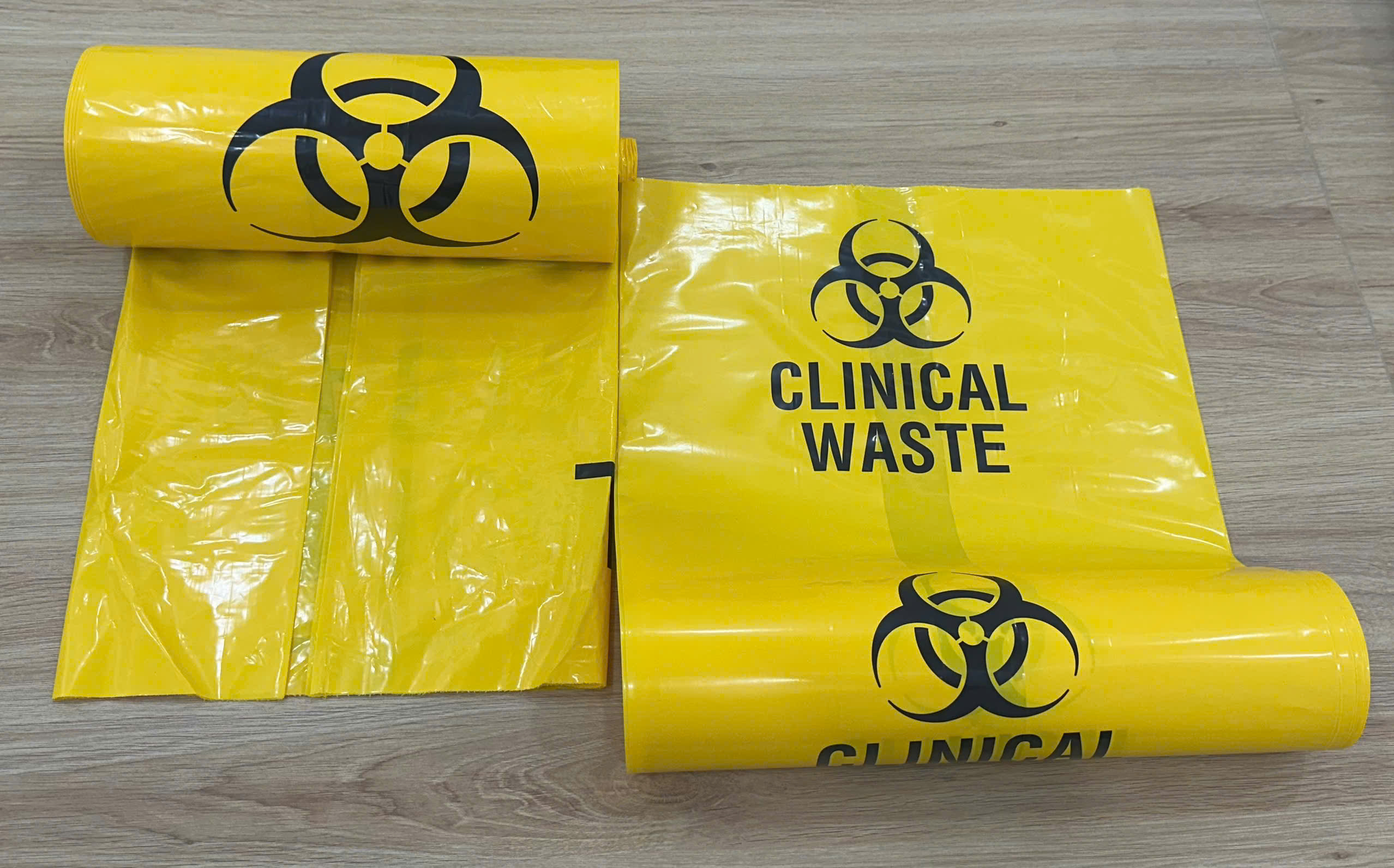
1. Global Market Dynamics & Emerging Non-Tariff Regulatory Barriers
The international trade landscape for industrial flexible packaging has undergone a structural transformation, driven by tightening environmental compliance and rigorous technical demands from multinational Original Equipment Manufacturers (OEMs). As a prominent polyethylene tubing rolls manufacturer export platform, Vnplast Global navigates an ecosystem heavily influenced by regional circular economy mandates, such as the European Union’s Packaging and Packaging Waste Regulation (PPWR) and extended producer responsibility (EPR) frameworks across North America and Asia-Pacific. International procurement desks face intense scrutiny regarding post-consumer recycled (PCR) content integration, virgin polymer traceability, and carbon footprint accounting across Scope 3 emissions.
Non-tariff regulatory barriers now dictate market entry parameters far beyond traditional price-per-kilogram metrics. Customs authorities in destination markets enforce stringent documentation regarding chemical substance declarations, including REACH (Registration, Evaluation, Authorisation and Restriction of Chemicals) compliance and RoHS directives. Furthermore, anti-dumping duties and countervailing measures targeting specific Asian polyethylene origins require automated supply chain transparency. Exporters must provide verifiable dual-origin proofs, explicit resin grade declarations, and life-cycle assessments (LCAs) to bypass port-of-entry friction, securing seamless clearance for high-volume automated packaging facilities.
2. Quantitative Impact on Operational Margins & Freight Cost Structures
Global supply chain volatility directly impacts the landed cost of polyethylene tubing rolls, where raw material feedstock accounts for 55% to 65% of total production cost. Polyethylene prices—fluctuating in tandem with Brent crude oil benchmarks, naphtha cracker operating rates, and regional polymer supply-demand balances—require sophisticated hedging and index-linked pricing mechanisms. Procurement desks must monitor melt index (MI) variances across low-density polyethylene (LDPE), linear low-density polyethylene (LLDPE), and high-density polyethylene (HDPE) blends to mitigate margin erosion caused by unexpected petrochemical spot market spikes. (Compliance verified under International ISO Trade Quality Standards).
Ocean freight economics further dictate trade viability. Because polyethylene tubing rolls possess high volume-to-weight ratios, volumetric optimization is critical for containerized shipping. Utilizing advanced high-cube 40-foot containers (40HC) alongside automated core-winding configurations maximizes payload efficiency, driving down per-unit ocean freight overhead. The following matrix illustrates the structural cost breakdown and container optimization parameters managed at Vnplast Global:
| Parameter Metric | LDPE Heavy-Duty Grade | LLDPE Stretch Tubing | HDPE Rigid-Profile Tubing |
|---|---|---|---|
| Melt Flow Index (MFI g/10min) | 0.8 – 1.2 ($190^\circ ext{C}/2.16 ext{kg}$) | 1.0 – 2.2 ($190^\circ ext{C}/2.16 ext{kg}$) | 0.05 – 0.3 ($190^\circ ext{C}/2.16 ext{kg}$) |
| Nominal Micron Range | $50\mu ext{m} – 250\mu ext{m}$ | $20\mu ext{m} – 80\mu ext{m}$ | $100\mu ext{m} – 400\mu ext{m}$ |
| Dimensional Tolerance | $\pm 5\%$ | $\pm 3\%$ | $\pm 7\%$ |
| 40HC Container Payload (MT) | 18.5 – 21.0 MT | 16.0 – 19.0 MT | 20.0 – 22.5 MT |
| Primary End-Use Application | Furniture & Textile Sealing | Auto-Parts Sleeve Packaging | Industrial Pipe Protection |
3. Mandatory Inspection Standards & Compliance Documentation Protocols

Global OEM packing lines operate at high linear speeds, demanding absolute dimensional consistency and mechanical reliability from continuous polyethylene tubing. Minor gauge deviations can trigger automatic line stoppages, sealing failures, or material jams on vertical form-fill-seal (VFFS) systems. Consequently, quality assurance protocols must strictly align with internationally recognized testing frameworks, predominantly ASTM and ISO standards.
To ensure zero-defect delivery, rigorous laboratory testing is executed per production lot prior to issuance of the Certificate of Analysis (CoA):-
- Dart Drop Impact Resistance (ASTM D1709): Measures the energy required to cause failure of the polyethylene film under specified free-falling dart conditions, ensuring puncture resistance during high-speed automated loading.
- Elmendorf Tear Resistance (ASTM D1922): Evaluates the force necessary to propagate a tear across machine and transverse directions, critical for heavy-duty industrial bundling.
- Tensile Strength and Elongation at Break (ASTM D882): Assesses the ultimate tensile strength and percentage elongation, guaranteeing structural integrity under mechanical tension.
- Coefficient of Friction (COF – ASTM D1894): Monitors slip properties to ensure smooth unwinding and prevent film blocking on high-speed conversion equipment.
Compliance documentation must accompany every bill of lading. This includes a certified Certificate of Origin (Form E, Form AK, or preferential trade agreements depending on the corridor), FDA/EU food-contact declarations where applicable, and restricted substance test reports verifying heavy metal compliance under CONEG and RoHS standards.
4. Shop-Floor Production Realignment & End-to-End Logistics Optimization
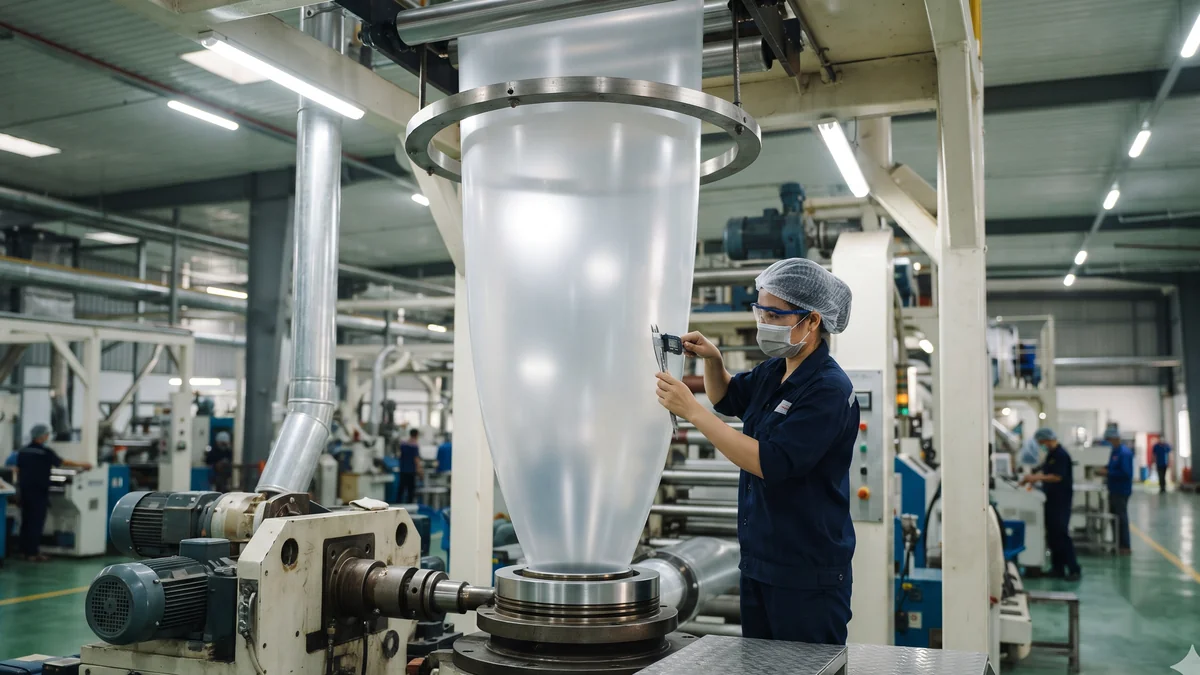
Achieving micron-level precision and customized width configurations requires advanced co-extrusion blown film lines equipped with automatic gauge profile controllers, internal bubble cooling (IBC) systems, and gravimetric dosing blenders. At Vnplast Global, shop-floor realignment focuses on minimizing thermal degradation during extrusion. Controlling melt temperature profiles across multi-zone barrel heaters ensures uniform molecular chain orientation, eliminating weak spots that lead to premature bubble collapse or uneven film thickness.
End-to-end logistics optimization begins immediately upon slitting and rewinding. Rolls are edge-trimmed, tension-regulated, and wound onto heavy-duty high-density paper cores or plastic cores designed to prevent telescoping during long-haul maritime transport. Packaging specifications require multi-layer moisture-barrier wrapping, vertical or horizontal palletization with edge protectors, and stretch-hood stabilization to safeguard against marine humidity and dynamic transit shocks.
5. Commercial Contract Negotiation & Cross-Border Risk Mitigation
International trade execution in the flexible packaging sector hinges on precise legal and commercial framing. Long-term supply agreements between global buyers and the manufacturer must incorporate raw material indexation formulas (e.g., ICIS or Platts polymer indices) to share market volatility equitably over multi-quarter commitments. Contracts should explicitly define force majeure thresholds, minimum order quantities (MOQs), buffer stock management protocols, and liability caps for technical non-conformance.
Cross-border risk mitigation also requires strategic Incoterms selection. While FOB (Free on Board) remains dominant for sea freight control, sophisticated buyers frequently negotiate DDP (Delivered Duty Paid) or DAP (Delivered at Place) frameworks backed by vendor-managed inventory (VMI) hubs situated near major manufacturing clusters. Clear alignment on payment terms—utilizing irrevocable Letters of Credit (LC at sight) or open account structures backed by credit insurance—ensures financial liquidity and shields both parties from currency fluctuation exposure and sovereign risk.
6. Strategic Recommendations & Operational Roadmap from Vnplast Global
To secure resilient, cost-effective, and future-proof supply chains for polyethylene tubing rolls, international procurement executives should execute the following strategic roadmap:
1. Consolidate SKU Profiles: Standardize width and micron specifications across regional manufacturing hubs to leverage volume economies of scale and minimize machine downtime during factory changeovers.
2. Implement Material Audits: Mandate comprehensive pre-shipment inspections (PSI) and insist on automated gauge profile reports rather than legacy spot-check methods.
3. Engage in Co-Development: Partner directly with technical manufacturing partners like Vnplast Global early in the product design phase to optimize resin formulations, integrating PCR content without compromising mechanical metrics.
4. Adopt Dynamic Forecasting: Share rolling 6-month demand forecasts to enable raw material forward-buying, hedging against petrochemical market cyclicality and securing guaranteed production slot allocations.
Technical & Quality Compliance Advisory from Vnplast Global
For international procurement directors, supply chain partners, and B2B buyers, rigorous pre-shipment sample testing (CoA/CoC) and accredited independent inspection (SGS/Intertek) are paramount prior to contract execution. Contact our technical desk for complete engineering datasheets and tailored FOB/CIF quotation schedules.