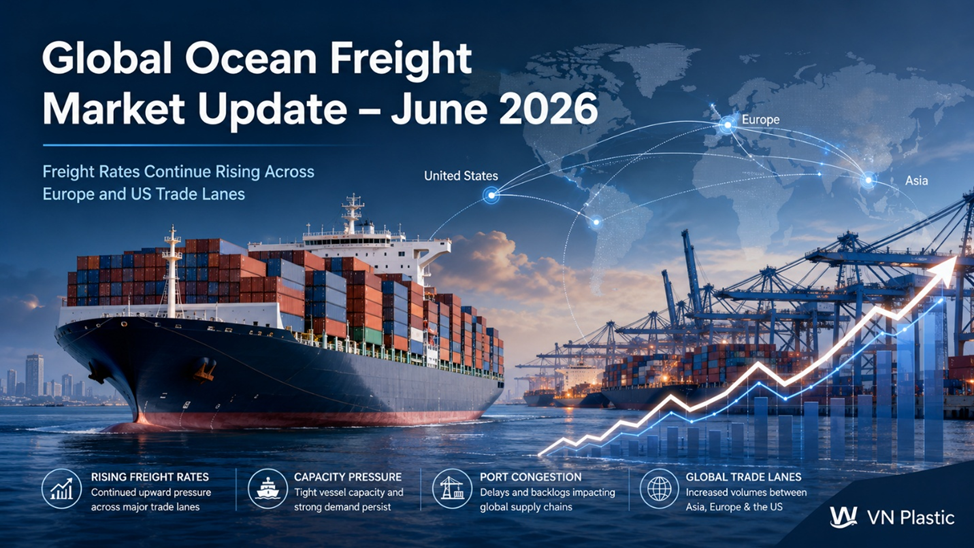
Global Ocean Freight Market Faces Strong Upward Pressure in June 2026
The global ocean freight market continues to experience significant volatility entering June 2026, with shipping rates increasing rapidly across major international trade lanes, especially routes connecting Asia to Europe and the United States.
Driven by strong seasonal cargo demand, carrier capacity control strategies, ongoing port congestion, and equipment shortages, freight costs are rising faster than many importers and exporters anticipated. Industry analysts expect elevated freight levels to remain throughout June and potentially continue into the third quarter of 2026.
For global importers, distributors, and manufacturers, understanding the latest freight market situation has become essential for maintaining stable supply chains and avoiding costly shipment delays.
Europe Freight Rates Continue Climbing
Ocean freight rates from Asia to Europe have increased sharply over recent weeks as carriers continue implementing aggressive capacity management strategies.
Shipping lines are reducing available vessel space through:
- Blank sailings
- Controlled slot allocation
- Reduced spot market availability
- Prioritized long-term contract cargo
As a result, freight prices to both North Europe and Mediterranean destinations are rising significantly week-over-week.
Mediterranean Trade Lane Sees Faster Rate Growth
Among all European destinations, Mediterranean ports are currently experiencing some of the strongest freight inflation due to tighter vessel allocation and increasing cargo demand.
Several ocean carriers have already announced new Peak Season Surcharges (PSS) ranging from USD 800 to USD 1,000 per FEU, with additional increases expected if market demand continues strengthening.
At the same time, reefer container shipments are becoming increasingly difficult to secure because of:
- Seasonal agricultural exports
- Limited reefer equipment availability
- Rising operational costs
Many logistics providers report that selected Europe services are already fully booked through mid-June, leaving importers with limited short-term booking flexibility.
Port Congestion Continues Affecting Europe Supply Chains
Although the current congestion situation has not yet reached the extreme levels seen during the pandemic years, operational bottlenecks continue impacting several major European gateways.
Current congestion challenges include:
- Delayed vessel berthing schedules
- Longer container dwell times
- Increased transshipment delays
- Inland trucking bottlenecks
- Rail connection disruptions
These operational issues are creating additional uncertainty for shipment planning and inventory management across Europe.
Importers relying on just-in-time inventory systems are especially vulnerable to these disruptions.
US Ocean Freight Market Remains Extremely Tight
The Trans-Pacific shipping market is also seeing strong upward momentum as cargo demand into the United States continues increasing while carrier capacity remains constrained.
Freight rates to both:
- US West Coast
- US East Coast
have continued climbing steadily throughout May and early June 2026.
Several major shipping lines have already announced:
- New General Rate Increases (GRI)
- Additional Peak Season Surcharges
- Tight allocation programs
- Reduced spot booking availability
Many forwarders report that available vessel space is becoming increasingly limited, especially for short lead-time shipments.
Reefer Cargo to the United States Faces Severe Challenges
One of the most difficult shipping segments currently is reefer cargo transportation to the US market.
Rates for refrigerated containers have increased substantially due to:
- Equipment shortages
- Strong food and agricultural demand
- Carrier prioritization policies
- High seasonal export volume
Shippers moving temperature-sensitive products are advised to secure bookings much earlier than usual to avoid costly disruptions.
Industry experts recommend confirming reefer bookings at least 2–3 weeks before cargo readiness whenever possible.
Asia-Europe and Trans-Pacific Capacity Constraints Continue
Carrier capacity management remains one of the biggest drivers behind rising ocean freight prices globally.
Major shipping lines continue implementing blank sailings across:
- Asia-Europe routes
- Trans-Pacific services
- Selected Australia lanes
- Certain Africa trade routes
By reducing available vessel capacity while demand remains high, carriers are maintaining strong pricing power across the market.
In addition to capacity reductions, several global shipping hubs continue experiencing operational congestion, including:
- Singapore transshipment hubs
- Australia ports
- Selected African ports
- Key European gateways
This combination of strong demand and limited supply is expected to keep freight rates elevated throughout June and potentially into July 2026.
Why Early Booking Is More Important Than Ever
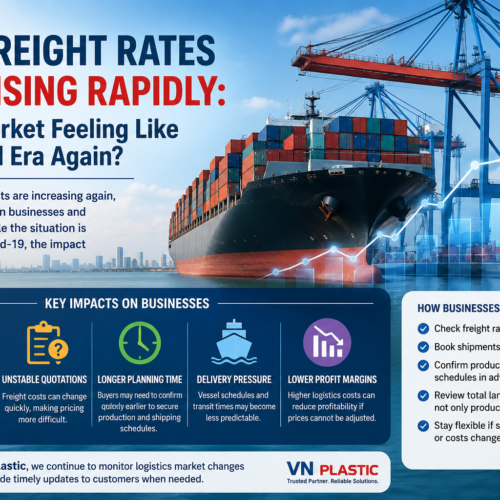
Under current market conditions, proactive shipment planning has become critical for importers and exporters worldwide.
Companies are strongly advised to:
- Confirm production schedules earlier
- Secure vessel space in advance
- Build more flexible delivery timelines
- Prepare backup logistics plans
- Monitor carrier surcharge announcements closely
Late shipment bookings may result in:
- Higher freight costs
- Limited space availability
- Longer transit uncertainty
- Increased rollover risk
- Delivery schedule disruptions
For businesses operating in highly competitive retail or manufacturing sectors, these delays can significantly impact inventory levels and customer commitments.
How VN Plastic Supports Customers During Freight Market Volatility
As a leading manufacturer and exporter of PE packaging products, VN Plastic continues working closely with international logistics partners to help customers maintain stable shipment planning despite challenging market conditions.
With over 20 years of manufacturing experience and production capacity exceeding 1,000 tons per month, VN Plastic remains committed to providing reliable supply chain support for global buyers.
VN Plastic Production Strength
VN Plastic currently operates:
- More than 100 modern production machines
- Large-scale flexible packaging production capacity
- Stable export operations across multiple international markets
- Experienced logistics coordination teams
The company focuses on delivering both product quality and shipment reliability for overseas customers.
Main Export Products from VN Plastic
VN Plastic supplies a wide range of PE packaging solutions for global importers and distributors, including:
- T-shirt bags
- Produce bags on roll
- Garbage bags
- Can liners
- Flat bags
- Food packaging bags
- Stretch film for pallet wrapping
These products are exported to various international markets including:
- United States
- Europe
- Australia
- Asia-Pacific regions
Planning Imports for Second Half of 2026
With freight market uncertainty expected to continue throughout the peak shipping season, businesses sourcing packaging products should begin preparing shipment plans as early as possible.
Working with experienced suppliers and logistics partners can help reduce:
- Supply chain disruption risks
- Unexpected freight surcharges
- Production delays
- Inventory shortages
VN Plastic continues supporting global customers with:
- Flexible shipment planning
- Quotation support
- Export coordination
- Logistics consultation
- Stable production scheduling
Companies planning sourcing activities for the second half of 2026 are encouraged to secure production and vessel bookings early to minimize operational risk.
Final Thoughts
The global ocean freight market in June 2026 remains highly dynamic and increasingly challenging for importers and exporters worldwide.
Rising freight rates, tight vessel capacity, reefer shortages, and ongoing port congestion are all contributing to elevated logistics costs across major global trade lanes.
Businesses that act early, maintain flexible planning, and collaborate with experienced manufacturing and logistics partners will be better positioned to navigate the ongoing market volatility.
As international trade demand continues strengthening, early booking and stable supplier relationships are becoming more important than ever for maintaining reliable global supply chains.