Businesses and event organizers are increasingly searching for a t shirt bag eco friendly solution that reduces waste while showcasing their brand. The answer lies in bags made from recycled plastics, biodegradable films, or reusable fabrics that meet both environmental standards and functional demands. This guide explains how to choose the right eco‑friendly t‑shirt bag, compares material options, and provides a practical checklist so you can implement a greener packaging strategy today.
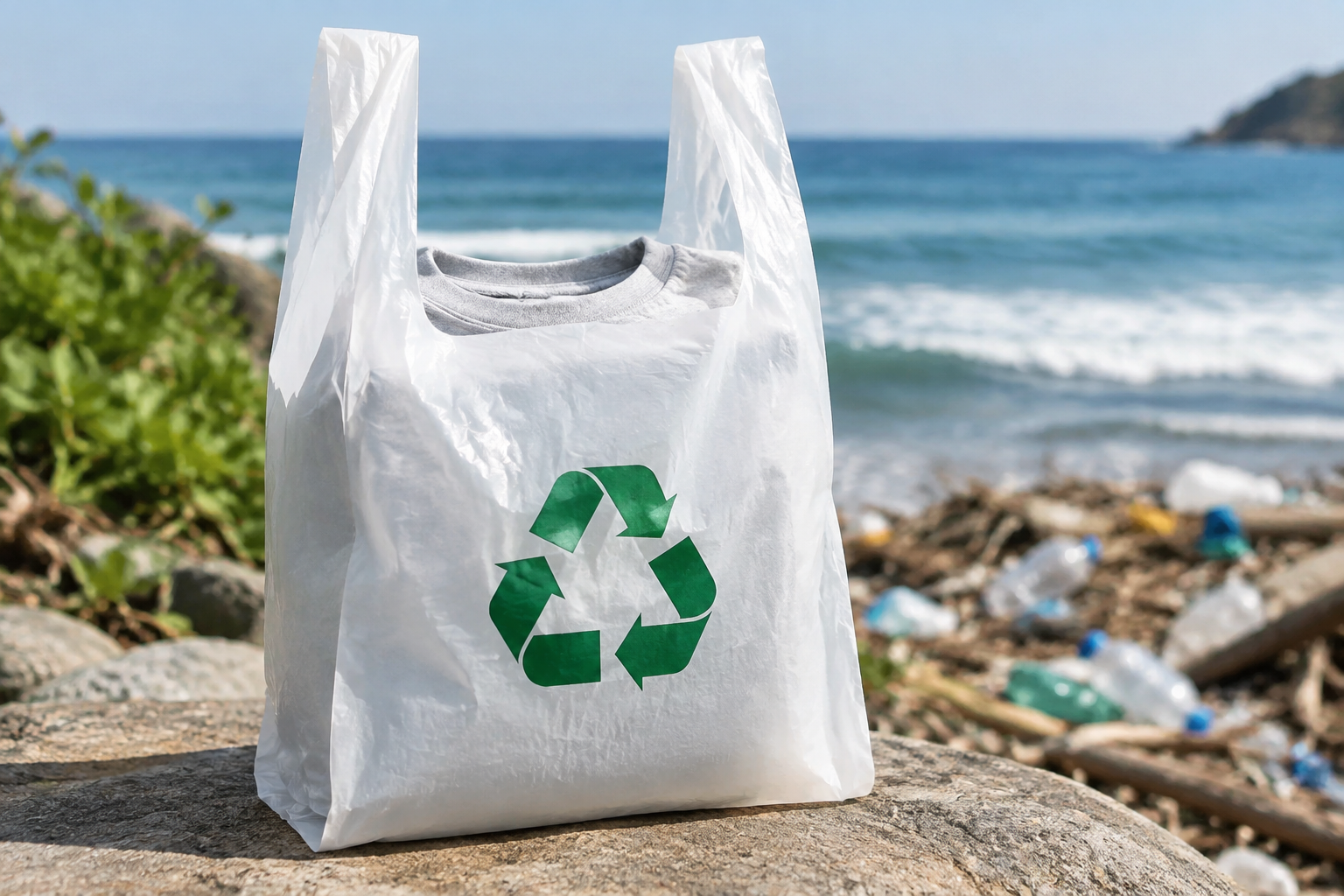
Close‑up of a recyclable t‑shirt bag made from recycled plastic film, showing the printed logo, sturdy handles, and a folded t‑shirt inside…
Why Choose an Eco‑Friendly T‑Shirt Bag?
Traditional single‑use plastic bags contribute to landfill overflow and ocean pollution. Switching to a t shirt bag eco friendly alternative delivers measurable benefits:
- Reduced carbon footprint: Recycled plastic and biodegradable materials consume less energy in production.
- Brand credibility: Consumers reward companies that demonstrate environmental responsibility.
- Regulatory compliance: Many regions now restrict single‑use plastics, making sustainable bags a legal necessity.
- Enhanced customer experience: Sturdy, reusable bags protect the t‑shirt and can be repurposed for everyday use.
Material Options for an Eco‑Friendly T‑Shirt Bag
1. Recycled Plastic Film (Hand Stretch Film)
Made from post‑consumer PET bottles, recycled plastic film offers high tensile strength and clear visibility for branding. When used as a t‑shirt bag, it can be die‑cut to precise dimensions, ensuring a snug fit.
2. Biodegradable Polylactic Acid (PLA) Film
Derived from corn starch, PLA film breaks down in industrial composting facilities within 90‑180 days. It provides a glossy finish and is suitable for short‑term promotional events.
3. Reusable Cotton or Jute Fabric
Natural fibers are the gold standard for reusability. Cotton bags can be washed repeatedly, while jute offers a rustic aesthetic and high durability.
4. Hybrid Options (Recycled Plastic + Organic Cotton)
Combining a recycled plastic inner lining with an outer cotton sleeve gives the best of both worlds: waterproof protection and a premium look.
Decision Matrix: Choosing the Right Bag for Your Needs
| Criteria | Recycled Plastic Film | Biodegradable PLA | Cotton/Jute | Hybrid |
|---|---|---|---|---|
| Cost per unit | Low | Medium | High | Medium‑High |
| Environmental impact | Moderate (recycled) | High (compostable) | Very High (natural) | Very High |
| Durability | High | Medium | High | High |
| Brand visibility | Excellent (transparent) | Good (printable) | Good (woven logo) | Excellent |
| Regulatory compliance | Meets most bans | Meets compostable mandates | Meets all bans | Meets all bans |
Key Features to Look For
- Die‑cut precision: Ensures the bag fits the t‑shirt without excess slack.
- Handle design: Reinforced hand‑stretch film or sewn cotton handles prevent tearing.
- Printability: UV‑stable inks for long‑lasting logos on recycled plastic or natural fibers.
- Recyclability after use: Verify that the bag can re-enter the recycling stream or be composted.
Real‑World Use Cases
Many brands have successfully integrated eco‑friendly t‑shirt bags into their supply chain. For example, a music festival in Vietnam partnered with VNPLAST to supply recycled plastic die cut bags that held artist‑branded t‑shirts. The bags were later collected and sent to a local recycling facility, achieving a 75% waste‑reduction rate compared to previous years.
Retail stores focusing on streetwear have adopted cotton‑lined recycled plastic bags to offer customers a reusable tote that doubles as a garment bag. This approach increased repeat purchases by 12% because shoppers appreciated the added utility.
Implementation Checklist for Switching to Eco‑Friendly T‑Shirt Bags
- Define volume requirements: Estimate the number of t‑shirts per event or season.
- Select material: Use the decision matrix to match cost, sustainability, and brand goals.
- Request samples: Test die‑cut accuracy, handle strength, and print quality.
- Confirm compliance: Ensure the bag meets local plastic bans and compostable standards.
- Set up a collection program: Offer incentives for customers to return used bags for recycling.
- Update marketing assets: Highlight the eco‑friendly feature on product pages and social media.
- Monitor performance: Track waste reduction metrics and customer feedback for continuous improvement.
Cost Considerations and ROI
While the upfront cost of a t shirt bag eco friendly solution can be higher than standard plastic, the long‑term ROI often outweighs the expense. Reusable bags generate repeat exposure as customers carry them beyond the point of sale. Additionally, many governments provide tax incentives or subsidies for sustainable packaging, further improving the financial case.
Frequently Asked Questions
What is the best material for a single‑use promotional t‑shirt bag?
For one‑time events, biodegradable PLA film offers a low‑impact, compostable option that still allows high‑quality printing.
Can recycled plastic bags be recycled again after use?
Yes, if the bag is made from 100% recycled PET and does not contain mixed materials, it can re-enter the recycling stream.
How many uses does a cotton‑lined recycled plastic bag typically last?
When handled with care, these hybrid bags can be reused 30‑50 times before the fabric shows significant wear.
Do eco‑friendly t‑shirt bags meet food‑grade regulations?
Only bags specifically certified for food contact (e.g., food plastic bag standards) should be used for apparel that may be tried on in fitting rooms. For pure apparel use, standard recycled plastic or fabric bags are sufficient.
What disposal method should be used for PLA bags?
PLA bags require industrial composting facilities. They should not be placed in regular curbside recycling bins.
Conclusion
Adopting a t shirt bag eco friendly strategy aligns your brand with sustainability goals, satisfies emerging regulations, and creates a tangible marketing advantage. By evaluating material options, using the provided checklist, and learning from real‑world case studies, you can transition smoothly from traditional plastic to a greener, more responsible packaging solution. VNPLAST’s expertise in recycled plastic, die‑cut bags, and hybrid solutions ensures you have a reliable partner for every stage of the process.