As environmental awareness grows, many individuals and businesses are seeking sustainable alternatives to traditional plastic products. Compostable trash bags have emerged as a popular choice for managing waste responsibly. This comprehensive guide explores the benefits, types, and key considerations for selecting the best compostable trash bags for your needs.
We’ll delve into the materials used, certifications to look for, and practical tips for ensuring proper composting. By understanding these factors, you can make an informed decision and contribute to a greener future.
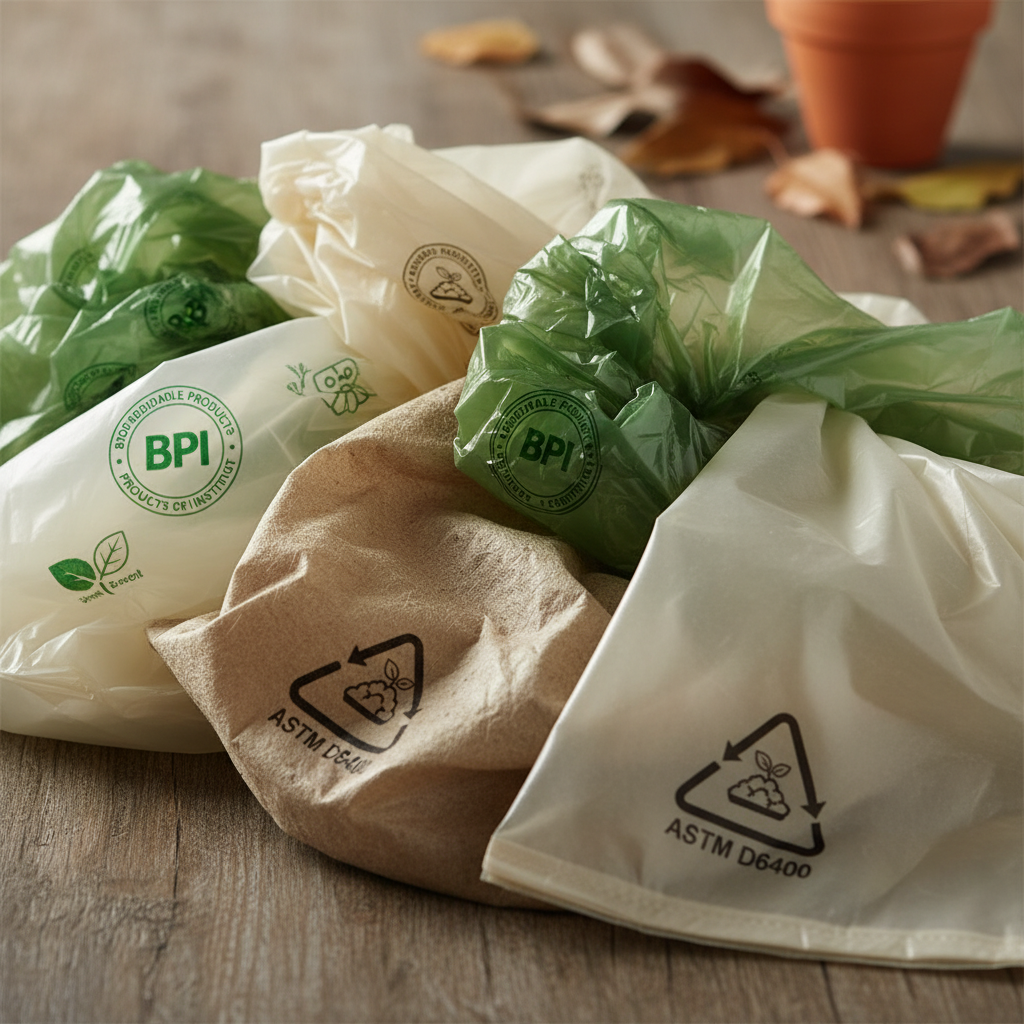
Close-up shot of a variety of compostable trash bags, showcasing their texture and markings, with a focus on certifications like BPI or ASTM.
Understanding Compostable Trash Bags
What Makes a Trash Bag Compostable?
Unlike biodegradable bags, which simply break down into smaller pieces, compostable trash bags are designed to decompose entirely into nutrient-rich humus under specific composting conditions. These conditions typically involve a combination of moisture, oxygen, and microorganisms found in composting environments.
- Materials: Compostable bags are typically made from plant-based materials such as cornstarch, polylactic acid (PLA), and other biodegradable polymers.
- Decomposition: They break down into natural elements at a rate similar to other organic materials in a compost pile.
- Certification: Look for certifications like BPI (Biodegradable Products Institute) or ASTM D6400, which ensure the bags meet specific compostability standards.
Benefits of Using Compostable Trash Bags
Switching to compostable trash bags offers numerous environmental and practical advantages:
- Reduced Plastic Waste: They help minimize the amount of plastic accumulating in landfills and oceans.
- Environmentally Friendly: They are made from renewable resources and contribute to a circular economy.
- Soil Enrichment: When properly composted, they enrich the soil with valuable nutrients.
- Supports Sustainable Practices: Using compostable bags demonstrates a commitment to sustainability and responsible waste management.
Types of Compostable Trash Bags
Home Compostable vs. Industrially Compostable
It’s crucial to distinguish between bags designed for home composting and those requiring industrial composting facilities.
- Home Compostable: These bags break down in backyard compost piles under typical home composting conditions. They generally require a good balance of “green” (nitrogen-rich) and “brown” (carbon-rich) materials, along with adequate moisture and aeration.
- Industrially Compostable: These bags require the higher temperatures and controlled conditions found in commercial composting facilities. They are not suitable for home composting. Check with your local waste management provider to see if they accept industrially compostable bags.
Material Composition and Performance
The material composition of compostable trash bags significantly impacts their strength, durability, and compostability.
- Cornstarch-Based Bags: These are a common option, known for their relatively quick decomposition. However, they may be less durable than other types.
- PLA (Polylactic Acid) Bags: PLA is derived from renewable resources like cornstarch or sugarcane. PLA bags offer good strength and compostability but can be sensitive to high temperatures.
- Blended Materials: Some bags combine different materials to enhance strength and compostability. These blends may include recycled content and other bio-based polymers.
Factors to Consider When Choosing Compostable Trash Bags
Size and Strength
Select a bag size that fits your trash can comfortably. Consider the typical weight and type of waste you’ll be disposing of.
- Small Bags (e.g., 3-gallon): Suitable for small bins in bathrooms or offices.
- Medium Bags (e.g., 13-gallon): Ideal for kitchen trash cans.
- Large Bags (e.g., 30-gallon or larger): Used for outdoor bins or heavy-duty waste.
Pay attention to the bag’s thickness and construction. Look for bags that are puncture-resistant and can withstand the weight of your typical waste without tearing.
Certifications and Standards
Certifications provide assurance that the bags meet established compostability standards.
- BPI (Biodegradable Products Institute): A leading certification for compostable products in North America.
- ASTM D6400: A standard specification for compostable plastics.
- EN 13432: The European standard for compostable packaging.
Look for these certifications on the packaging to ensure the bags will break down properly in a composting environment.
Storage and Handling
Proper storage and handling are essential to maintain the integrity of compostable trash bags.
- Cool, Dry Place: Store bags in a cool, dry place away from direct sunlight and heat.
- Avoid Moisture: Moisture can accelerate the decomposition process, even before the bag is used.
- Use Promptly: Use bags within a reasonable timeframe to ensure they remain strong and effective.
Cost and Availability
Compostable bags are generally more expensive than traditional plastic trash bags. However, the environmental benefits often outweigh the higher cost. Consider buying in bulk to save money. Compostable trash bags are available at most grocery stores, home improvement stores, and online retailers.
Proper Composting Practices
Setting Up a Home Compost System
If you plan to compost the bags at home, ensure you have a well-maintained compost system. This involves:
- Choosing a Compost Bin: Select a bin that provides adequate aeration and drainage.
- Balancing Green and Brown Materials: Maintain a proper balance of nitrogen-rich (“green”) materials like food scraps and grass clippings, and carbon-rich (“brown”) materials like leaves and shredded paper.
- Turning the Compost: Regularly turn the compost pile to aerate it and promote decomposition.
- Monitoring Moisture: Keep the compost pile moist but not waterlogged.
Working with Municipal Composting Programs
If your municipality offers a composting program, check their guidelines for accepted materials. Some programs may have specific requirements for the type of compostable trash bags they accept.
- Check Local Regulations: Contact your local waste management provider for information on accepted compostable products.
- Follow Guidelines: Adhere to the program’s guidelines for sorting and preparing compostable waste.
- Participate Actively: By participating in municipal composting programs, you can contribute to a larger-scale effort to reduce waste and create valuable compost.
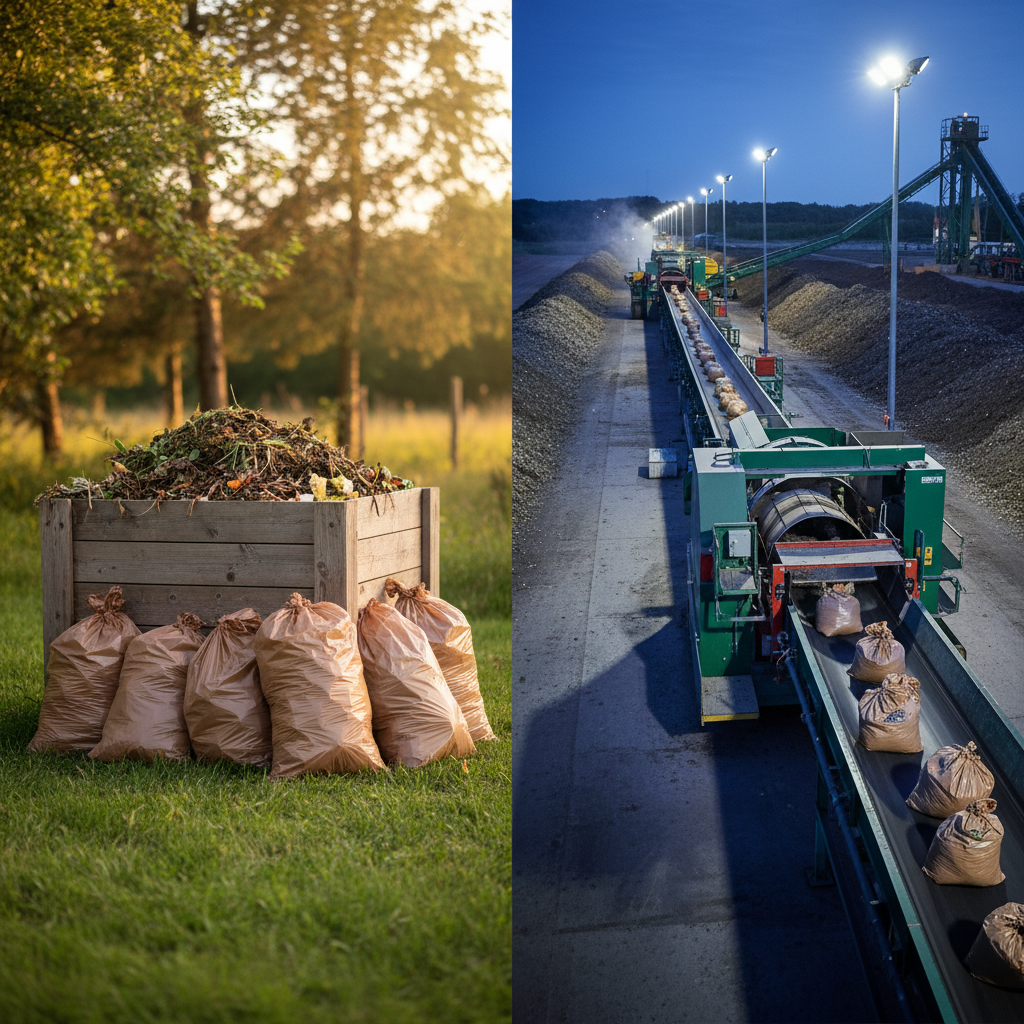
A split image showing a backyard compost bin on one side and a commercial composting facility on the other, highlighting the different scales of composting.
Conclusion
Choosing the right compostable trash bags is a significant step towards reducing plastic waste and promoting sustainable practices. By understanding the different types of bags, considering key factors like size, strength, and certifications, and implementing proper composting practices, you can make an informed decision that benefits both the environment and your community. Embrace the shift towards compostable alternatives and contribute to a greener, more sustainable future.