When standard trash liners split under pressure, contractor bags are built to handle the mess. Designed for demanding cleanup tasks, these heavy-duty bags are commonly used in construction, remodeling, landscaping, roofing, demolition, moving, and large-scale home cleanouts. Whether you are disposing of broken drywall, wood scraps, insulation, yard debris, or bulky household waste, the right contractor bags help keep worksites cleaner, safer, and more efficient.
For professionals and homeowners alike, choosing the right bag is not just about size. It involves material thickness, puncture resistance, load capacity, closure type, and intended use. In this guide, we will cover everything you need to know about contractor bags, including types, sizes, uses, buying considerations, and best practices for disposal and storage.
Table of Contents
- What Are Contractor Bags?
- Why Contractor Bags Matter on Tough Jobs
- Common Uses for Contractor Bags
- Sizes, Materials, and Thickness
- How to Choose the Right Contractor Bags
- Contractor Bags vs Standard Trash Bags
- Best Practices for Use
- Storage and Disposal Tips
- Frequently Asked Questions
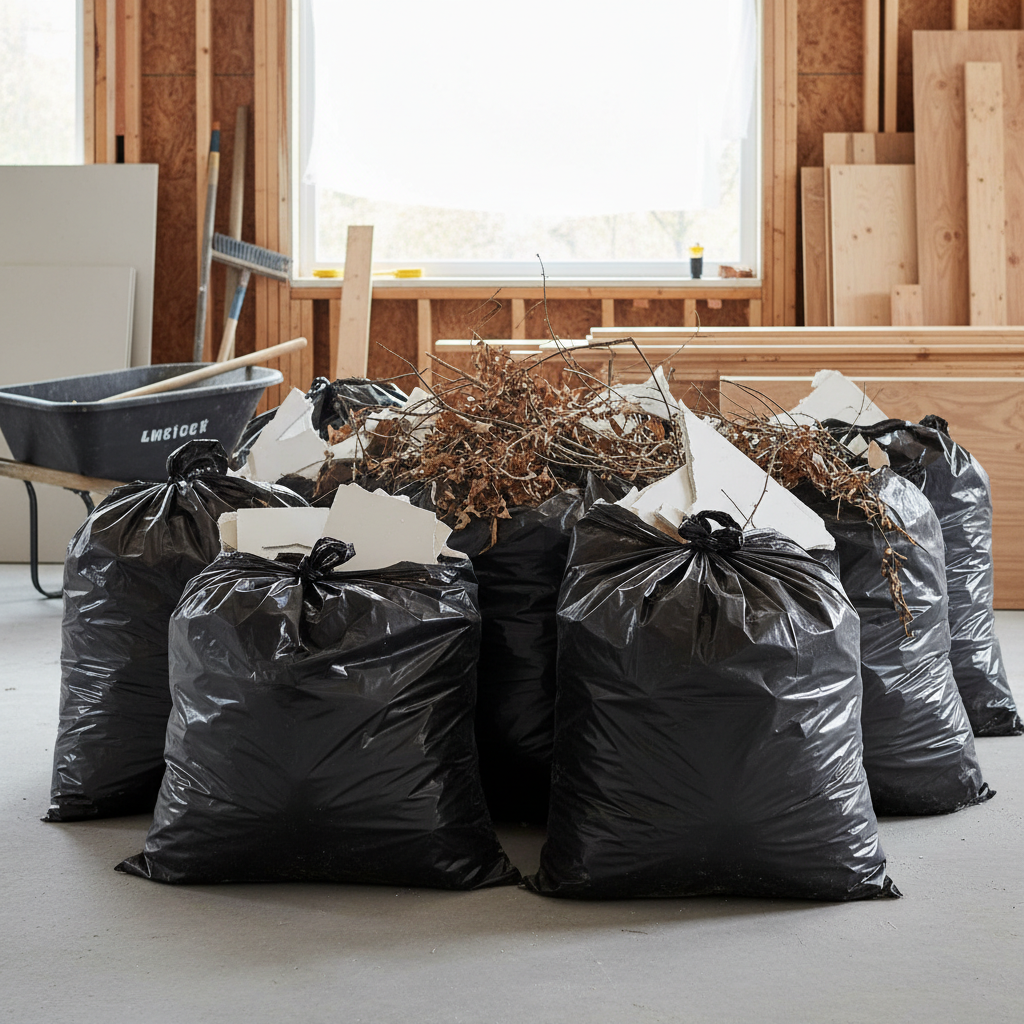
Heavy-duty black contractor bags filled with broken drywall, wood scraps, and yard debris at an active renovation site, showing thick plast…
What Are Contractor Bags?
Contractor bags are extra-strong waste bags designed to hold heavy, sharp, bulky, or irregular debris that would quickly tear ordinary garbage bags. They are typically made from thick low-density polyethylene or blended resins that provide better stretch, puncture resistance, and load-bearing performance.
Unlike standard household trash bags, contractor bags are intended for tougher environments. They are often used in:
- Construction and remodeling projects
- Demolition and tear-outs
- Landscaping and yard maintenance
- Garage, basement, and attic cleanouts
- Roofing and flooring removal
- Moving and storage protection
Semantic callout: If the waste is heavy, jagged, dusty, or awkwardly shaped, contractor bags are usually the safer and more durable choice.
Why Contractor Bags Matter on Tough Jobs
On active jobsites, efficiency and safety go hand in hand. Torn bags create cleanup delays, increase labor time, and can leave nails, glass, splinters, or debris scattered across the work area. High-quality contractor bags help reduce these risks.
Key Benefits of Contractor Bags
- Higher puncture resistance: Better for sharp-edged debris like tile fragments, lumber offcuts, and metal pieces.
- Improved tear strength: Useful when lifting or dragging filled bags short distances.
- Larger capacity: Many contractor bags are available in 42-gallon, 45-gallon, and 55-gallon sizes.
- Versatile applications: Suitable for both indoor renovation and outdoor cleanup.
- Cleaner worksites: Helps contain dust-producing and loose debris.
For crews managing repetitive cleanup, the right contractor bags can lower replacement frequency and improve workflow. For homeowners, they offer peace of mind during major projects where ordinary kitchen or lawn bags simply do not perform well enough.
Common Uses for Contractor Bags
One reason contractor bags remain so popular is their flexibility across industries and tasks. They are not limited to contractors. Property managers, landscapers, maintenance teams, and homeowners also rely on them.
Construction and Remodeling
During renovations, contractor bags are frequently used for collecting:
- Drywall scraps
- Insulation offcuts
- Trim and molding remnants
- Packaging materials from fixtures and supplies
- Dusty debris from tear-outs
Yard Work and Landscaping
In outdoor settings, contractor bags can hold:
- Leaves and grass clippings
- Small branches and hedge trimmings
- Weeds and plant matter
- Mulch bags and garden waste
Home Cleanouts
For attic, garage, estate, or post-move cleanups, contractor bags are useful for:
- Old textiles and damaged household goods
- Basement clutter
- Broken storage items
- Bulky general waste
Roofing, Flooring, and Demolition
Heavy renovation debris often demands stronger containment. Contractor bags can be used for shingles, carpet padding, underlayment scraps, and other dense materials, provided the bag is not overloaded and local disposal rules are followed.
Sizes, Materials, and Thickness of Contractor Bags
Not all contractor bags are made the same. Understanding basic specifications will help you select the best option for your project.
Popular Sizes
- 33-gallon contractor bags: Good for smaller jobs and lighter construction debris.
- 42-gallon contractor bags: One of the most common sizes for remodeling and cleanup.
- 45-gallon contractor bags: Offers extra room for bulky waste.
- 55-gallon contractor bags: Best for larger cleanup jobs, though weight management is critical.
Material Types
- Low-density polyethylene: Flexible and strong, often preferred for irregular and sharp loads.
- Linear low-density blends: Can deliver strong puncture and tear resistance.
- Recycled-content options: Useful for organizations seeking more environmentally conscious purchasing choices.
Thickness Matters
Bag thickness is often measured in mils. In general, thicker contractor bags provide better resistance for demanding debris. Common ranges include:
- 2 mil: Suitable for moderate-duty cleanup
- 3 mil: Popular for heavy-duty residential and jobsite use
- 4 mil and above: Better for very tough, abrasive, or sharp materials
Semantic callout: A larger bag is not always the better bag. If it is too big, workers may overfill it, making lifting unsafe and increasing the chance of failure.
How to Choose the Right Contractor Bags
Choosing the best contractor bags starts with understanding the material you need to dispose of and the conditions in which the bags will be used.
1. Match the Bag to the Debris
Sharp tile pieces, wood splinters, nails, and metal fragments call for thicker contractor bags. Soft, bulky, lightweight waste may not require the heaviest option.
2. Consider Weight, Not Just Volume
A bag may have enough space, but that does not mean it should be filled to the top. Dense debris can exceed safe lifting limits quickly. Select contractor bags that balance capacity with manageable load weight.
3. Review Puncture and Tear Resistance
If the cleanup involves jagged materials, prioritize heavy-duty or extra heavy-duty contractor bags. Product descriptions often reference puncture strength, industrial grade construction, or reinforced film blends.
4. Check Closure Preference
Some contractor bags are simple open-top designs, while others include drawstrings or twist-tie compatibility. Open-top bags are common for construction debris, but closure features can help with lighter mixed waste.
5. Think About Storage Conditions
If bags are stored in a truck, shed, or exposed work area, keep them away from prolonged sunlight, moisture, and extreme heat. Proper storage helps preserve the integrity of contractor bags before use.
Contractor Bags vs Standard Trash Bags
The difference between everyday garbage liners and contractor bags becomes obvious as soon as the load gets rough, heavy, or sharp.
- Strength: Contractor bags are engineered for more demanding loads.
- Thickness: They are typically thicker than household trash bags.
- Applications: Standard bags suit kitchen or office waste, while contractor bags are made for renovation debris, yard waste, and cleanup projects.
- Durability: Better resistance to punctures, abrasion, and tearing.
- Capacity: Contractor bags often come in larger sizes for bigger cleanup tasks.
If you are handling broken materials, rough surfaces, or oversized waste, switching to contractor bags is often the more cost-effective choice because fewer bag failures mean less rework and less wasted labor.
Best Practices for Using Contractor Bags
Even the strongest contractor bags perform best when used correctly. These simple practices can extend bag life and reduce onsite accidents.
Do Not Overfill
Leave enough room at the top to grip or tie the bag if needed. Overfilled contractor bags are harder to lift, more likely to split, and less stable during transport.
Distribute Sharp Debris Carefully
Place flatter items along the sides and avoid forcing pointed materials directly against one area of the bag. For especially sharp waste, consider double-bagging or using rigid disposal containers where appropriate.
Lift with Proper Technique
Use team lifting or equipment when filled contractor bags become too heavy. A strong bag does not eliminate the risk of worker strain or injury.
Separate Waste Streams
Many projects benefit from sorting debris into categories such as general waste, recyclable packaging, yard waste, or landfill-only materials. This can simplify disposal and support better site organization.
Follow Local Disposal Rules
Not every material belongs in contractor bags. Hazardous waste, chemicals, wet paint, asbestos-containing materials, or regulated construction debris may require special handling. Always verify local regulations before disposal.
Storage and Disposal Tips for Contractor Bags
Proper handling matters before and after use. Good storage protects your inventory, while responsible disposal helps ensure compliance and cleaner jobsite operations.
Storage Tips
- Keep contractor bags in a dry, cool location
- Avoid prolonged UV exposure from direct sunlight
- Store rolls or boxes off wet floors when possible
- Use older stock first to maintain product quality
Disposal Tips
- Confirm local landfill and transfer station rules
- Do not mix prohibited materials into general debris bags
- Label or separate special waste when required
- Use dumpsters or designated collection systems for high-volume projects
For many contractors and facility teams, pairing contractor bags with carts, bins, or dumpsters creates a cleaner waste workflow from collection to final disposal.
Buying Tips: What to Look for in Quality Contractor Bags
Before purchasing, compare product details rather than choosing by price alone. Reliable contractor bags should offer clear specifications and consistent quality.
- Mil thickness listed clearly
- Capacity in gallons
- Material composition or resin blend information
- Puncture and tear resistance claims
- Count per box or roll
- Intended use recommendations
Bulk buying may reduce cost per bag, especially for commercial use, but consistency is critical. Poor-quality contractor bags can create more expense in breakage, delays, and replacement labor than they save upfront.
Buying Tips: What to Look for in Quality Contractor Bags
Frequently Asked Questions About Contractor Bags
Are contractor bags stronger than regular trash bags?
Yes. Contractor bags are specifically designed for heavier, sharper, and more abrasive waste than standard household trash bags.
What size contractor bags should I buy?
The right size depends on your cleanup volume and the weight of the debris. A 42-gallon option is a common choice for many remodeling and yard projects, while larger sizes may suit bigger jobs if loads remain manageable.
Can contractor bags hold sharp debris?
Many can, especially thicker heavy-duty options. However, extremely sharp or hazardous materials may still require rigid containers or specialized disposal methods.
Are contractor bags good for yard waste?
Yes. Contractor bags are often used for leaves, trimmings, weeds, and general yard debris, though local composting or municipal yard waste guidelines should be checked.
How thick should contractor bags be?
For general heavy-duty cleanup, many users prefer bags in the 3 mil range, while tougher debris may call for 4 mil or thicker contractor bags.
Conclusion
Contractor bags are an essential part of efficient, heavy-duty cleanup. From renovation sites and demolition work to landscaping and home cleanouts, they provide the strength and durability needed for jobs that standard trash bags cannot handle. By choosing the right size, thickness, and material, you can improve safety, reduce mess, and keep projects moving smoothly.
If your work involves rough debris, bulky waste, or demanding cleanup conditions, investing in dependable contractor bags is a practical decision that supports better results from start to finish.