As more shoppers, commuters, and businesses look for ways to reduce waste, eco friendly bags have become one of the most visible and useful sustainable swaps. They are no longer limited to simple grocery totes. Today, they include reusable shopping bags, produce bags, jute sacks, recycled PET carry bags, organic cotton totes, compostable mailers, and more. Each option offers a different balance of durability, appearance, recyclability, and environmental impact.
Choosing the right bag is about more than replacing plastic. It is about selecting a material that fits your routine, lasts long enough to justify its footprint, and supports responsible use over time. Whether you are buying for personal errands or sourcing bags for a retail brand, understanding the differences among eco friendly bags helps you make smarter, more sustainable decisions.
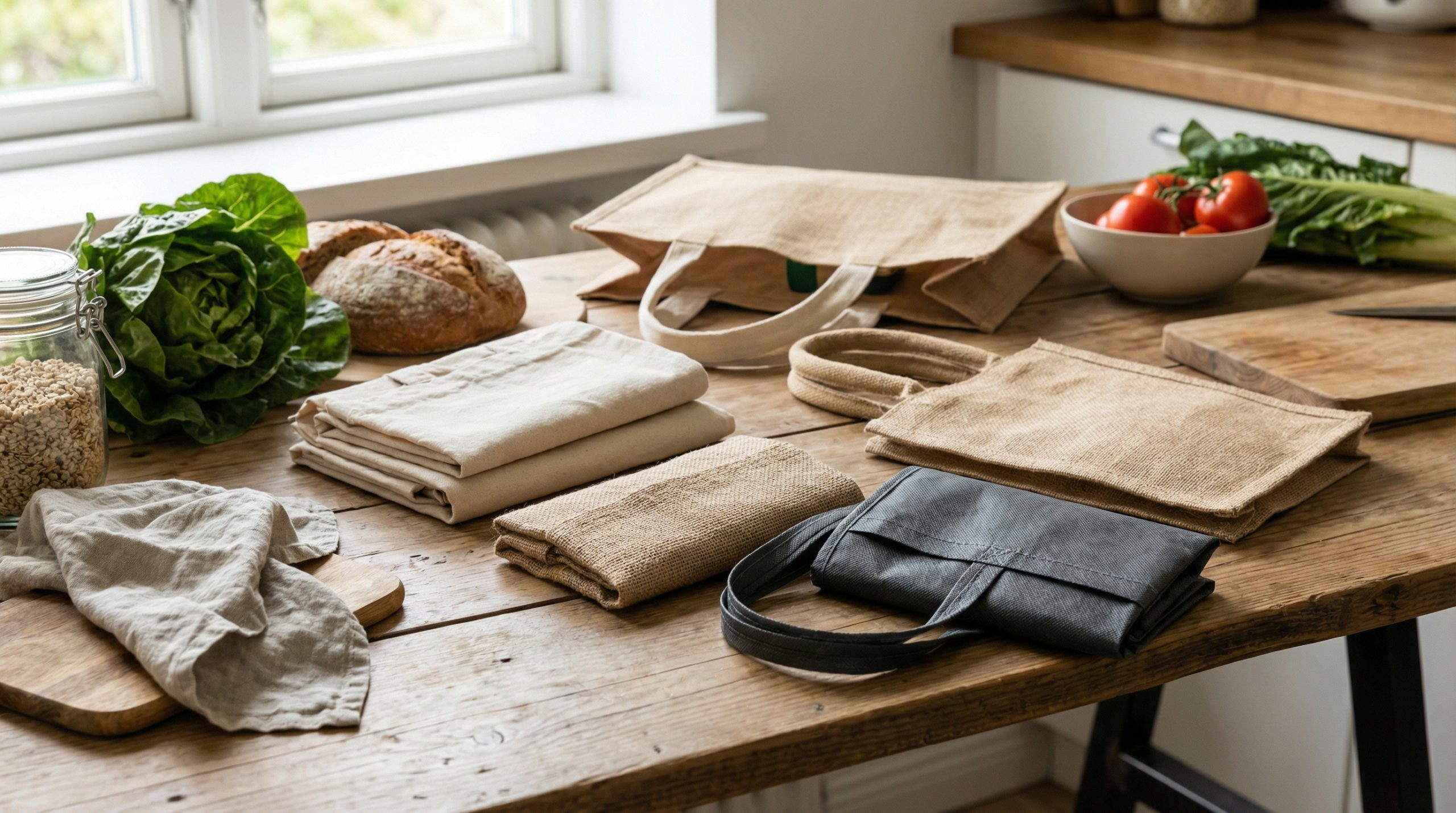
reusable eco friendly bags made from organic cotton, jute, and recycled PET arranged beside fresh groceries on a wooden kitchen table
What Makes a Bag Eco Friendly?
The term eco friendly bags is often used broadly, but a truly sustainable bag usually shares a few important qualities. It should reduce reliance on single-use plastic, last through repeated use, and be made from materials that are responsibly sourced or easier to recycle at the end of life.
A bag may be considered more eco conscious if it has one or more of the following features:
- Reusable design: Built to handle many trips rather than one-time use.
- Lower-impact materials: Made from natural fibers, recycled plastics, or compostable materials.
- Durability: Strong stitching and sturdy handles that extend service life.
- Minimal packaging: Reduced excess wraps, labels, and coatings.
- Responsible disposal potential: Recyclable, compostable, or biodegradable under suitable conditions.
It is worth noting that no bag is impact-free. The most sustainable choice is usually the one you can use consistently for a long time. A reusable bag that is forgotten in a drawer contributes less to sustainability than a simple bag used hundreds of times.
Popular Types of Eco Friendly Bags
1. Cotton and Organic Cotton Bags
Cotton bags are among the most recognizable reusable options. They are lightweight, foldable, and easy to print on, which makes them popular for retail and promotional use. Organic cotton is a better option when possible because it avoids many conventional pesticide and fertilizer inputs.
Best for: everyday shopping, brand promotions, library runs, and light carry needs.
- Soft and easy to store
- Good for repeated use
- Washable and familiar to users
Keep in mind that cotton bags need frequent reuse to offset their production impact. Their strength is practicality, not necessarily the smallest manufacturing footprint.
2. Jute Bags
Jute is a natural fiber with a rustic look and strong structure. Jute bags are commonly used for grocery shopping, gift packaging, and premium retail presentation. They are durable, breathable, and often visually associated with sustainability because of their earthy texture.
Best for: heavier items, farmers market shopping, gift sets, and branded packaging.
- Sturdy and reusable
- Natural appearance
- Suitable for heavier loads
Jute bags tend to be less flexible than cotton, but they offer excellent structure and a strong perceived value.
3. Recycled PET Bags
Recycled PET bags are made from post-consumer plastic, often derived from used beverage bottles. These bags help divert waste from landfills while creating a durable reusable product. They are especially useful when a bag needs to be lightweight, water-resistant, and strong enough for frequent use.
Best for: grocery shopping, travel, work commutes, and reusable retail packaging.
- Durable and easy to clean
- Uses recovered plastic waste
- Often more water-resistant than natural fibers
For many users, recycled PET offers a practical middle ground between performance and environmental responsibility.
4. Compostable and Biodegradable Bags
Compostable bags are designed to break down under specific composting conditions. They are often made from plant-based materials such as cornstarch blends or other bio-based polymers. These are commonly used for produce, food service, or mailers in controlled disposal systems.
Best for: compost collection, produce, food packaging, and short-life applications.
- Useful for specialized disposal streams
- Can reduce persistent plastic waste
- Suitable where industrial composting is available
Because compostable does not always mean backyard-compostable, it is important to check disposal instructions carefully. A bag that cannot be processed in your local system may not deliver the intended benefit.
5. Mesh and Produce Bags
Mesh produce bags are a small but powerful sustainability upgrade. Replacing thin plastic produce bags with washable mesh alternatives can cut down a surprising amount of waste over time. They are lightweight, breathable, and ideal for fruits, vegetables, and bulk items.
Best for: grocery produce sections, bulk food shopping, and kitchen storage.
- Very lightweight
- Reusable for repeated grocery trips
- Helps organize produce at home
Why Eco Friendly Bags Matter
The shift toward eco friendly bags matters because bags are used constantly. A single household may use dozens of bags each week for shopping, storage, transport, and organization. When those bags are single-use, the waste adds up quickly.
The benefits include:
- Less plastic pollution: Reusable bags help reduce disposable bag consumption.
- Better brand image: Businesses that use sustainable packaging can strengthen customer trust.
- Lower long-term cost: Reusable bags often pay off through repeated use.
- Improved convenience: Sturdy bags are easier to carry and more reliable than thin disposables.
- Consumer education: Visible sustainable choices encourage better habits.
For companies, the right bag can also serve as a practical marketing tool. A well-designed reusable bag is carried repeatedly, turning every trip into an opportunity for brand visibility without relying on disposable materials.
How to Choose the Right Eco Friendly Bag
Not all sustainable bags are ideal for every purpose. The best option depends on how you plan to use it, how often it will be reused, and what conditions it must handle.
Consider the Intended Use
- Groceries: Choose jute, recycled PET, or reinforced cotton.
- Produce: Choose mesh or lightweight washable bags.
- Retail packaging: Choose cotton, jute, or recycled PET for durability and presentation.
- Food waste or composting: Choose certified compostable liners if local compost systems support them.
Check Material Performance
Look at load capacity, washability, water resistance, foldability, and handle strength. A bag that tears easily or becomes inconvenient to carry is less likely to be reused, which weakens its environmental value.
Look for Clear Certifications and Claims
When shopping for eco friendly bags, pay attention to product labeling. Helpful indicators may include:
- Recycled content percentage
- Organic fiber certification
- Compostability standards
- Restricted chemical compliance
Be cautious with vague wording. Terms like “green” or “natural” do not always guarantee responsible sourcing or end-of-life performance.
Eco Friendly Bags for Businesses
Retailers, event organizers, cafes, and subscription brands increasingly use eco friendly bags as part of their customer experience. A good reusable bag can reinforce sustainability messaging while improving utility.
For business buyers, the most important considerations are usually:
- Branding space: Enough surface area for logos or messaging.
- Durability: Strong seams and reliable handles for repeated use.
- Cost per use: Value improves when bags are reused many times.
- Customer appeal: A design people actually want to keep and use.
Businesses should also think beyond aesthetics. If a bag looks premium but falls apart quickly, it becomes waste instead of a useful brand asset. The best promotional bags are functional enough to remain in circulation for months or years.
How to Care for Reusable Bags
Proper care extends the life of reusable bags and improves hygiene. Many bags are used for groceries, produce, or personal items, so regular cleaning is important.
- Wash cotton bags: Follow care instructions and air dry when possible.
- Wipe recycled PET bags: Use mild soap and water for easy cleaning.
- Brush jute bags gently: Avoid soaking unless the manufacturer allows it.
- Store bags in a visible place: Keep them near the door or in the car so they are easy to remember.
Small habits make a big difference. A bag that is cleaned and reused regularly offers far more value than one that is bought but rarely used.
End-of-Life Considerations
Even sustainable bags eventually wear out. When that happens, the best path depends on the material.
- Cotton bags: May be repurposed as cleaning cloths or textile recycling feedstock where available.
- Jute bags: Can sometimes be reused for storage, garden use, or craft projects.
- Recycled PET bags: Check local recycling guidance, since not all facilities accept them.
- Compostable bags: Only compost if they meet local composting requirements.
Extending the life of a bag through repair or repurposing is often the most sustainable next step. A torn handle does not always mean the entire bag needs to be discarded.

End-of-Life Considerations
Frequently Asked Questions About Eco Friendly Bags
Are eco friendly bags always better than plastic bags?
Not always in every scenario. The environmental benefit depends on the material, how the bag is made, and how many times it is reused. A durable reusable bag used many times is generally a better choice than single-use plastic.
Which eco friendly bag is the most durable?
Durability varies by design, but jute and reinforced recycled PET bags are often very strong. Cotton bags can also be durable when they have heavy stitching and thick fabric.
Can eco friendly bags be recycled?
Some can, but not all. Recycled PET bags may be recyclable in certain systems, while cotton and jute are typically handled through textile reuse or repurposing. Always check local recycling rules.
Are compostable bags a good choice?
They can be, especially for food waste or compost-related uses. However, they only perform as intended when disposed of in the right composting system. If local facilities do not accept them, their benefit may be limited.
What is the best eco friendly bag for shopping?
For general shopping, a strong reusable tote made from recycled PET, jute, or thick cotton is often a practical choice. The best option is the one that fits your load, lasts well, and gets reused often.
Conclusion
Eco friendly bags are a simple but meaningful way to reduce waste, improve everyday convenience, and support more responsible consumption. From cotton totes and jute bags to recycled PET and compostable options, each material offers a different set of strengths. The best choice depends on your use case, disposal system, and commitment to reuse.
For shoppers, the goal is to choose a bag you will carry again and again. For businesses, the goal is to select a product that customers value, reuse, and remember positively. When used thoughtfully, eco friendly bags do more than replace disposable packaging. They help build habits that are practical, visible, and sustainable.