When you search for a reliable plastic roll for t shirts, you’re looking for a packaging solution that protects garments, speeds up handling, and reduces waste. VNPLAST’s high‑clarity polyethylene rolls deliver exactly that: a flexible, durable film that can be applied quickly in retail, wholesale, and e‑commerce environments. This guide explains how the material works, key factors to consider when buying, and real‑world tips for getting the most out of your roll.
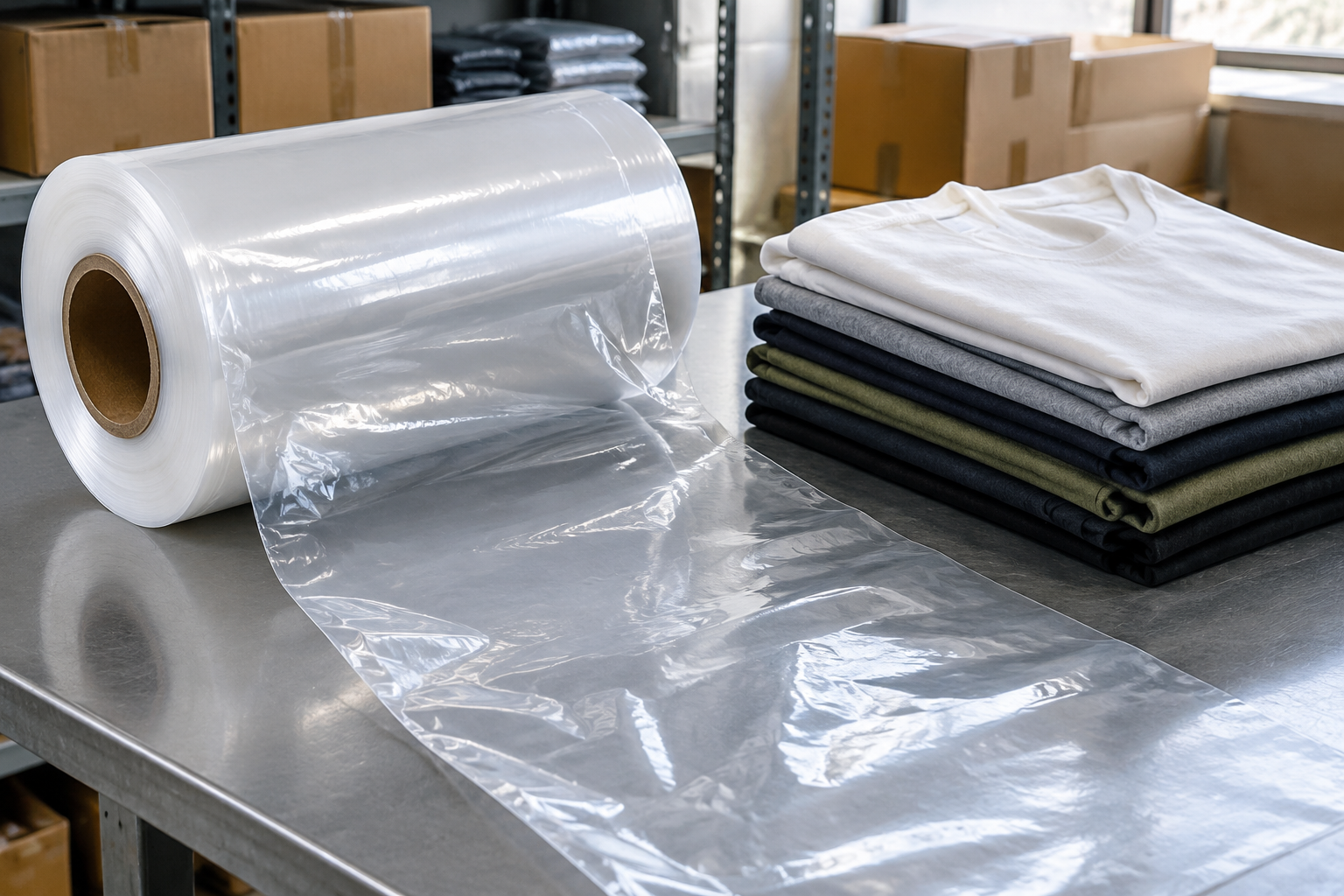
A clear polyethylene plastic roll unspooling on a warehouse packing table, with a stack of freshly folded t‑shirts ready to be wrapped
Why Choose a Plastic Roll for T‑Shirts?
Unlike traditional cardboard boxes, a plastic roll for t shirts offers several operational advantages:
- Space efficiency: Rolls occupy far less storage space than bulk boxes.
- Quick application: Hand stretch film or automated dispensers can wrap a shirt in seconds.
- Visibility: Clear film lets customers see the product without opening the package.
- Protection: Moisture‑resistant barrier guards against spills and humidity.
Key Decision Factors
Material Thickness (Gauge)
Thickness determines strength and stretchability. Common gauges for garment rolls are:
- 30 µm – Light duty, ideal for single‑piece retail packaging.
- 45 µm – Balanced strength, suitable for bulk shipments.
- 60 µm – Heavy‑duty, used for hazardous or wet environments.
Clarity and Printability
High‑clarity film improves product visibility. If branding is required, choose a roll that accepts hand stretch film printing or pre‑printed graphics.
Environmental Impact
VNPLAST offers recycled options that meet EU directives for single‑use plastics. Look for rolls labeled “Recycle Plastic bag grade” to align with sustainability goals.
Practical Checklist Before Purchasing
- Confirm gauge needed for your shipping volume.
- Check compatibility with existing dispensers (hand‑pull or automatic).
- Verify clarity level for visual merchandising.
- Ensure the roll meets local waste‑management regulations (e.g., recyclable label).
- Compare cost per square meter against bulk cardboard alternatives.
Real‑World Use Cases
Retail Storefronts
Boutiques often use a plastic roll for t shirts to wrap individual items directly on the sales floor. The clear film showcases designs while protecting against accidental spills.
E‑Commerce Fulfillment Centers
High‑volume warehouses pair the roll with a Handle Wrap Tool Plastic Bag system. The tool automatically stretches the film around each shirt, reducing labor by up to 40 %.
Bulk Wholesale Shipping
When shipping pallets of t‑shirts, a thicker 45 µm roll combined with a Hand Stretch Film dispenser creates a secure, tamper‑evident seal that resists tearing during transport.
Pros and Cons of Plastic Roll vs. Alternative Packaging
- Pros:
- Lightweight – reduces shipping weight.
- Transparent – no need for additional labeling.
- Reusable in some cases with proper handling.
- Cons:
- Perceived as single‑use plastic – may require recycling program.
- Less rigid than cardboard – not ideal for heavy items.
- Requires compatible dispensing equipment for fastest application.
Implementation Tips for Maximum Efficiency
- Train staff: Demonstrate proper stretch technique to avoid over‑stretching, which can cause film breakage.
- Maintain tension: Use a calibrated dispenser to keep consistent tension across each wrap.
- Integrate with barcode systems: Print QR codes directly on the film for inventory tracking.
- Recycle on‑site: Set up a collection bin for used rolls and work with a local recycler familiar with Garbage Plastic Bag streams.
Frequently Asked Questions
What gauge of plastic roll is best for single‑piece t‑shirt packaging?
A 30 µm roll provides enough strength for individual shirts while keeping material costs low.
Can the roll be printed with custom branding?
Yes. VNPLAST offers printable films that accept inkjet or flexographic printing, allowing logos or care instructions directly on the wrap.
Is the plastic roll recyclable?
When labeled as “Recycle Plastic bag,” the film can be collected with other polyethylene plastics. Verify local recycling guidelines.
How does a plastic roll compare to a die‑cut bag for t‑shirts?
Die‑cut bags provide a pre‑formed shape but are bulkier and more expensive per unit. A roll offers flexibility, lower cost, and better space utilization for high‑volume operations.
What safety precautions should be taken when using the roll?
Ensure the film is kept away from sharp edges to prevent punctures, and store rolls in a cool, dry area to avoid brittleness.
Conclusion
Choosing the right plastic roll for t shirts can streamline your packaging workflow, protect garments, and support sustainability targets when paired with proper recycling practices. By evaluating gauge, clarity, and compatibility with existing equipment, you can select a roll that delivers cost savings and enhances the customer experience. VNPLAST’s range of high‑quality polyethylene rolls, including recycled options, equips businesses of any size to meet today’s packaging challenges efficiently.