When you search for t shirt plastic roll, you’re looking for a flexible, clear solution that protects garments during storage, transport, and retail display. VNPLAST’s t‑shirt plastic roll combines durability with visibility, allowing you to keep each shirt clean, wrinkle‑free, and ready for the customer. In the first 120 words we answer the core question: a t‑shirt plastic roll is a continuous roll of thin, transparent polyethylene film designed to be cut to size and wrapped around individual shirts or stacked bundles. It offers superior protection compared to traditional plastic bags, reduces handling time, and integrates easily with automated wrapping equipment.
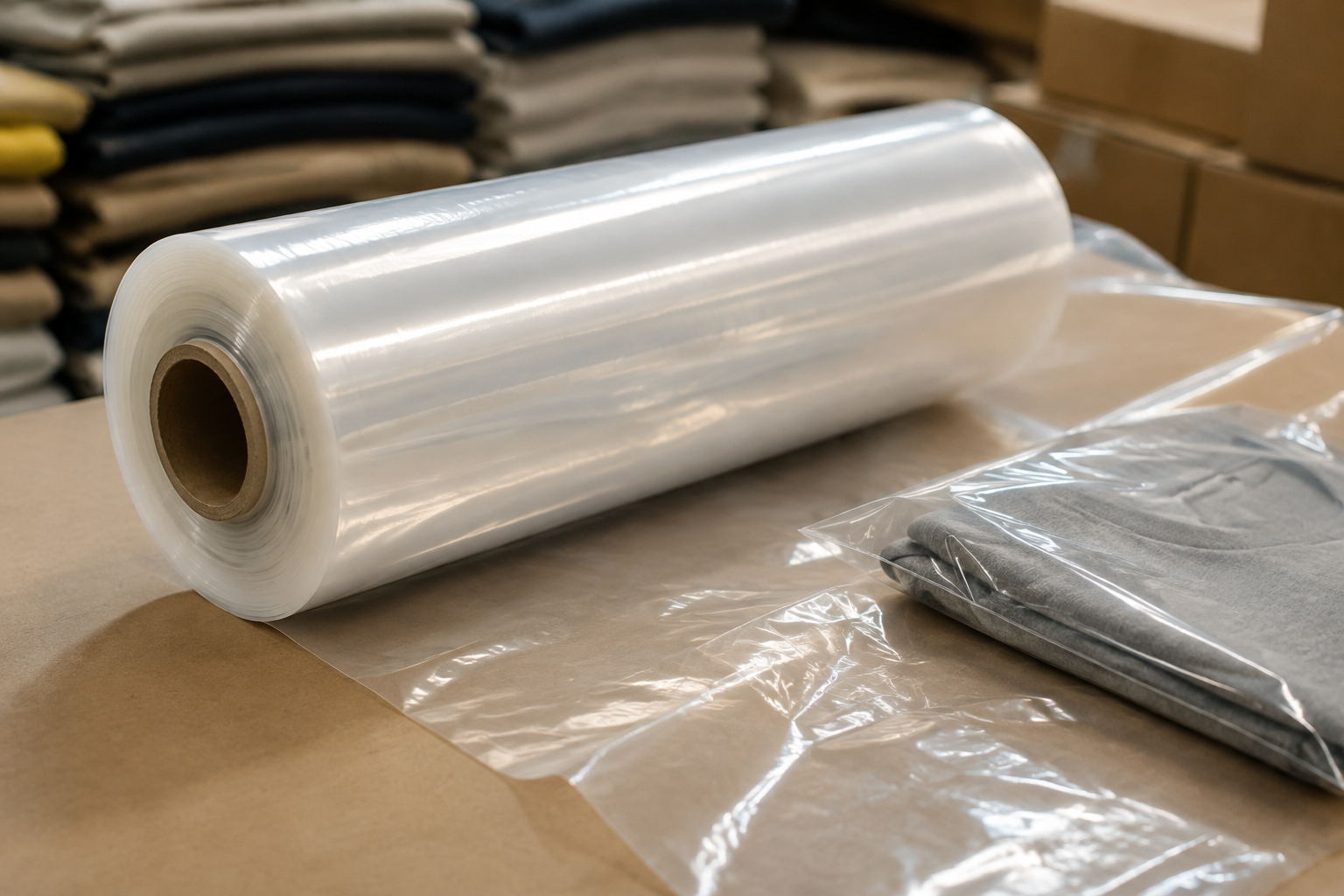
close‑up of a clear polyethylene t‑shirt plastic roll partially unrolled on a packaging table, showing the smooth texture and transparent f…
What Is a T Shirt Plastic Roll?
A t‑shirt plastic roll is a roll of thin, stretchable polyethylene film specifically engineered for apparel packaging. Unlike standard plastic bags, the roll format lets manufacturers cut custom lengths, ensuring a perfect fit for any shirt size or packaging style.
Key Characteristics
- Material: Low‑density polyethylene (LDPE) or linear low‑density polyethylene (LLDPE) for high clarity and tear resistance.
- Thickness: Typically 12‑20 µm, balancing protection and cost.
- Width: 500 mm to 1,000 mm, allowing single‑shirt wraps or multi‑shirt bundles.
- Stretchability: 150‑200 % elongation, enabling a snug fit without crushing the fabric.
Why Choose a Plastic Roll Over Traditional Plastic Bags?
Choosing a roll format provides several operational and financial advantages:
- Reduced Material Waste: Cut only the length you need, eliminating excess bag volume.
- Faster Production: Seamless integration with automatic cutters and wrapping machines.
- Improved Visibility: Clear film showcases branding, tags, and garment details.
- Enhanced Protection: Uniform tension prevents creasing and protects against moisture.
Decision Checklist: Selecting the Right T Shirt Plastic Roll
Use this checklist to match product specifications with your packaging needs:
- ✅ Film Thickness: Choose 12 µm for lightweight shirts, 20 µm for heavier fabrics.
- ✅ Roll Width: 500 mm for single‑shirt wraps, 800 mm+ for bulk bundles.
- ✅ Stretch Ratio: 150 % for delicate fabrics, 200 % for robust cotton blends.
- ✅ Recyclability: Verify that the film complies with local recycling codes (often #4 LDPE).
- ✅ Compatibility: Ensure the roll works with your existing hand stretch film or seal‑and‑cut equipment.
Comparison with Other VNPLAST Packaging Solutions
VNPLAST offers a full suite of packaging options. Below is a quick comparison to help you decide when a t‑shirt plastic roll is the best fit.
| Feature | T Shirt Plastic Roll | Hand Stretch Film | Die Cut Bag Plastic |
|---|---|---|---|
| Customization | Cut to exact length | Pre‑cut strips | Fixed dimensions |
| Visibility | Clear, full‑view | Clear, but may have seams | Opaque or semi‑transparent |
| Material Use | Minimal waste | Higher waste per roll | Fixed waste per bag |
| Automation | Seamless with cutters | Requires hand tension | Requires bag feeder |
| Cost per Unit | Low for high volume | Moderate | Higher for small runs |
Real‑World Use Cases
Retailers and manufacturers use t‑shirt plastic rolls in various scenarios:
- Bulk Shipping: Roll film is cut into 30‑cm lengths, wrapped around 10‑shirt bundles, and sealed with heat‑seal equipment.
- In‑Store Presentation: Single‑shirt wraps allow shoppers to see the design without removing the garment.
- E‑Commerce Fulfillment: Automated machines feed the roll, wrap each shirt, and apply a barcode label for inventory tracking.
- Branding Opportunities: Custom printed logos can be printed directly onto the film before rolling, turning the packaging into a marketing asset.
Installation & Operation Tips
Implementing t‑shirt plastic roll in your packaging line is straightforward. Follow these best practices to maximize efficiency:
- Set the Cutter Length: Adjust the cutter to the exact length needed for your garment size.
- Maintain Tension: Ensure the roll is fed with consistent tension to avoid film slack or tearing.
- Heat‑Seal Settings: Use a temperature of 150‑180 °C for LDPE; test on a sample before full production.
- Quality Check: Inspect the first 100 wraps for proper fit and seal integrity.
- Recycle Management: Collect off‑cuts for recycling; label bins with “LDPE Recycle Plastic Bag” for proper sorting.
Pros and Cons of T Shirt Plastic Roll
- Pros:
- Customizable length reduces waste.
- High clarity improves product visibility.
- Easy integration with existing equipment.
- Recyclable material aligns with sustainability goals.
- Cons:
- Initial equipment setup may require calibration.
- Thin film can be punctured if handling sharp objects.
- Requires proper storage to avoid moisture absorption.
Buying Guide: How to Order from VNPLAST
When you’re ready to purchase, consider these steps to ensure you get the right product:
- Identify the film thickness and width needed for your apparel range.
- Request a sample roll to test fit and stretch on a few garments.
- Confirm the roll’s recyclability aligns with your sustainability policy.
- Discuss custom printing options if branding on the film is desired.
- Ask for a price break schedule based on volume (e.g., 5,000 m, 10,000 m, 20,000 m).
Conclusion
Choosing a t shirt plastic roll from VNPLAST gives you a versatile, cost‑effective, and environmentally friendly packaging solution. Whether you need single‑shirt wraps for retail display or bulk bundles for e‑commerce shipping, the roll format offers superior customization, reduced waste, and seamless integration with automated systems. By following the checklist, comparing alternatives, and implementing best‑practice operation tips, you can enhance product protection, improve brand presentation, and streamline your packaging workflow.
FAQ
- What thickness of t‑shirt plastic roll is best for lightweight cotton tees? A 12 µm LDPE film provides sufficient protection while keeping costs low for lightweight garments.
- Can the roll be printed with my logo? Yes, VNPLAST offers custom printing on the film before it is rolled, turning the packaging into a branding tool.
- Is the material recyclable? The roll is made from LDPE, which is recyclable in most municipal programs; label the waste as “LDPE Recycle Plastic Bag.”
- How does a t‑shirt plastic roll compare to a die‑cut bag? The roll reduces material waste, offers better visibility, and integrates with automatic cutters, whereas die‑cut bags have fixed dimensions and higher per‑unit cost.
- What equipment is needed to use a t‑shirt plastic roll? A basic hand cutter and heat‑seal gun work for low volume; high‑volume operations benefit from an automatic cutter and wrapping machine.