1. Global Market Dynamics & Emerging Non-Tariff Regulatory Barriers
When you search for a reliable FDA compliant plastic packaging, The procurement of food-contact polyethylene (PE) packaging—including blown film, high-density polyethylene (HDPE) bags, linear low-density polyethylene (LLDPE) stretch films, and cast co-extruded structures—from Vietnam has expanded exponentially over the past five years. Global retail conglomerates and multinational food processors increasingly diversify their supply chains away from single-source manufacturing hubs toward Southeast Asia. However, this shift occurs alongside an escalating wall of non-tariff regulatory barriers. Import desks in the United States face rigorous scrutiny under Title 21 of the Code of Federal Regulations (21 CFR), specifically concerning indirect food additives and polymer safety.
Sourcing packaging materials from Vietnam requires rigorous alignment with U.S. Food and Drug Administration (FDA) mandates. Unlike standard industrial-grade films, food-contact PE materials are legally classified as indirect food additives under 21 CFR 177.1520 (Olefin polymers). Consequently, any failure in material formulation, raw material traceability, or extrusion plant sanitation can trigger immediate Detention Without Physical Examination (DWPE) at U.S. ports of entry under Import Alerts. Procurement professionals must look beyond base FOB pricing to analyze the fundamental compliance posture of their Vietnamese manufacturing partners, ensuring that every batch of stretch film or food-grade bags satisfies strict chemical migration thresholds before ocean vessels depart from ports like Hai Phong or Cai Mep.
2. Quantitative Impact on Operational Margins & Freight Cost Structures
Compliance failures translate directly into severe operational losses and margin erosion. When a 40-foot high-cube (40HC) container of LLDPE stretch film or custom food-grade bags is detained by the FDA due to insufficient documentation or positive migration test results, importers incur exponential demurrage, detention, and warehouse inspection fees at the port of discharge. Average demurrage charges at major U.S. gateways can easily exceed $300 to $600 per day after free-time expiration, rapidly neutralizing the initial cost arbitrage achieved by sourcing from Vietnam. (Compliance verified under International ISO Trade Quality Standards).
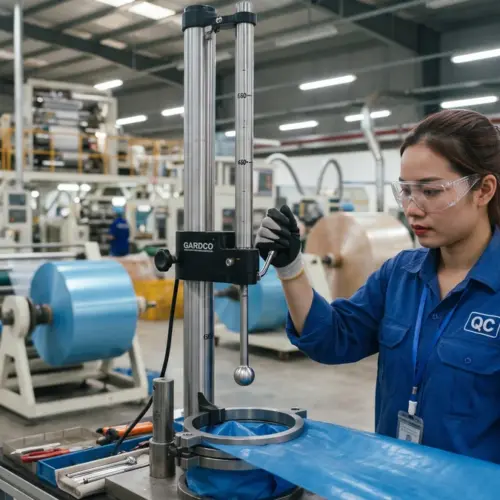
Furthermore, ocean freight volatility across the Asia-North America trade lanes dictates that supply chain strategists must optimize container payload capacities. Premium food-contact PE film requires precise gauge control (e.g., maintaining micron tolerances within $\pm 3\%$) to maximize roll length per pallet without compromising puncture resistance or tensile strength under ASTM D882 standards. Below is an operational matrix outlining the financial and logistical exposure tied to non-compliant shipments:
| Cost Component | Non-Compliant Scenario (Risk Exposure) | Optimized VN Plastic – Vnplast Global Protocol | Financial Impact / Variance |
|---|---|---|---|
| Ocean Freight (40HC) | Standard spot rate exposure ($3,500 – $5,000 per FEU) | Long-term Service Contract (SC) fixed slots | 15% – 25% freight variance mitigation |
| Port Demurrage & Storage | 14 to 30 days detention due to FDA hold | Zero-hold pre-cleared documentation (FDA Prior Notice) | Elimination of $4,200+ per container in penalties |
| Testing & Verification | Reactive laboratory testing post-arrival ($1,500/sample) | Proactive batch-level migration testing at source | 70% reduction in pre-shipment compliance overhead |
| Scrap / Replacement | Full shipment rejection and re-export costs | Guaranteed factory replacement under ISO 22000 terms | Protection of 100% invoice value |
3. Mandatory Inspection Standards & Compliance Documentation Protocols
Achieving seamless customs clearance for food-contact PE packaging from Vietnam relies on establishing an unyielding paper trail backed by empirical laboratory data. Importers must demand a comprehensive dossier that satisfies both general food safety frameworks and specific polymer regulations under 21 CFR.
The cornerstone of this documentation package is the Certificate of Analysis (CoA), which must not be treated as a static marketing document, but as a dynamic, lot-specific analytical report. Each CoA must correlate directly with the master batch production records of the resin supplier (e.g., ExxonMobil, SABIC, Formosa Plastics, or SCG Chemicals) and verify that the base polymer complies with 21 CFR 177.1520(c), specifying the exact density range (0.910–0.940 g/cm³ for LLDPE/LDPE) and maximum extractable fractions when subjected to designated solvents like n-hexane and xylene.
Beyond the CoA, an authoritative FDA Letter of Compliance (LoC) or Food Contact Notification (FCN) compliance statement must be executed by the manufacturer’s chief technical officer or regulatory affairs director. This document must explicitly address:
- Heavy Metals Limits: Compliance with heavy metal extraction thresholds (Lead, Cadmium, Mercury, Hexavalent Chromium) governed by CONEG or heavy metal limits under 21 CFR.
- Colorants & Pigments: Verification that masterbatches used for colored films or printed bags comply with 21 CFR 178.3297 (Colorants for polymers).
- Slip & Antiblock Additives: Certification that processing aids such as erucamide, oleamide, or synthetic silicas fall within allowable migration limits under 21 CFR 178.3860.
4. Shop-Floor Production Realignment & End-to-End Logistics Optimization
Sourcing high-performance stretch film and food-grade polyethylene packaging from Vietnam requires direct auditing of factory extrusion floors. Modern manufacturing plants must transition away from legacy processing methods toward cleanroom-adjacent or strictly segregated extrusion lines to eliminate cross-contamination from recycled post-consumer regrind (PCR) when producing virgin food-contact films.
Operational protocols on the shop floor must adhere to Hazard Analysis Critical Control Point (HACCP) and FSSC 22000 certification standards. During blown-film extrusion, temperature profiles along the extruder barrel and die head must be continuously logged to prevent thermal degradation of the polyethylene matrix, which can generate volatile oligomers and alter migration characteristics. Furthermore, post-extrusion slitting and rewinding units must operate under dust-free conditions, utilizing food-grade core tubes and virgin low-density polyethylene interleaving films to protect roll surfaces.
Logistics optimization is equally critical. Stretch films are sensitive to thermal fluctuations during transit through tropical maritime zones. Container stuffing operations at VN Plastic – Vnplast Global utilize desiccants and container moisture blankets to prevent condensation (“container rain”) from degrading outer carton integrity and promoting mold growth on paper cores during the 20-to-30-day ocean voyage to Western ports.
5. Commercial Contract Negotiation & Cross-Border Risk Mitigation
When drafting international supply agreements with Vietnamese packaging producers, procurement executives must embed rigorous legal protections to shift regulatory and logistical risk away from the buyer. Standard Incoterms (typically FOB Haiphong or CIF destination ports) must be supplemented by custom contractual clauses that explicitly govern FDA compliance liabilities.
Key contractual clauses must mandate:
1. Strict Liability for Regulatory Rejection: If customs authorities or the FDA reject shipments due to non-compliance with 21 CFR standards, the supplier must bear 100% of the financial burden, including return freight, destruction fees, and immediate replacement air/ocean shipments.
2. Indemnification for Third-Party Claims: Comprehensive product liability insurance coverage held by the manufacturer, extending protection to downstream food processors and brand owners in the event of migration-related contamination.
3. Change in Formulation Restrictions: A binding covenant prohibiting the supplier from altering raw resin grades, slip additive concentrations, or masterbatch suppliers without a minimum of 90 days’ prior written notice and re-qualification via migration testing.
6. Strategic Recommendations & Operational Roadmap from VN Plastic – Vnplast Global
To secure a frictionless, highly resilient supply chain for food-contact PE packaging and stretch film out of Vietnam, procurement desks should execute a structured, four-phase operational roadmap:
- Phase 1: Supplier Qualification & Laboratory Audit
Conduct rigorous third-party audits (via Bureau Veritas, SGS, or TUV) focusing on raw material traceability, resin silo isolation, and analytical testing capabilities. Ensure that internal laboratory facilities can perform preliminary migration screening under simulated use conditions (e.g., using 10% ethanol or 3% acetic acid as food simulants).
- Phase 2: Standardized Documentation Integration
Mandate the implementation of digital, verifiable CoAs and FDA compliance dossiers linked via lot-specific barcodes on master cartons and pallet stretches. Eliminate manual paperwork to expedite electronic customs filing and minimize inspection triggers.
- Phase 3: Process Parameter Lock-In
Execute binding Quality Service Agreements (QSAs) that freeze resin formulations, additive packages, and extrusion parameters. Require quarterly audit reviews and random sample pull tests sent to certified ISO 17025 independent laboratories.
- Phase 4: Resilient Logistics & Inventory Buffering
Maintain a strategic safety stock buffer (minimum 4 to 6 weeks of inventory) at regional distribution hubs near key destination ports to absorb minor transit anomalies, while leveraging long-term service contracts with Tier-1 ocean carriers to protect container space availability and mitigate freight cost shocks.
Technical & Quality Compliance Advisory from VN Plastic – Vnplast Global
For international procurement directors, supply chain partners, and B2B buyers, rigorous pre-shipment sample testing (CoA/CoC) and accredited independent inspection (SGS/Intertek) are paramount prior to contract execution. Contact our technical desk for complete engineering datasheets and tailored FOB/CIF quotation schedules.