The ubiquity of plastic in modern society has brought unparalleled convenience, yet it has also presented one of the most pressing environmental challenges of our time: escalating plastic waste. The imperative for plastic waste reduction is no longer a niche concern but a global mandate, demanding concerted efforts from individuals, industries, and governments alike. Our reliance on single-use plastics, coupled with inadequate waste management infrastructure in many regions, has led to staggering levels of pollution, impacting ecosystems, wildlife, and human health. Addressing this crisis requires a multi-faceted approach, encompassing innovative solutions, policy changes, and a fundamental shift in consumer behavior. This article delves into the critical strategies and collective actions necessary to achieve significant plastic waste reduction and foster a more sustainable future.
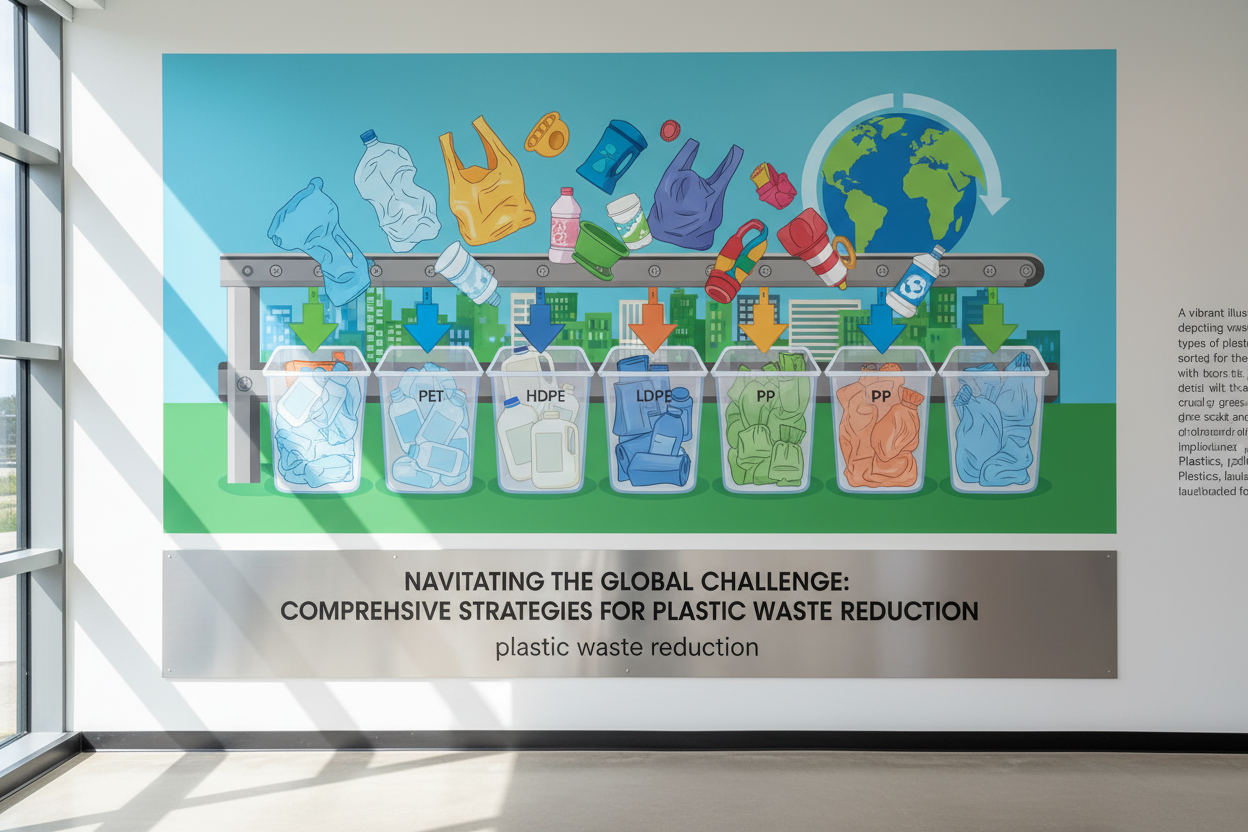
A vibrant illustration depicting various types of plastic waste being sorted for recycling, with a focus on clear separation and collection…
Understanding the Scope of Plastic Pollution
Before exploring solutions, it is crucial to grasp the sheer scale and profound implications of plastic pollution. Plastics, lauded for their durability and versatility, are precisely these qualities that make them problematic once discarded. Their slow degradation rate means they persist in the environment for hundreds, if not thousands, of years.
The Ubiquity of Plastics in Modern Life
From packaging and construction to electronics and textiles, plastics are deeply embedded in nearly every aspect of daily life. This pervasive presence, while offering numerous benefits, also generates an immense volume of waste. A significant portion of this waste comprises single-use items – packaging, bottles, bags, and cutlery – designed for immediate disposal, directly contributing to the escalating need for effective plastic waste reduction strategies.
Environmental and Health Impacts of Plastic Waste
The consequences of unchecked plastic waste are far-reaching:
- Marine Life Devastation: Millions of tons of plastic enter our oceans annually, forming vast garbage patches and endangering marine animals. Wildlife often mistakes plastic debris for food, leading to internal injuries, starvation, and entanglement.
- Microplastic Contamination: As larger plastic items break down, they fragment into microplastics – tiny particles less than 5mm in size. These microplastics permeate every corner of the planet, from the deepest oceans to the highest mountains, and have been found in our food, water, and even the air we breathe. The long-term health effects on humans and ecosystems are still being researched but raise significant concerns.
- Landfill Burden and Greenhouse Gas Emissions: Landfills worldwide are overflowing with plastic waste, occupying vast amounts of land. The production and incineration of plastics also contribute substantially to greenhouse gas emissions, exacerbating climate change. Effective plastic waste reduction directly alleviates these pressures.
Core Principles of Plastic Waste Reduction: The 3 R’s and Beyond
The foundational framework for tackling plastic waste revolves around the principles of Reduce, Reuse, and Recycle. However, a truly comprehensive approach extends beyond these to encompass systemic changes.
Reduce: Minimizing Consumption at the Source
The most effective strategy for plastic waste reduction is to prevent its creation in the first place. This involves a conscious effort to lessen our reliance on plastic products, particularly single-use items.
- Conscious Consumer Choices:
- Opt for products with minimal or no plastic packaging.
- Choose items sold in bulk to reduce individual packaging waste.
- Prioritize durable, long-lasting goods over disposable alternatives.
- Support brands committed to sustainable packaging and genuine plastic waste reduction initiatives.
- Avoiding Single-Use Plastics: Simple swaps like carrying a reusable water bottle, coffee cup, shopping bag, and cutlery can significantly cut down on daily plastic consumption.
Reuse: Extending the Lifespan of Plastic Products
Before discarding plastic items, consider if they can be reused or repurposed. This step directly reduces demand for new plastic production and minimizes waste generation.
- Refill and Repurpose: Many stores now offer refill stations for household cleaners, personal care products, and even food items. Old plastic containers can be repurposed for storage, crafts, or other household needs.
- Innovations in Reusable Packaging: Companies are increasingly investing in durable, returnable, and reusable packaging systems, from food delivery containers to product shipping boxes, all designed to facilitate greater plastic waste reduction.
Recycle: Proper Processing for a Circular Economy
When reduction and reuse are not feasible, recycling becomes the next crucial step. Recycling transforms discarded plastics into new products, conserving resources and diverting waste from landfills and oceans. However, not all plastics are easily recyclable, and proper sorting is paramount.
- Challenges in Plastic Recycling: The myriad types of plastics (identified by resin codes 1-7), contamination from food residue, and the economic viability of processing certain plastics pose significant challenges. Only a fraction of plastic produced globally is effectively recycled.
- Advancements in Recycling Technologies: New technologies, including chemical recycling (which breaks plastics down to their molecular components) and advanced mechanical sorting, are emerging to address these challenges and expand the range of recyclable plastics.
- Importance of Community Recycling Programs: Robust municipal recycling programs, coupled with clear guidelines for residents, are essential for collecting and processing recyclable materials efficiently. Understanding local recycling rules is a key individual action for effective plastic waste reduction.
Industry and Corporate Initiatives for Plastic Waste Reduction
Beyond individual actions, systemic change driven by industry and policy is vital for large-scale plastic waste reduction.
Sustainable Packaging Innovations
Businesses are increasingly investing in alternative materials and innovative packaging designs to reduce their plastic footprint.
- Biodegradable and Compostable Materials: While promising, these alternatives require specific conditions to break down and are not a universal solution. Careful consideration of their end-of-life infrastructure (e.g., industrial composting facilities) is crucial to avoid simply shifting the problem.
- Paper-Based and Plant-Based Alternatives: Innovations in paper-based packaging, often with thin barriers, and materials derived from agricultural waste or algae offer viable substitutes for traditional plastics in many applications.
- Lightweighting and Design for Recyclability: Companies are redesigning products and packaging to use less material overall and to be more easily separated and recycled at the end of their life.
Extended Producer Responsibility (EPR) Schemes
EPR policies hold manufacturers financially and/or physically responsible for the entire lifecycle of their products and packaging, including collection, sorting, and recycling. These schemes incentivize companies to design products with recyclability and plastic waste reduction in mind from the outset.
Supply Chain Optimization and Circular Design
A true circular economy for plastics means moving away from a linear “take-make-dispose” model. This involves:
- Reducing Virgin Plastic Use: Incorporating recycled content into new products.
- Designing for Disassembly and Recycling: Creating products that can be easily taken apart, allowing components to be reused or recycled.
- Closed-Loop Systems: Establishing systems where plastic materials are continuously collected, processed, and reintroduced into the manufacturing cycle.
Government Policies and Global Cooperation
Governmental action plays a pivotal role in setting the framework for plastic waste reduction and fostering a sustainable transition.
Bans and Regulations on Single-Use Plastics
Many countries and municipalities have implemented bans or restrictions on problematic single-use plastic items such as bags, straws, stirrers, and cutlery. These policies have proven effective in significantly reducing the consumption of these items and encouraging alternatives.
International Agreements and Targets
The global nature of plastic pollution necessitates international cooperation. Discussions are underway for a legally binding global treaty on plastic pollution, aiming to establish common goals, standards, and mechanisms for plastic waste reduction across borders. Such agreements are critical for harmonizing efforts and preventing leakage of waste from one region to another.
Individual Actions for Significant Impact
While systemic changes are essential, individual choices collectively drive demand and influence corporate behavior, making personal commitment to plastic waste reduction indispensable.
Conscious Consumerism
Every purchase is a vote for the kind of world we want. By being mindful of what we buy, we can exert considerable influence:
- Choosing Brands Committed to Sustainability: Research and support companies that prioritize sustainable practices, use recycled content, and have clear goals for plastic waste reduction.
- Supporting Local and Zero-Waste Businesses: Local markets often offer unpackaged produce, and zero-waste stores provide opportunities to refill containers for a wide range of products.
Home-Based Strategies
Integrating plastic reduction into daily routines at home can make a substantial difference:
- Kitchen: Use reusable food storage containers instead of plastic wrap or bags. Opt for unpackaged fruits and vegetables. Consider making your own cleaning products to avoid plastic bottles.
- Bathroom: Switch to solid shampoo bars, soap bars, and bamboo toothbrushes. Choose products in glass or aluminum packaging.
- Shopping: Always carry reusable shopping bags. Plan meals to reduce food waste, which often comes in plastic packaging.
- Educational Outreach: Share knowledge and encourage friends, family, and community members to adopt practices that contribute to plastic waste reduction.
Challenges and Future Outlook in Plastic Waste Reduction
Despite significant progress and growing awareness, the path to a plastic-free future is fraught with challenges, yet illuminated by promising innovations.
Overcoming Economic and Infrastructural Hurdles
The low cost of virgin plastic, combined with the complex and often expensive infrastructure required for collection, sorting, and processing recycled materials, presents significant economic barriers. Investing in robust waste management systems, especially in developing nations, is crucial. Furthermore, ensuring that recycled plastics can compete economically with virgin plastics is vital for establishing a truly circular economy and driving plastic waste reduction.
The Role of Innovation and Research
Continuous innovation is key to overcoming these hurdles. This includes:
- New Materials: Developing truly sustainable, economically viable, and scalable alternatives to conventional plastics that are either fully biodegradable or infinitely recyclable without loss of quality.
- Chemical Recycling: Advancing technologies that can break down mixed or contaminated plastics into their original monomers, allowing them to be rebuilt into high-quality new plastics.
- Advanced Sorting Technologies: Implementing AI-powered sorting systems that can identify and separate different plastic types with greater accuracy and efficiency, improving the quality and quantity of recycled material.
Shifting Mindsets and Cultural Change
Ultimately, achieving widespread plastic waste reduction requires a fundamental shift in societal mindset. Moving away from a culture of convenience and disposability towards one that values resource conservation, durability, and circularity is paramount. This involves ongoing education, public awareness campaigns, and fostering a sense of shared responsibility for environmental stewardship.
Shifting Mindsets and Cultural Change
Conclusion
The challenge of plastic waste is immense, but so too is the potential for transformative change. Effective plastic waste reduction demands a holistic approach, integrating individual responsibility with corporate innovation, and robust governmental policies with global cooperation. By embracing the principles of reduce, reuse, and recycle, investing in sustainable alternatives, optimizing supply chains, and fostering a circular economy, we can collectively mitigate the environmental impact of plastics. The journey towards a future free from plastic pollution is long, but with sustained effort and unwavering commitment, significant progress is not only possible but imperative for the health of our planet and generations to come.