Pallet stretch film is one of the most important packaging materials used in warehousing, logistics, manufacturing, and distribution. From securing products for shipping to protecting goods from dust, moisture, and tampering, pallet stretch film plays a critical role in keeping palletized loads stable from the warehouse floor to the final destination.
Whether you run a small shipping operation or manage a large-scale distribution center, choosing the right pallet stretch film can reduce product damage, improve wrapping efficiency, and lower overall packaging costs. With different film gauges, stretch levels, application methods, and specialty options available, understanding how this material works can help businesses make smarter purchasing decisions.
In this guide, we will cover what pallet stretch film is, how it works, the main types available, how to choose the right film for your operation, and best practices for wrapping pallets effectively. We will also answer common questions and highlight key factors that influence performance, load stability, and cost savings.
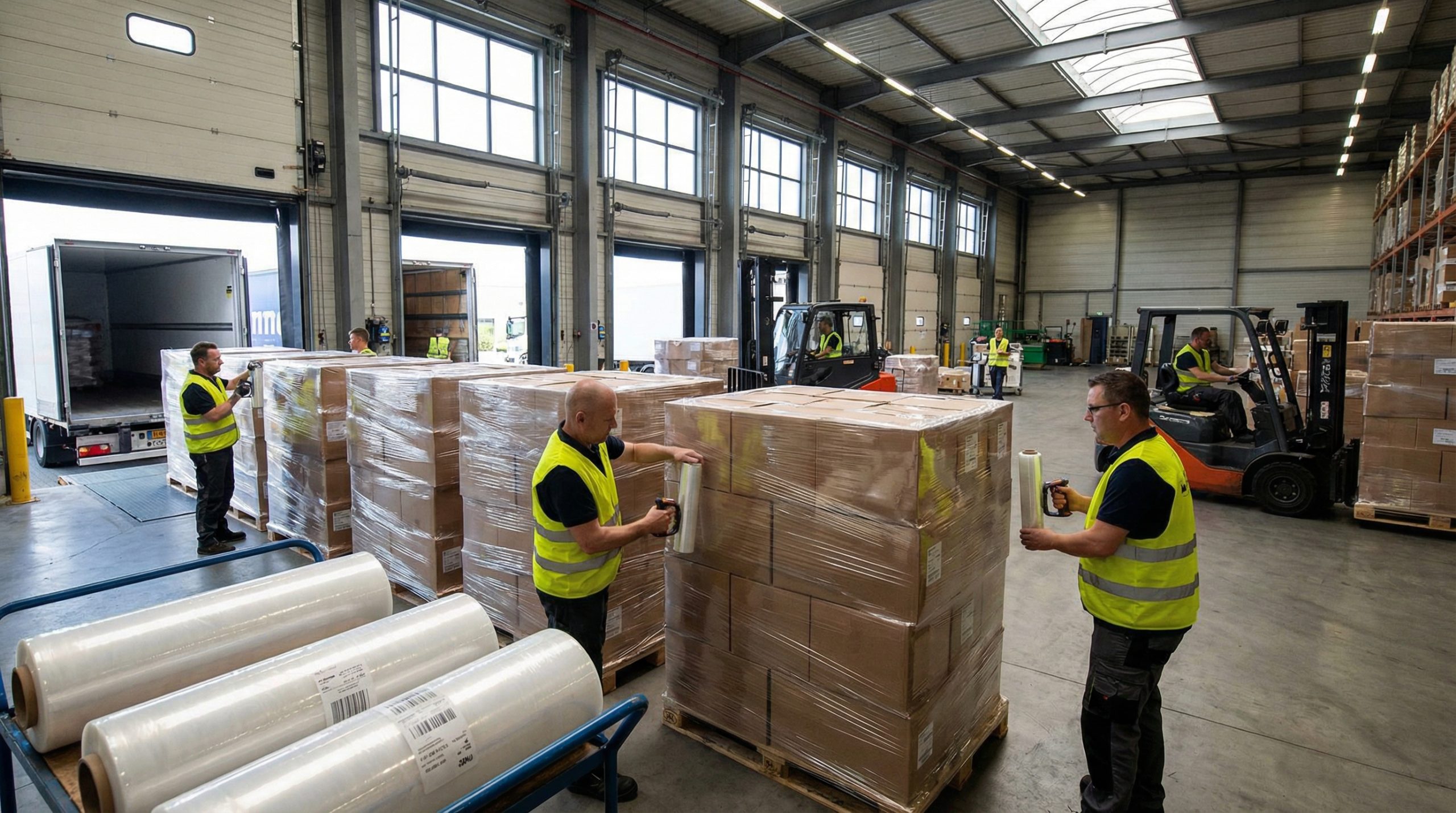
A high-resolution warehouse scene showing workers wrapping stacked pallets with clear pallet stretch film near loading docks, with visible …
What Is Pallet Stretch Film?
Pallet stretch film is a highly stretchable plastic film, typically made from linear low-density polyethylene (LLDPE), used to wrap products on a pallet. The film is stretched around the load to create tension, which holds cartons, containers, or other packaged goods tightly together.
This tight containment helps with:
– Load stability
– Damage prevention
– Dust and moisture resistance
– Tamper indication
– Safer transportation and storage
The primary purpose of pallet stretch film is to keep products from shifting during movement, lifting, storage, or transit. When applied correctly, it reduces the risk of collapsed loads, broken packaging, and costly returns.
How Pallet Stretch Film Works
The effectiveness of pallet stretch film comes from its elastic memory and cling properties. As the film is stretched during application, it tries to return to its original shape. That force creates containment pressure around the pallet load.
Key Performance Features
A quality pallet stretch film usually offers:
– Stretch capability to maximize yield
– Cling so layers stick to each other
– Puncture resistance for sharp edges and rough handling
– Tear resistance for dependable wrapping
– Load retention force to keep products stable
Different films are engineered for different environments. For example, some loads need high puncture resistance, while others benefit more from superior clarity or UV protection.
Main Types of Pallet Stretch Film
Choosing the right pallet stretch film starts with understanding the main categories.
Hand Stretch Film
Hand-grade pallet stretch film is applied manually, making it ideal for low-volume wrapping operations or facilities with limited automation.
Best for:
– Small warehouses
– Retail backrooms
– Light shipping departments
– Low daily pallet counts
Advantages:
– Lower equipment investment
– Easy to use
– Available in multiple widths and gauges
Considerations:
– More labor-intensive
– Less consistent tension than machine wrapping
– Can contribute to worker fatigue over time
Machine Stretch Film
Machine-grade pallet stretch film is designed for use with semi-automatic or automatic stretch wrapping machines. This type is suitable for medium to high-volume operations.
Best for:
– Distribution centers
– Manufacturing plants
– Large warehouses
– High-throughput packaging lines
Advantages:
– Consistent wrap performance
– Higher stretch efficiency
– Reduced labor costs
– Better load containment
Considerations:
– Requires compatible equipment
– Higher upfront investment
Pre-Stretched Film
Pre-stretched pallet stretch film has already been stretched during manufacturing. It requires less effort to apply and offers excellent control for operators.
Benefits include:
– Reduced operator fatigue
– Lower material usage
– More consistent application
– Quiet unwinding in some formats
Blown Stretch Film
Blown pallet stretch film is produced through a blown extrusion process. It is known for toughness and puncture resistance.
Common features:
– High load-holding force
– Strong cling
– Better resistance to tears
– Ideal for irregular or sharp loads
The tradeoff is that blown film may be noisier during application and can have slightly less clarity than cast film.
Cast Stretch Film
Cast pallet stretch film is made through a cast extrusion process and is valued for its transparency and smooth unwind.
Advantages:
– Excellent clarity for barcode scanning
– Quiet application
– Consistent thickness
– Cost-effective for many standard loads
For businesses that need visual inspection and barcode readability, cast pallet stretch film is often a strong choice.
Specialty Pallet Stretch Film Options
Not all loads are the same. Many industries use specialty pallet stretch film to solve unique packaging challenges.
Colored Stretch Film
Colored pallet stretch film helps with:
– Product identification
– Inventory coding
– Shipment segregation
– Concealing load contents
UV Stretch Film
UV-resistant pallet stretch film is designed for outdoor storage or prolonged sun exposure. It helps protect loads that remain in yards, construction sites, or open staging areas.
Ventilated Stretch Film
Ventilated pallet stretch film includes air channels or perforations that allow airflow. It is useful for products that need to breathe, such as produce or temperature-sensitive goods.
Vented or Food-Safe Options
Certain industries require pallet stretch film with compliance for food contact or specialized handling standards. Businesses in food processing and cold-chain logistics should verify regulatory suitability before buying.
How to Choose the Right Pallet Stretch Film
Selecting the correct pallet stretch film depends on load type, shipping conditions, budget, and wrapping method.
1. Evaluate Load Characteristics
Ask the following:
– Is the load heavy or lightweight?
– Are there sharp corners or uneven edges?
– Is the pallet stacked high?
– Are cartons uniform or irregular?
– Will the load travel long distances?
Loads with unstable shapes may require a tougher pallet stretch film with better puncture resistance and higher containment force.
2. Consider Wrap Volume
If your business wraps only a few pallets a day, hand pallet stretch film may be enough. If you wrap dozens or hundreds of loads daily, machine film can improve consistency and reduce labor.
3. Match Film Gauge to Application
Gauge refers to the thickness of the film. Thicker is not always better. Modern high-performance pallet stretch film can often replace heavier traditional film while maintaining or improving load security.
4. Look at Stretch Level
Higher-performance pallet stretch film can stretch farther, improving yield and reducing the cost per pallet wrapped. However, to achieve those savings, the film must be applied correctly and matched to the right equipment.
5. Review Environmental Conditions
Temperature, humidity, sunlight, and storage time matter. A pallet stretch film used in freezer storage may need different characteristics than one used in a climate-controlled warehouse.
Benefits of Using High-Quality Pallet Stretch Film
Using the right pallet stretch film offers more than just wrapping convenience. It directly impacts shipping safety and business efficiency.
Improved Load Stability
A stable load is less likely to tip, shift, or collapse. High-quality pallet stretch film provides consistent containment pressure, helping loads stay intact during transport.
Reduced Product Damage
Damaged shipments can lead to returns, replacement costs, and customer dissatisfaction. Reliable pallet stretch film helps minimize these risks.
Lower Packaging Costs
When the right film is used properly, businesses can often reduce material waste. Advanced pallet stretch film solutions may allow downgauging while maintaining strong performance.
Better Warehouse Efficiency
Efficient application means faster pallet prep and less downtime. Machine-applied pallet stretch film is especially useful in high-volume operations.
Cleaner Presentation
Clear, neatly wrapped loads look professional and make inventory identification easier. This is particularly helpful in retail, food, and distribution settings.
Best Practices for Wrapping Pallets
Even the best pallet stretch film will underperform if it is applied incorrectly. Following proven wrapping practices can dramatically improve results.
Start with a Stable Base
Before applying pallet stretch film, make sure cartons are stacked evenly and the pallet itself is in good condition. A weak foundation increases the risk of transit damage.
Anchor the Film Properly
Wrap the base of the pallet several times to secure the load to the pallet deck. This is one of the most important steps in using pallet stretch film effectively.
Use Adequate Overlap
Each layer of pallet stretch film should overlap the previous one enough to create consistent tension and support. Too little overlap can weaken containment.
Apply the Right Tension
Too much tension can crush products. Too little can leave the load unstable. The best pallet stretch film results come from balanced application based on load type.
Reinforce Weak Points
Corners, top layers, and irregular sections may need extra wraps. Some loads also benefit from corner boards or top sheets in combination with pallet stretch film.
Reinforce Weak Points
Common Mistakes to Avoid
Many packaging issues come from preventable errors in film selection or use.
Using the Wrong Film Type
A hand-grade pallet stretch film used in a machine application can create failures and waste. Likewise, using a basic film for demanding loads can lead to breakage.
Choosing Film by Price Alone
The lowest roll price does not always mean the lowest total cost. A better pallet stretch film may use less material per load and provide better protection.
Ignoring Load Testing
Without testing, it is hard to know whether a pallet stretch film truly meets your shipping needs. Trialing different films can reveal better performance and savings.
Inconsistent Operator Technique
For manual wrapping, training matters. Consistent use of pallet stretch film helps improve safety, reduce waste, and ensure every load is protected properly.
Pallet Stretch Film and Sustainability
Sustainability is increasingly important in modern packaging. Many companies are now looking for pallet stretch film solutions that balance load security with reduced environmental impact.
Ways to Improve Sustainability
– Use high-performance film to reduce material consumption
– Optimize wrap patterns to avoid overwrapping
– Recycle used pallet stretch film where facilities exist
– Work with suppliers offering downgauged or recyclable solutions
The most sustainable pallet stretch film strategy often starts with efficiency. Using only the amount required to secure the load can reduce both waste and cost.
Industries That Rely on Pallet Stretch Film
Pallet stretch film is used across many sectors, including:
– Manufacturing
– Food and beverage
– Pharmaceuticals
– Retail distribution
– E-commerce fulfillment
– Agriculture
– Construction materials
Each industry may have different performance needs, but the goal remains the same: secure palletized products for handling, storage, and transport.
FAQ About Pallet Stretch Film
What is pallet stretch film used for?
Pallet stretch film is used to secure products on pallets for storage and transport. It helps stabilize loads, protect against dust and moisture, and reduce the risk of damage.
What is the difference between cast and blown pallet stretch film?
Cast pallet stretch film offers better clarity and quieter application, while blown pallet stretch film provides greater puncture resistance and stronger holding force for challenging loads.
Can pallet stretch film be recycled?
In many cases, yes. Clean, used pallet stretch film may be recyclable through commercial plastic film recycling programs, depending on local capabilities.
Is machine pallet stretch film better than hand film?
Machine pallet stretch film is generally better for high-volume operations because it provides more consistent wrapping, better stretch performance, and lower labor demands.
How do I know which pallet stretch film to buy?
Choose pallet stretch film based on load weight, shape, transport conditions, wrap volume, and whether you apply film by hand or machine. Testing different options is often the best way to identify the right fit.
Conclusion
Pallet stretch film is a simple but essential packaging solution that has a major impact on product safety, warehouse efficiency, and shipping performance. By choosing the right type of pallet stretch film, matching it to your load requirements, and applying it properly, businesses can reduce damage, improve stability, and control packaging costs more effectively.
From hand wrap for smaller operations to high-performance machine film for large-scale distribution, the right pallet stretch film can make every pallet more secure and every shipment more reliable. If your goal is stronger load containment, lower material waste, and better logistics performance, investing in the right pallet stretch film strategy is a smart move.