In the competitive landscape of modern retail and trade shows, packaging is far more than a simple vessel for carrying goods. It serves as a mobile billboard, a tactile representation of a brand’s quality, and a critical component of the customer experience. Among the myriad of packaging solutions available, die cut plastic bags have emerged as a premier choice for businesses seeking a balance between aesthetic appeal, structural integrity, and cost-efficiency. These bags, characterized by their clean, punched-out handles, offer a sleek and professional look that resonates with consumers across various industries.
The term “die cut” refers to the specific manufacturing process where a metal die is used to punch out a precise shape—most commonly an oval or kidney bean shape—from the plastic film to create a handle. Unlike “t-shirt” bags or “soft loop” handle bags, die cut plastic bags maintain a flat, uniform profile that allows for high-visibility printing and easy storage. Whether you are a boutique owner, a marketing coordinator for a large-scale event, or a manufacturer of medical supplies, understanding the nuances of die cut plastic bags is essential for optimizing your packaging strategy.
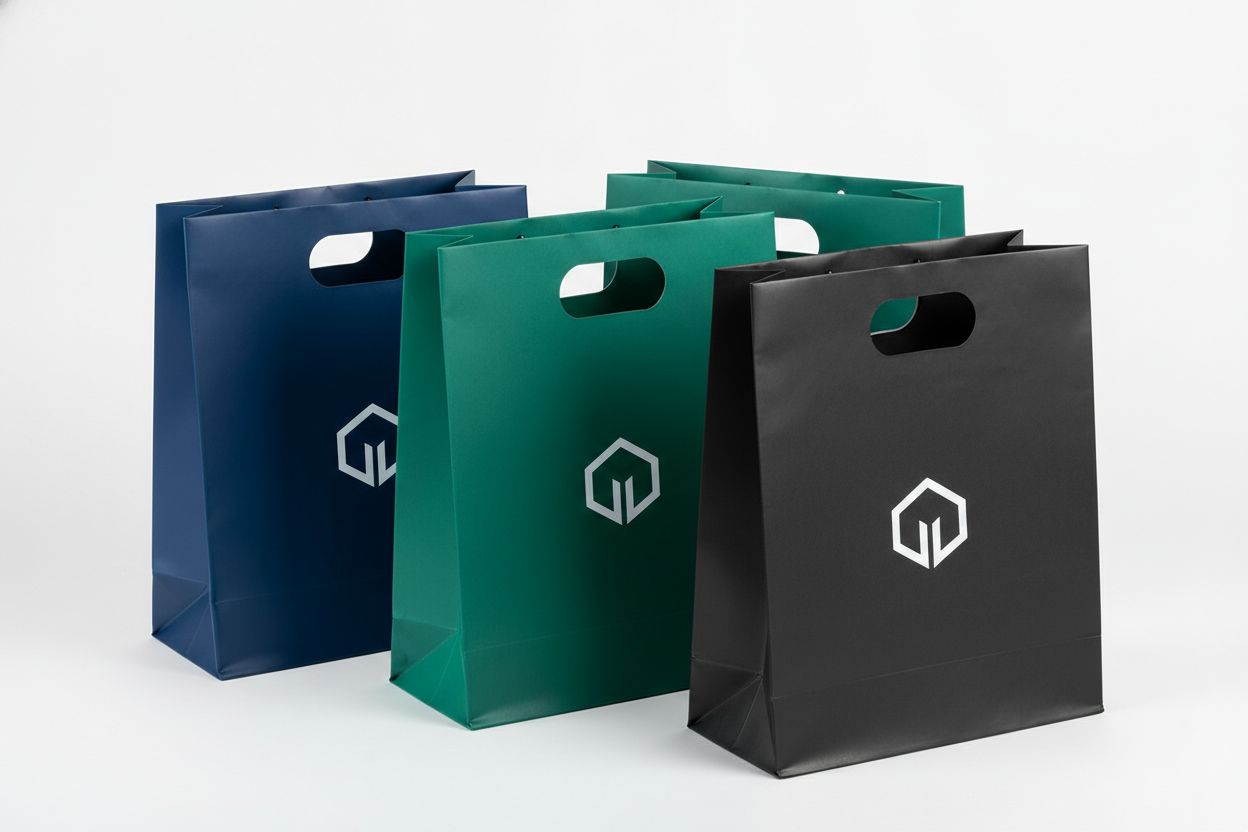
A professional studio shot of multiple high-quality die cut plastic bags in vibrant colors like navy blue, emerald green, and matte black, …
Understanding the Anatomy of Die Cut Plastic Bags
To appreciate why die cut plastic bags are so widely utilized, one must first understand their construction and the materials that dictate their performance. These bags are typically manufactured from polyethylene, a versatile polymer that can be manipulated to offer different textures and strengths.
Material Variations: LDPE vs. HDPE
The choice of material is the most significant factor in the look and feel of the bag. Generally, die cut plastic bags are available in two primary types of polyethylene:
- Low-Density Polyethylene (LDPE): This is the most popular choice for high-end retail. LDPE bags are known for their glossy finish, high clarity, and soft, flexible feel. They are highly resistant to tearing and puncturing, making them ideal for items with sharp corners, such as boxed electronics or high-end apparel.
- High-Density Polyethylene (HDPE): These bags have a more “crinkly” feel and a matte finish. While they are thinner than LDPE, they offer exceptional tensile strength, meaning they can carry significant weight without stretching. HDPE is often chosen for its cost-effectiveness in high-volume environments.
The Manufacturing Process
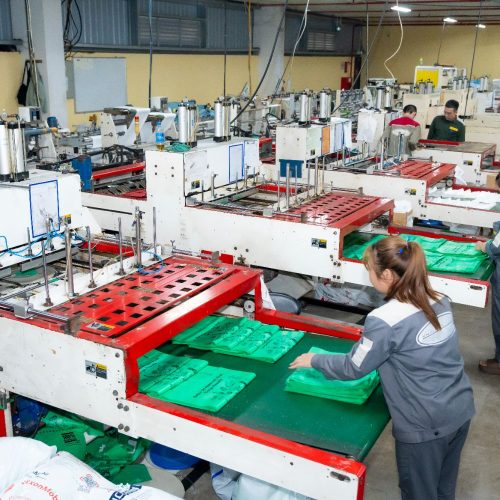
The creation of die cut plastic bags involves several sophisticated steps. It begins with plastic resin pellets being melted and blown into a continuous film (extrusion). If the bags are to be customized, the film is then passed through a printing press—usually a flexographic press—where fast-drying inks apply logos and branding. Finally, the film is heat-sealed to form the bag shape, and a precision die punches out the handle. This integrated process ensures that the handle is perfectly centered and the dimensions are consistent across millions of units.
Advanced Handle Styles and Reinforcements
While the standard die cut handle is suitable for lightweight items, many businesses require additional strength. The industry has developed several variations to ensure that die cut plastic bags can handle heavier loads without the handles stretching or tearing.
Standard Die Cut Handles
The standard handle is a simple cutout in the plastic film. These are best suited for lightweight retail items like t-shirts, greeting cards, or small accessories. They offer the cleanest aesthetic, as there are no visible seams or extra layers of plastic around the handle area.
Reinforced Patch Handles
For medium-duty applications, a patch handle die cut bag is the gold standard. During manufacturing, a secondary piece of thick plastic (the patch) is heat-welded or glued to the inside of the bag around the handle area before the die cut is made. This reinforcement significantly increases the weight capacity and prevents the handle from “elongating” when the bag is full.
Fold-Over Die Cut Handles
Another premium option is the fold-over handle. In this design, the top few inches of the bag are folded over and sealed to create a double layer of plastic. The die is then punched through both layers. This provides a clean, finished look on both the inside and outside while offering double the strength of a standard handle. It is a popular choice for high-end fashion retailers.
The Marketing Power of Custom Die Cut Plastic Bags
In the world of marketing, die cut plastic bags are often referred to as “walking billboards.” Because these bags are durable and aesthetically pleasing, consumers are more likely to reuse them for personal errands, extending the lifespan of your brand’s advertisement.
High-Definition Printing Capabilities
The flat surface of a die cut bag is an ideal canvas for complex graphics. Unlike bags with gussets or folded handles that can distort an image, die cut bags stay flat. This allows for:
- Flexographic Printing: Ideal for high-volume orders, using rubber or polymer plates to transfer ink.
- Process Color Printing: Allowing for photographic-quality images and intricate gradients.
- Edge-to-Edge Printing: Utilizing the entire surface area of the bag to create a bold, immersive brand experience.
Brand Perception and Consumer Psychology
The “hand-feel” of a die cut plastic bag influences how a customer perceives the value of the product inside. A thick, glossy LDPE bag suggests luxury and care, whereas a thin, flimsy bag can detract from a premium purchase. By selecting the right gauge (thickness) and finish, businesses can reinforce their brand positioning at the final point of contact with the customer.
Versatile Applications Across Industries
The utility of die cut plastic bags extends far beyond the traditional retail clothing store. Their versatility makes them a staple in numerous sectors:
- Trade Shows and Conventions: These bags are the standard for “swag bags.” Their flat profile makes them easy for attendees to carry, and the large print area ensures that sponsors’ logos are seen throughout the convention hall.
- Medical and Pharmaceutical: Pharmacies use small die cut bags for prescriptions, providing a professional and secure way for patients to transport medication. In hospitals, they are often used for patient personal effects.
- Education and Non-Profits: Schools and universities use customized die cut bags for orientation kits, while non-profits utilize them for fundraising events and kit packing.
- Automotive and Hardware: Using heavy-duty HDPE or reinforced LDPE, these bags can hold manuals, small parts, or promotional materials at dealerships and hardware stores.
Sustainability and the Future of Die Cut Packaging
As environmental awareness grows, the industry surrounding die cut plastic bags has evolved to offer more sustainable solutions. Modern manufacturing allows for high-quality packaging that aligns with corporate social responsibility (CSR) goals.
Recycled Content and Circularity
Many die cut plastic bags are now manufactured using Post-Consumer Recycled (PCR) or Post-Industrial Recycled (PIR) resins. By incorporating recycled content, manufacturers reduce the reliance on virgin petroleum-based plastics. Furthermore, most polyethylene die cut bags are fully recyclable (Category 2 or 4), provided they are taken to appropriate film recycling drop-off locations.
Biodegradable and Compostable Alternatives
For businesses operating in regions with strict plastic regulations or those with a strong “green” brand identity, compostable die cut bags are an emerging trend. These are made from bio-polymers (like cornstarch-based PLA) that break down in industrial composting facilities. While they have different storage requirements than traditional plastic, they offer a similar die cut aesthetic.
Durability as a Sustainability Feature
One often overlooked aspect of sustainability is durability. Because die cut plastic bags are frequently made with higher gauges (2.0 mil to 4.0 mil), they are designed for multiple uses. A single durable plastic bag that is used twenty times has a lower environmental impact than twenty single-use paper bags that require significant energy and water to produce.
Durability as a Sustainability Feature
Conclusion: Choosing the Right Die Cut Plastic Bag for Your Business
Selecting the perfect die cut plastic bags requires a careful evaluation of your product’s weight, your brand’s aesthetic, and your budget. By choosing between LDPE and HDPE, deciding on handle reinforcements, and utilizing high-quality printing, you can create a packaging solution that not only protects your goods but also elevates your brand in the eyes of the consumer. As the industry continues to innovate with recycled materials and enhanced manufacturing techniques, the die cut bag remains a versatile, reliable, and professional choice for modern commerce.