Plastic trash bags are an indispensable part of modern life, playing a critical role in waste management for households, businesses, and public spaces. While seemingly simple, selecting the right plastic trash bag involves understanding various factors, including size, strength, material, and environmental impact. This comprehensive guide provides in-depth information to help you choose the best plastic trash bags for your specific needs, ensuring effective and responsible waste disposal.
Understanding the Basics of Plastic Trash Bags
Before diving into the specifics, it’s essential to understand the fundamental aspects of plastic trash bags. These bags are primarily made from polyethylene, a type of plastic polymer, and come in various thicknesses and sizes. Their primary function is to contain and transport waste, preventing the spread of odors, liquids, and potential contaminants.
Types of Plastic Trash Bags
Plastic trash bags are broadly categorized into several types, each designed for specific applications:
- Low-Density Polyethylene (LDPE) Bags: These bags are typically thicker and more flexible, making them suitable for heavy or bulky waste. They offer excellent puncture resistance and are often used in construction, landscaping, and industrial settings.
- High-Density Polyethylene (HDPE) Bags: HDPE bags are thinner and more rigid than LDPE bags. They are commonly used for lighter waste, such as office paper, food scraps, and general household trash. HDPE bags are more cost-effective but less resistant to punctures and tears.
- Linear Low-Density Polyethylene (LLDPE) Bags: LLDPE bags combine the flexibility of LDPE with the strength of HDPE. They offer good tear resistance and are suitable for a wide range of applications, from kitchen waste to yard debris.
- Recycled Plastic Bags: These bags are made from recycled plastic materials, offering a more sustainable option. They can be made from either post-consumer or post-industrial recycled content and are available in various strengths and sizes.
- Biodegradable/Compostable Bags: Made from plant-based materials like cornstarch or vegetable oils, these bags are designed to break down in composting environments. They are an environmentally friendly option for food waste and yard trimmings, but require specific composting conditions to degrade properly.
Key Features to Consider
When selecting plastic trash bags, several key features should be taken into account:
- Size: Trash bags are measured by volume (gallons) and dimensions (width and length). Choose a size that fits your trash can properly, allowing for easy removal and preventing spills. Common sizes include 13-gallon kitchen bags, 30-gallon outdoor bags, and 55-gallon industrial bags.
- Thickness: Bag thickness is measured in mils (thousandths of an inch). Thicker bags offer greater puncture and tear resistance, making them suitable for heavy or sharp waste. Consider the type of waste you typically generate to determine the appropriate thickness.
- Strength: Bag strength refers to its ability to withstand weight and pressure without tearing. Look for bags with reinforced seams and durable materials to prevent leaks and spills.
- Odor Control: Some trash bags feature odor-neutralizing technologies, such as activated carbon or antimicrobial agents, to minimize unpleasant smells. These bags are ideal for kitchen waste and other sources of strong odors.
- Drawstring or Tie Closure: These features make it easier to close and carry the bag, preventing spills and messes. Drawstring closures offer a secure and convenient way to seal the bag, while tie closures provide a simple and effective alternative.
Choosing the Right Bag for Your Needs
Selecting the right plastic trash bag depends on your specific requirements and the type of waste you generate. Here’s a breakdown of considerations for different scenarios:
Household Use
For general household waste, a 13-gallon kitchen bag is typically sufficient. Consider HDPE or LLDPE bags for everyday trash, and opt for thicker LDPE bags if you frequently dispose of heavy or sharp items. Look for bags with drawstring closures and odor control features to maintain a clean and pleasant environment. When choosing between brands, consider the content gaps present in their offerings. Glad.com could benefit from a detailed comparison of bag types, addressing common issues like tearing and leakage, and providing comprehensive sustainability information. Hefty.com could expand on material explanations, visual demonstrations of bag strength, and partnerships with environmental organizations. Up & Up (Target) and Amazon Basics bags require more information on manufacturing, quality control, and sustainability efforts.
Outdoor and Yard Waste
For outdoor trash cans and yard waste, larger and stronger bags are necessary. Opt for 30-gallon or 33-gallon bags made from LDPE or LLDPE. Ensure the bags are thick enough to withstand the weight and bulk of yard debris, such as leaves, branches, and grass clippings. Consider using heavy-duty bags with reinforced seams for added durability.
Commercial and Industrial Use
Commercial and industrial settings often require heavy-duty trash bags to handle large volumes of waste. Choose 55-gallon or larger bags made from LDPE or LLDPE. Look for bags with a high mil thickness and reinforced construction to prevent tearing and leaks. Consider using drum liners for added protection and ease of disposal.
Specialized Applications
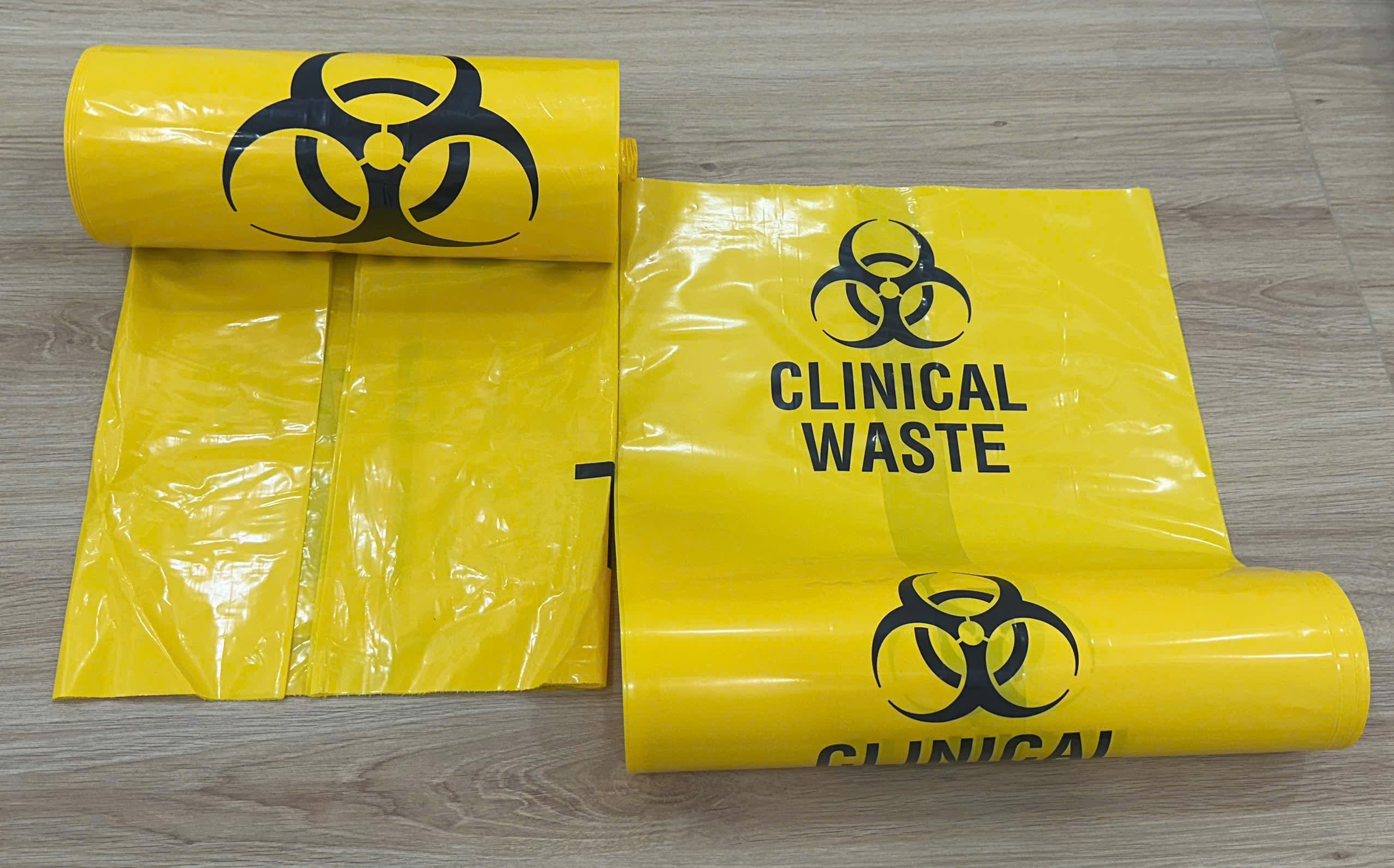
For specific applications, such as medical waste or hazardous materials, specialized trash bags are required. These bags are typically made from puncture-resistant materials and feature biohazard symbols and warning labels. Ensure you comply with all relevant regulations and guidelines when handling and disposing of hazardous waste.
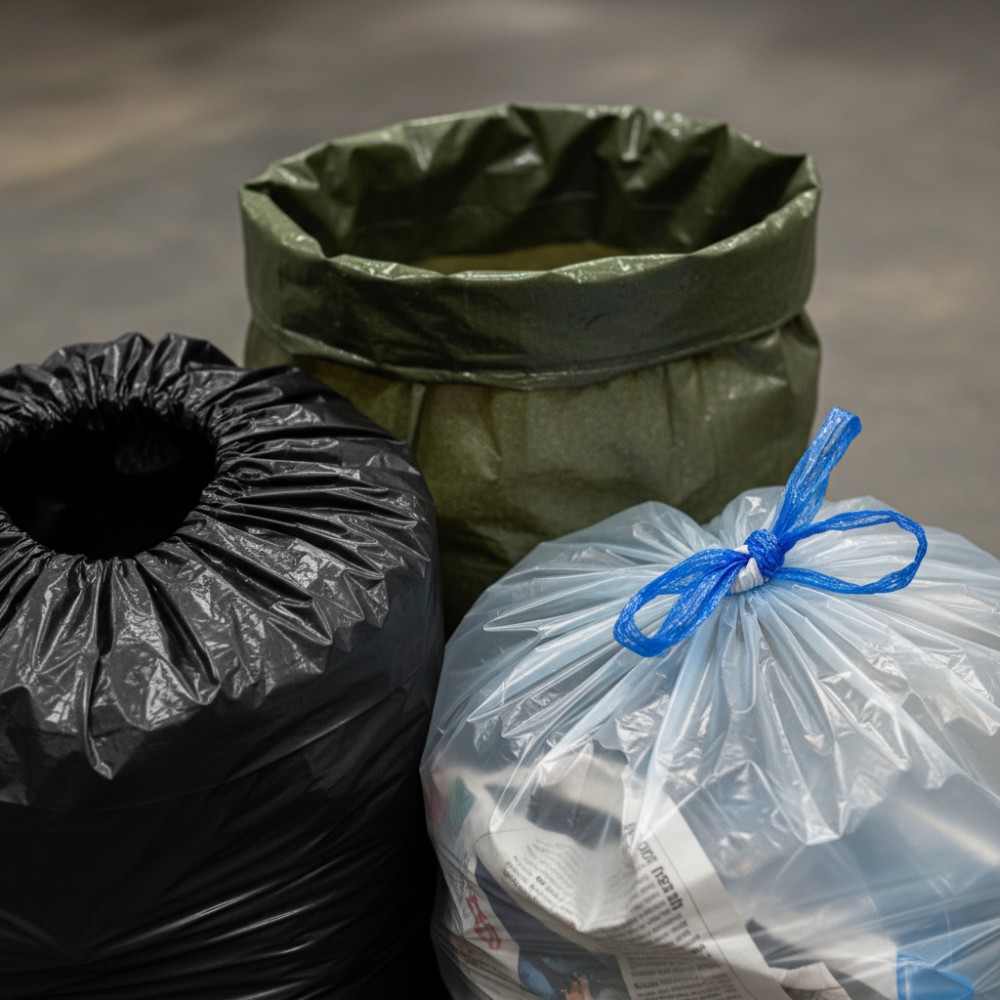
The Environmental Impact of Plastic Trash Bags
Plastic trash bags have a significant environmental impact, primarily due to their reliance on fossil fuels and their persistence in landfills. Traditional plastic bags can take hundreds of years to decompose, contributing to pollution and harming wildlife. However, there are several ways to mitigate the environmental impact of plastic trash bags:
Recycling
Recycling plastic trash bags is an effective way to reduce their environmental footprint. Check with your local recycling program to determine if they accept plastic bags. Many grocery stores and retail outlets also offer bag recycling drop-off locations. Ensure the bags are clean and dry before recycling to prevent contamination.
Using Recycled Plastic Bags
Opting for trash bags made from recycled plastic is another way to promote sustainability. These bags reduce the demand for virgin plastic and help divert waste from landfills. Look for bags with a high percentage of post-consumer recycled content to maximize their environmental benefits.
Compostable Bags
Compostable trash bags are an environmentally friendly alternative to traditional plastic bags. Made from plant-based materials, these bags break down in composting environments, returning nutrients to the soil. Use compostable bags for food waste and yard trimmings, and ensure they are disposed of in a designated composting facility.
Reducing Waste
The most effective way to reduce the environmental impact of plastic trash bags is to minimize waste generation. Practice waste reduction strategies, such as recycling, composting, and reducing consumption. Use reusable containers and bags whenever possible, and avoid single-use plastics.
Tips for Proper Use and Disposal
To maximize the effectiveness and minimize the environmental impact of plastic trash bags, follow these tips:
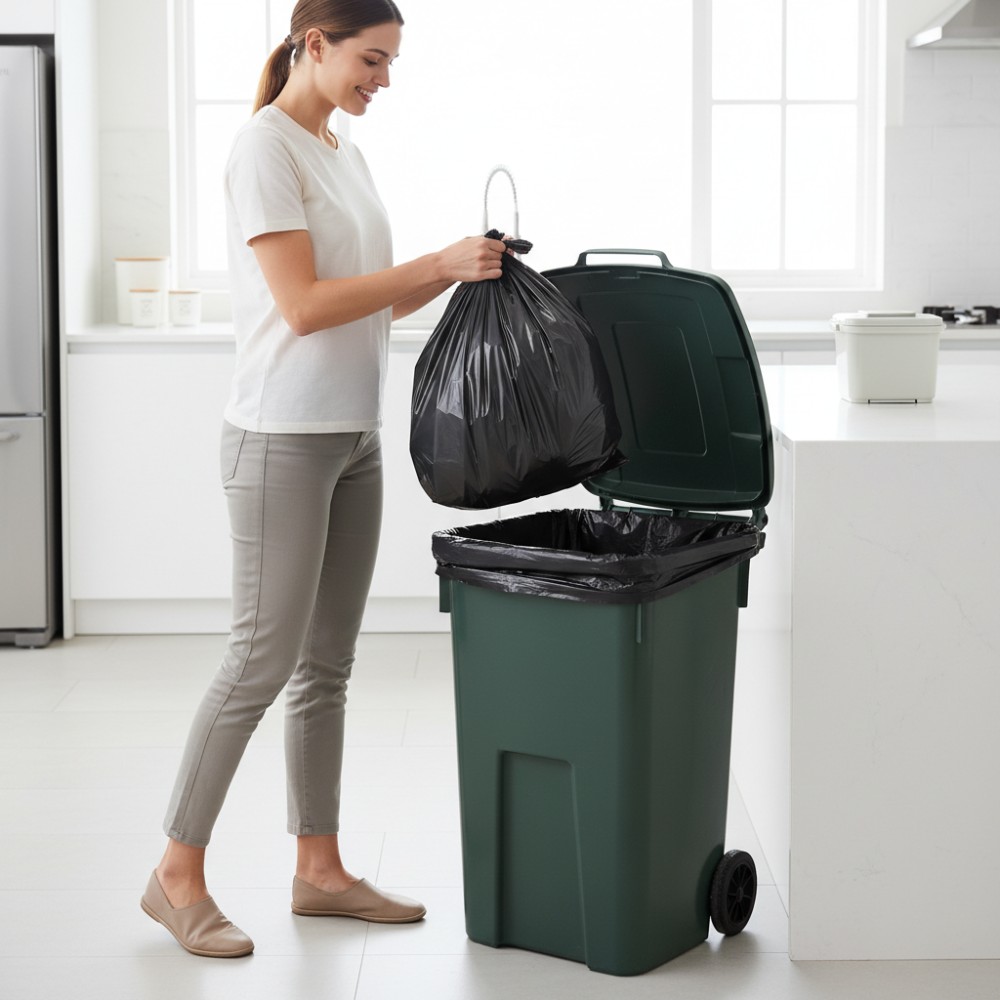
- Choose the Right Size: Select a bag size that fits your trash can properly, preventing spills and messes.
- Avoid Overfilling: Overfilling trash bags can cause them to tear or leak. Leave enough room at the top to securely close the bag.
- Securely Close the Bag: Use the drawstring or tie closure to seal the bag tightly, preventing odors and spills.
- Double Bag Sharp Objects: Place sharp objects, such as broken glass or needles, in a puncture-resistant container before placing them in the trash bag.
- Dispose of Properly: Follow your local waste management guidelines for proper disposal of trash bags. Recycle when possible, and use compostable bags for appropriate waste streams.
[IMAGE_PROMPT: A split image. On one side, a person is correctly sorting recyclables and compostable materials into separate bins. On the other side, a person is incorrectly throwing everything into a single trash bag.]
Addressing Common Consumer Issues
Consumers often face challenges with plastic trash bags, such as tearing, leakage, and odor control. Here are some expert tips and troubleshooting methods to address these issues:
- Bag Tearing:
- Problem: Bags tear easily when filled with heavy or sharp objects.
- Solution: Use thicker, heavy-duty bags with reinforced seams. Double-bag sharp objects or wrap them in newspaper before disposal.
- Leakage:
- Problem: Bags leak when containing wet or liquid waste.
- Solution: Choose bags with leak-resistant materials. Line the bottom of the trash can with absorbent material, such as newspaper or paper towels.
- Odor Control:
- Problem: Trash bags emit unpleasant odors, especially from food waste.
- Solution: Use bags with odor-neutralizing technologies, such as activated carbon or antimicrobial agents. Regularly empty the trash can and clean it with a disinfectant.
Conclusion
Choosing the right plastic trash bags involves careful consideration of various factors, including size, strength, material, and environmental impact. By understanding the different types of bags available and their specific applications, you can make informed decisions that meet your needs while minimizing your environmental footprint. Remember to recycle when possible, use compostable bags for appropriate waste streams, and reduce waste generation to promote a more sustainable future. Brands like Glad, Hefty, Amazon Basics, and Up & Up can improve their offerings by addressing content gaps related to detailed product comparisons, consumer issue resolution, sustainability initiatives, and user-generated content.
[IMAGE_PROMPT: A person is smiling and holding a reusable shopping bag filled with groceries. In the background, there are recycling bins and a compost bin, symbolizing responsible waste management.]