Trash can liners, often overlooked, are an essential part of maintaining cleanliness and hygiene in our homes and businesses. Choosing the right trash can liners can significantly impact waste management efficiency, odor control, and overall tidiness. This comprehensive guide will explore the different types of trash can liners, materials, sizes, and features, helping you make informed decisions for your specific needs. We’ll delve into everything from selecting the perfect kitchen trash can liners to understanding the requirements for heavy-duty commercial applications.

Understanding the Basics of Trash Can Liners
Before diving into the specifics, let’s establish a foundational understanding of trash can liners. Essentially, they are bags designed to fit inside trash cans, providing a barrier between waste and the can itself. This barrier prevents messes, simplifies waste disposal, and reduces the need for frequent cleaning of the trash can.
Key Considerations When Choosing Trash Can Liners:
- Size: The liner must fit the trash can properly.
- Strength: The liner must be strong enough to hold the weight and type of waste.
- Material: Different materials offer varying levels of durability, eco-friendliness, and odor control.
- Type: Drawstring, flap tie, and other closure types offer different levels of convenience.
Trash Can Liner Sizes: Finding the Perfect Fit
One of the most critical aspects of choosing trash can liners is selecting the correct size. A liner that’s too small will be difficult to secure and may tear, while one that’s too large will be wasteful and cumbersome. Here’s how to determine the right size:
- Measure Your Trash Can: Measure the height and circumference (or diameter) of your trash can.
- Calculate Liner Size:
- Width: The liner width should be slightly more than half the circumference of the can. Add a few inches for overhang to secure the bag.
- Length: The liner length should be the height of the can plus enough extra to fold over the top (typically 4-6 inches).
- Consider the Shape: Round cans require different calculations than rectangular or square cans.
Here’s a general guide for common trash can sizes and corresponding liner sizes:
- 4-Gallon Trash Can: Typically uses 4-6 gallon liners.
- 8-Gallon Trash Can: Typically uses 8-10 gallon liners.
- 13-Gallon Trash Can: The most common kitchen size, usually uses 13-gallon liners.
- 30-Gallon Trash Can: Suitable for larger households or outdoor use, requires 30-33 gallon liners.
- 55-Gallon Trash Can: Commonly used in commercial settings, needs 55-60 gallon liners.
Trash Can Liner Materials: A Comparison
Trash can liners are made from various materials, each with its own advantages and disadvantages. Understanding these differences is crucial for selecting the best liner for your specific needs and environmental concerns.
Polyethylene (PE)
Polyethylene is the most common material for trash can liners. It’s durable, flexible, and relatively inexpensive. There are two main types:
- Low-Density Polyethylene (LDPE): More flexible and puncture-resistant, ideal for sharp or bulky items.
- High-Density Polyethylene (HDPE): Stronger and more rigid, better for heavier loads and preventing stretching.
Linear Low-Density Polyethylene (LLDPE)
LLDPE combines the strength of HDPE with the flexibility of LDPE, offering excellent tear resistance. It’s a popular choice for demanding applications.
Recycled Plastic
Trash can liners made from recycled plastic are an environmentally friendly option. They reduce the demand for virgin plastic and help divert waste from landfills. The quality and durability can vary depending on the percentage of recycled content and the manufacturing process.
Biodegradable and Compostable Materials
For those seeking the most sustainable option, biodegradable and compostable trash can liners are available. These liners are made from plant-based materials like cornstarch or vegetable oils and are designed to break down in a composting environment. However, it’s important to note that they may not be as durable as traditional plastic liners and require specific disposal methods.
Trash Can Liner Thickness: Understanding Mil
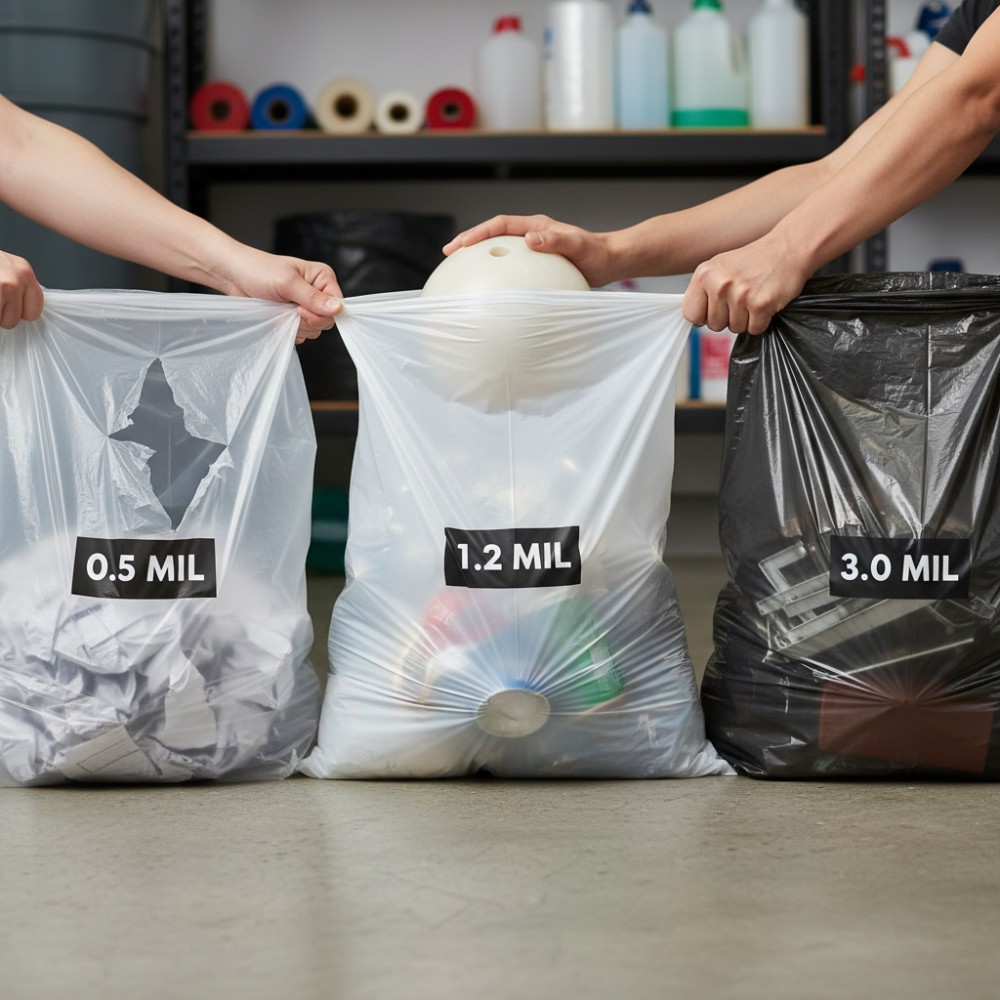
The thickness of a trash can liner is measured in “mil,” which is one-thousandth of an inch (0.001 inch). The higher the mil number, the thicker and stronger the liner. Choosing the appropriate mil thickness depends on the type of waste you’ll be disposing of.
- Light-Duty (0.7-0.9 mil): Suitable for light, non-sharp waste like paper or bathroom trash.
- Medium-Duty (1.0-1.2 mil): Ideal for general household waste, including kitchen scraps and small objects.
- Heavy-Duty (1.5-2.0 mil): Designed for heavier loads, construction debris, and waste with sharp edges.
- Extra-Heavy-Duty (2.0+ mil): For the most demanding applications, such as industrial waste or sharp, heavy materials.
Types of Trash Can Liners: Closure Mechanisms and Features
Beyond size and material, the type of closure mechanism is another important consideration when selecting trash can liners. Different closure types offer varying levels of convenience and security.
Drawstring
Drawstring trash can liners are among the most popular choices. They feature a drawstring that allows you to easily close and lift the bag, preventing spills and making disposal more convenient. They are very user friendly.
Flap Tie
Flap tie trash can liners have flaps that can be tied together to secure the bag. They are a simple and cost-effective option, but may not be as secure as drawstring liners for heavy or messy loads.
Twist Tie
Twist tie trash can liners come with twist ties that can be used to close the bag. They offer a secure closure, but can be less convenient than drawstring or flap tie liners.
Star Seal Bottom
A star seal bottom is a type of bottom seal where the edges of the bag are folded inward and sealed, creating a star-like pattern. This design helps distribute weight evenly and prevents leaks.
Flat Bottom
Flat bottom trash can liners are simply sealed at the bottom with a straight seam. They are a basic and economical option, but may be more prone to leaks if overloaded.
Addressing Common Problems with Trash Can Liners
Even with the best trash can liners, you may encounter common problems like tears, leaks, and odors. Here are some tips to prevent and address these issues:
- Tears: Choose a liner with sufficient thickness and tear resistance for the type of waste you’re disposing of. Avoid overfilling the bag and be careful when disposing of sharp objects.
- Leaks: Ensure the liner is properly sealed and that the bottom seal is intact. Double-bag messy or wet waste.
- Odors: Use scented trash can liners or add baking soda to the bottom of the can to absorb odors. Empty the trash frequently, especially if it contains food waste.
Creative Uses for Trash Can Liners Beyond Waste Disposal
While primarily designed for waste disposal, trash can liners can also be used for a variety of other purposes:
- Protecting Surfaces: Use them as drop cloths when painting or doing messy crafts.
- Storing Items: Store seasonal clothing, blankets, or other items in trash can liners to protect them from dust and moisture.
- Organizing: Use them to separate and organize items in your garage or storage room.
- Emergency Rain Gear: In a pinch, a trash can liner can be used as a makeshift poncho.
Commercial vs. Residential Trash Can Liners
The needs for commercial and residential trash can liners often differ significantly. Commercial settings typically require larger, heavier-duty liners to handle higher volumes and more demanding types of waste.
- Commercial Liners: Higher mil thickness, larger capacity, often sold in bulk.
- Residential Liners: Variety of sizes and thicknesses, focus on convenience and odor control, often sold in smaller quantities.
The Environmental Impact of Trash Can Liners and Sustainable Alternatives
Traditional plastic trash can liners contribute to plastic waste and environmental pollution. Choosing sustainable alternatives can help reduce your environmental footprint.
- Recycled Plastic Liners: Reduce the demand for virgin plastic.
- Biodegradable and Compostable Liners: Break down in composting environments.
- Reduce Waste: Minimize waste by recycling and composting as much as possible.
[IMAGE_PROMPT: A split image showing the negative environmental impact of traditional plastic trash bags on one side (landfill overflowing with plastic, polluted ocean) versus the positive impact of using biodegradable trash bags on the other side (composting bin, thriving plants).]
Conclusion: Choosing the Right Trash Can Liners for Your Needs
Selecting the right trash can liners involves considering several factors, including size, material, thickness, closure type, and environmental impact. By understanding these factors and assessing your specific needs, you can choose the best trash can liners for your home or business, ensuring efficient waste management, odor control, and a cleaner environment. From heavy-duty construction jobs to the simple kitchen trash can, there is a perfect trash can liner for every job. Prioritizing factors like durability, size, and environmental impact will lead you to the best decision.