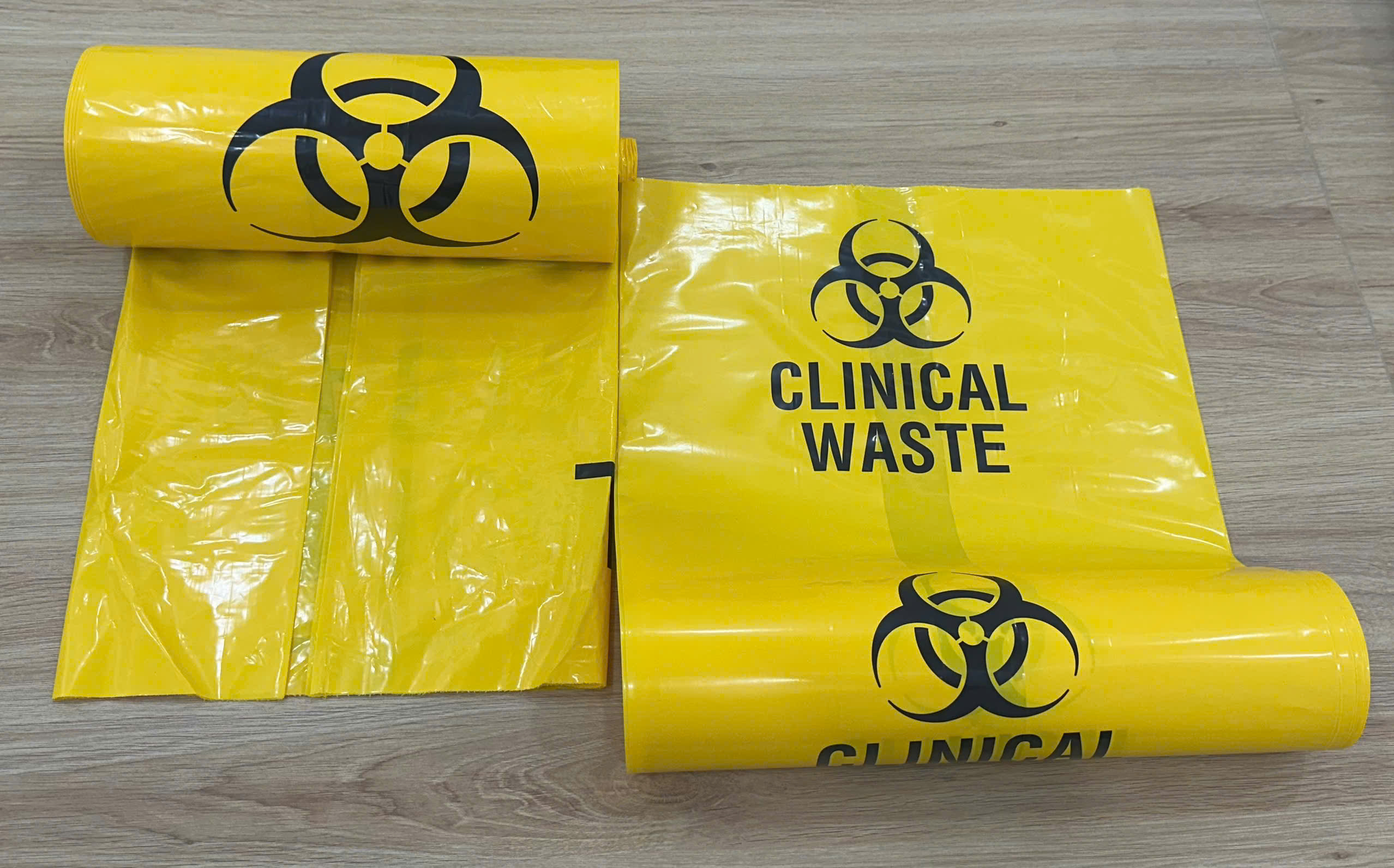
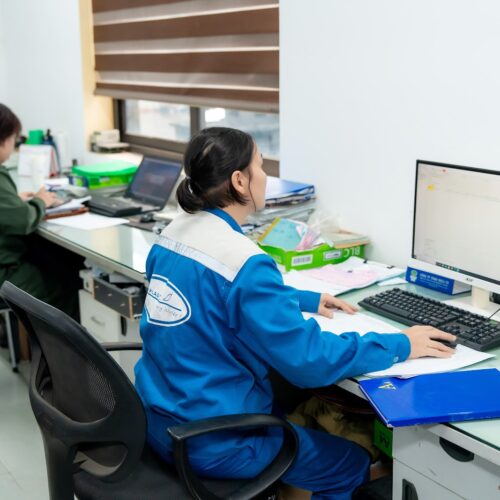
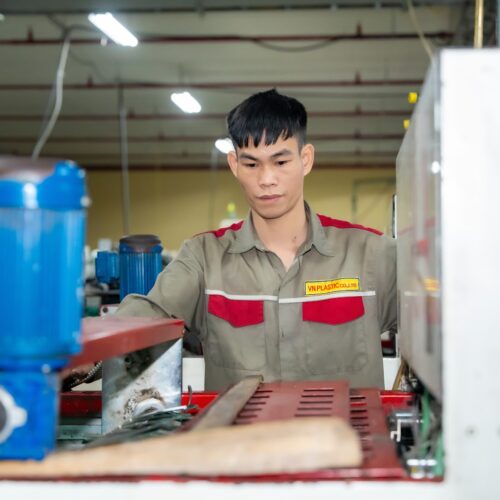
Regarding OEM plastic packaging manufacturer in vietnam: Industrial packaging procurement across Europe, North America, and Oceania has shifted decisively away from thick monolayer polyethylene films toward engineered 3-layer and 5-layer coextruded structures. Two structural forces drive this transition: resin cost volatility and stringent non-tariff regulatory barriers.
1. Global Market Dynamics & Emerging Non-Tariff Regulatory Barriers
When you search for a reliable OEM plastic packaging manufacturer in vietnam, Industrial packaging procurement across Europe, North America, and Oceania has shifted decisively away from thick monolayer polyethylene films toward engineered 3-layer and 5-layer coextruded structures. Two structural forces drive this transition: resin cost volatility and stringent non-tariff regulatory barriers. Under the European Union’s Packaging and Packaging Waste Regulation (PPWR), industrial shippers face escalating Extended Producer Responsibility (EPR) eco-modulation fees unless secondary and tertiary films meet strict recyclability-by-design thresholds. Multi-material laminates combining PET or nylon with polyethylene are increasingly penalized in municipal and commercial recovery streams, forcing multinational buyers to specify mono-material polyethylene (PE) coextruded films that deliver equivalent moisture and oxygen barriers without compromising mechanical recyclability.
Simultaneously, North American importers are navigating state-level EPR mandates in California, Oregon, and Colorado alongside heightened U.S. Customs and Border Protection (CBP) scrutiny on transshipment and anti-dumping/countervailing duty (AD/CVD) orders targeting polyethylene retail and industrial bags from select Asian jurisdictions. Sourcing from a qualified OEM plastic packaging manufacturer in vietnam provides a measurable tariff and compliance advantage. Under the EU-Vietnam Free Trade Agreement (EVFTA), qualifying industrial PE films enter the EU at 0% preferential duty—eliminating the standard 6.5% MFN tariff—provided strict Rules of Origin (ROO) and EUR.1 documentation are maintained. Similarly, CPTPP member states benefit from preferential tariff schedules when resin transformation and extrusion occur within verified Vietnamese manufacturing facilities.
2. Quantitative Impact on Operational Margins & Freight Cost Structures
Transitioning from conventional monolayer LDPE to 3-layer and 5-layer coextrusion directly restructures both raw material conversion costs and ocean freight economics. By isolating functional polymers into dedicated layers—such as placing high-density polyethylene (HDPE) or metallocene LLDPE (mLLDPE) in the core for moisture barrier and stiffness, while reserving ethylene-vinyl acetate (EVA) or low-density polyethylene (LDPE) for the outer sealing and print skins—converters achieve 20% to 30% downgauging without sacrificing dart impact or seal integrity. (Compliance verified under International ISO Trade Quality Standards).
With CFR Southeast Asia LLDPE film-grade resin trading in the $980–$1,060/MT band and EVA (18% VA content) commanding a $220–$300/MT premium over commodity LDPE, precise layer-ratio engineering prevents over-specification. Furthermore, downgauging directly increases linear meterage per pallet, maximizing 40ft High Cube (HC) container payload utilization on trans-Pacific (Cat Lai/Haiphong to Los Angeles/Long Beach, averaging $2,400–$3,100/FEU contract rates) and Asia-Europe (to Rotterdam/Hamburg, averaging $3,200–$4,100/FEU) lanes.
| Film Architecture | Typical Gauge (Microns) | Polymer Layer Distribution | WVTR (g/m²/24h @ 38°C, 90% RH) | Dart Drop Impact (ASTM D1709, g) | Resin Cost Index (Base = 100) | 40ft HC Container Yield (Linear Meters/FEU) |
|---|---|---|---|---|---|---|
| Monolayer LDPE/LLDPE Blend | 100 µm | 100% Blended (70% LLDPE / 30% LDPE) | 4.8 – 5.5 | 280 – 320 g | 100 | ~185,000 m |
| 3-Layer Coex (A/B/C) | 75 µm | 20% LDPE-EVA / 60% C6-LLDPE / 20% mLLDPE | 3.2 – 3.8 | 410 – 460 g | 84 (per m²) | ~246,000 m (+33%) |
| 5-Layer Barrier Coex (A/B/C/D/E) | 65 µm | 15% EVA-LDPE / 20% mLLDPE / 30% HDPE / 20% mLLDPE / 15% Sealant | 1.6 – 2.1 | 480 – 540 g | 79 (per m²) | ~284,000 m (+53%) |
As demonstrated in the operational matrix above, a 5-layer coextruded structure at 65 microns reduces Water Vapor Transmission Rate (WVTR) by more than 60% compared to a 100-micron monolayer film while increasing container linear yield by 53%. For high-volume industrial liners, heavy-duty shipping sacks (FFS), and hygroscopic chemical packaging, this translates into a 14% to 19% reduction in total landed cost per 1,000 units.
3. Mandatory Inspection Standards & Compliance Documentation Protocols

Exporting engineered multi-layer films to Tier-1 industrial accounts requires rigorous adherence to international testing protocols and auditable quality documentation. Every production lot must undergo laboratory verification against standardized ASTM and ISO benchmarks prior to container stuffing:
- Moisture Barrier Verification (ASTM F1249): Modulated infrared sensor testing at 38°C and 90% relative humidity to certify WVTR compliance for hygroscopic resin, fertilizer, and food-ingredient liners.
- Puncture & Impact Resistance (ASTM D1709 Method A/B & ASTM D5748): Free-falling dart impact and slow-rate protrusion puncture testing to validate the synergy between C6/C8 LLDPE core layers and EVA/LDPE outer skins.
- Tensile & Elongation Profiling (ASTM D882 / ISO 527-3): Machine Direction (MD) and Transverse Direction (TD) yield strength and elongation-at-break verification to prevent web breaks on high-speed Form-Fill-Seal (FFS) lines.
- Surface Wetting Tension (ASTM D2578): Dyne-pen and contact-angle verification immediately post-extrusion and 72 hours post-aging to confirm inline corona treatment stability at 38–44 dynes/cm for solvent-based and water-based flexographic ink adhesion.
- Gauge Uniformity (ISO 4593): Continuous cross-web thickness profiling maintaining tolerances within ±3% to ±4% across the layflat width.
On the regulatory front, shipments must be accompanied by a complete compliance dossier: Certificate of Origin (Form EUR.1 for EU, Form CPTPP, or Form D for ASEAN), REACH SVHC (Substances of Very High Concern) declarations confirming zero restricted phthalates or PFAS processing aids, and food-contact migration certificates under FDA 21 CFR 177.1520 and EU Regulation 10/2011 where applicable. Manufacturing facilities must maintain active BRCGS Packaging Materials and ISO 9001:2015 certifications to pass multinational vendor qualification audits.
4. Shop-Floor Production Realignment & End-to-End Logistics Optimization
Achieving consistent barrier performance and printability on 3-layer and 5-layer blown film lines requires synchronized control across extrusion, cooling, surface treatment, and export staging. At Vnplast Global, an established OEM plastic packaging manufacturer in vietnam, shop-floor execution follows a strict five-stage engineering sequence:
1. Stage 1: Gravimetric Dosing & Polymer Ratio Balancing: Automated loss-in-weight gravimetric blenders meter virgin C6/C8 LLDPE, mLLDPE, HDPE, LDPE, and EVA (9%–18% VA) into dedicated extruders with ±0.2% dosing accuracy. Balancing EVA and LDPE in the outer skin layers lowers seal initiation temperatures (SIT) to 95°C–105°C and enhances melt strength, while the mLLDPE/HDPE core maximizes puncture resistance and moisture barrier.
2. Stage 2: Spiral Mandrel Die Head & Melt Profiling: Multi-layer stacked or concentric spiral mandrel die heads distribute polymer melts uniformly without weld lines or interfacial instability. Precise barrel and die zone temperature profiling (185°C–215°C) prevents EVA thermal degradation while maintaining optimal viscosity matching across adjacent layers.
3. Stage 3: Internal Bubble Cooling (IBC) & Automatic Air Ring Control: High-capacity IBC systems exchange heated internal air with chilled air via ultrasonic bubble-diameter sensors, stabilizing the frost line height and blow-up ratio (BUR 2.2:1 to 2.8:1). Paired with capacitive or beta-ray oscillating gauge scanners and segmented dual-lip automatic air rings, the line corrects cross-web thickness variations in real time to hold ±3% gauge uniformity.
4. Stage 4: Inline Corona Treatment & Flexographic Print Readiness: Prior to winding, the film web passes through high-frequency ceramic-electrode corona treaters calibrated to deliver 40–44 dynes/cm on the print face. Because slip additives (erucamide/oleamide) migrate to the surface and degrade dyne levels, non-migratory slip masterbatches or controlled-migration formulations are engineered into the skin layer to preserve ink adhesion for 8-color Central Impression (CI) flexographic printing.
5. Stage 5: Automated Slitting, Roll Conditioning & Containerization: Jumbo rolls undergo 24-hour tension-controlled conditioning before high-speed slitting. Finished rolls are core-plugged, stretch-hooded on ISPM-15 heat-treated pallets, and loaded into 40ft HC containers using load-plan software to eliminate dead space and prevent telescoping during ocean transit.
5. Commercial Contract Negotiation & Cross-Border Risk Mitigation
Multinational procurement directors structuring annual or semi-annual supply agreements for coextruded industrial films must insulate their P&L against raw material swings and maritime disruptions. Fixed-price annual contracts expose both buyer and converter to severe margin distortion when ethylene and propylene feedstocks fluctuate. Best-practice commercial agreements utilize a transparent Resin Index-Linked Pricing Formula, pegging the polymer component to the monthly ICIS or Platts CFR Southeast Asia LLDPE/LDPE/EVA benchmark plus a fixed conversion, printing, and logistics margin.
Under Incoterms 2020, buyers with established global freight contracts should negotiate FOB Cat Lai (Ho Chi Minh City) or FOB Haiphong to retain control over carrier selection, Bunker Adjustment Factors (BAF), and General Rate Increases (GRI). Conversely, mid-market importers utilizing CIF or DDP terms must mandate explicit demurrage/detention free-time clauses (minimum 14 days combined at destination port) and force majeure buffers accounting for Red Sea/Suez Canal rerouting around the Cape of Good Hope, which adds 10–14 days to Asia-Europe transit times.
To mitigate quality disputes across borders, contracts should stipulate Acceptable Quality Limit (AQL) 1.5/2.5 inspection protocols, mandatory retention of 5-meter production counter-samples per batch for 12 months, and pre-shipment third-party verification (SGS, Intertek, or Bureau Veritas) covering WVTR, dart impact, and dyne-level retention prior to Bill of Lading issuance.
6. Strategic Recommendations & Operational Roadmap from Vnplast Global
Procurement teams seeking to future-proof their industrial packaging supply chains should execute a structured 12-month technical and commercial transition with a vetted OEM plastic packaging manufacturer in vietnam:
- Months 1–3 (Specification Audit & Recipe Engineering): Audit existing monolayer or laminated SKUs for downgauging potential. Conduct lab-scale trials transitioning 90–120 µm monolayer films to 65–75 µm 3-layer or 5-layer mono-PE coextruded recipes, targeting a minimum 20% resin weight reduction and verified ASTM F1249 WVTR parity.
- Months 4–6 (Line Qualification & Print Adhesion Validation): Execute commercial pilot runs on IBC-equipped coextrusion lines. Validate ±3% gauge uniformity, 40+ dynes/cm corona treatment stability after 30 days of warehouse aging, and rub-resistance on 8-color CI flexographic presses.
- Months 7–9 (Regulatory Dossier & Tariff Optimization): Finalize EU PPWR recyclability certifications, REACH/FDA migration test reports, and EVFTA EUR.1 or CPTPP Certificate of Origin workflows to lock in 0% preferential import duties.
- Months 10–12 (Index-Linked Contracting & Dual-Port Logistics): Transition to quarterly or semi-annual resin-indexed supply agreements with safety-stock buffers and dual-port dispatch capability (Cat Lai and Haiphong) to insulate operations against seasonal vessel blank sailings.
By aligning polymer science, precision IBC extrusion hardware, and disciplined trade compliance, Vnplast Global enables industrial buyers to capture structural cost reductions while meeting the strictest global environmental and barrier performance mandates.
Technical & Quality Compliance Advisory from Vnplast Global
For international procurement directors, supply chain partners, and B2B buyers, rigorous pre-shipment sample testing (CoA/CoC) and accredited independent inspection (SGS/Intertek) are paramount prior to contract execution. Contact our technical desk for complete engineering datasheets and tailored FOB/CIF quotation schedules.
Frequently Asked Questions (FAQ) Regarding Oem Plastic Packaging Manufacturer In Vietnam
Question 1: What is the standard production manufacturing lead-time for OEM plastic packaging manufacturer in vietnam export orders?
Answer: Under standard factory operating capacity, production and loading for OEM plastic packaging manufacturer in vietnam container consignments are completed within 10 to 14 business days from deposit or L/C confirmation.
Question 2: Are pre-shipment evaluation samples of OEM plastic packaging manufacturer in vietnam provided with official laboratory test reports?
Answer: Yes, complimentary sample kits of certified OEM plastic packaging manufacturer in vietnam accompanied by full Certificate of Analysis (CoA) reports are dispatched internationally within 3 to 5 business days via DHL/FedEx.
Question 3: Which Incoterms 2020 terms and payment methods are supported for OEM plastic packaging manufacturer in vietnam orders?
Answer: We provide standard FOB Cát Lái/Hải Phòng as well as CIF worldwide gateway ports for all OEM plastic packaging manufacturer in vietnam shipments, supported by Irrevocable Letters of Credit (L/C at sight) or T/T payment terms.