When you search for stretch film machine price, you expect a clear answer on cost, features, and ROI. In 2024‑2026, prices range from USD 3,500 for entry‑level hand stretch film units to USD 120,000 for fully automated, high‑speed lines. The exact figure depends on capacity, automation level, film width, and optional accessories such as tension control or integrated bag handling. This guide breaks down every factor that influences the price, compares popular models, and provides a practical checklist to help you select the right machine for your plastic‑bag production or packaging operation.
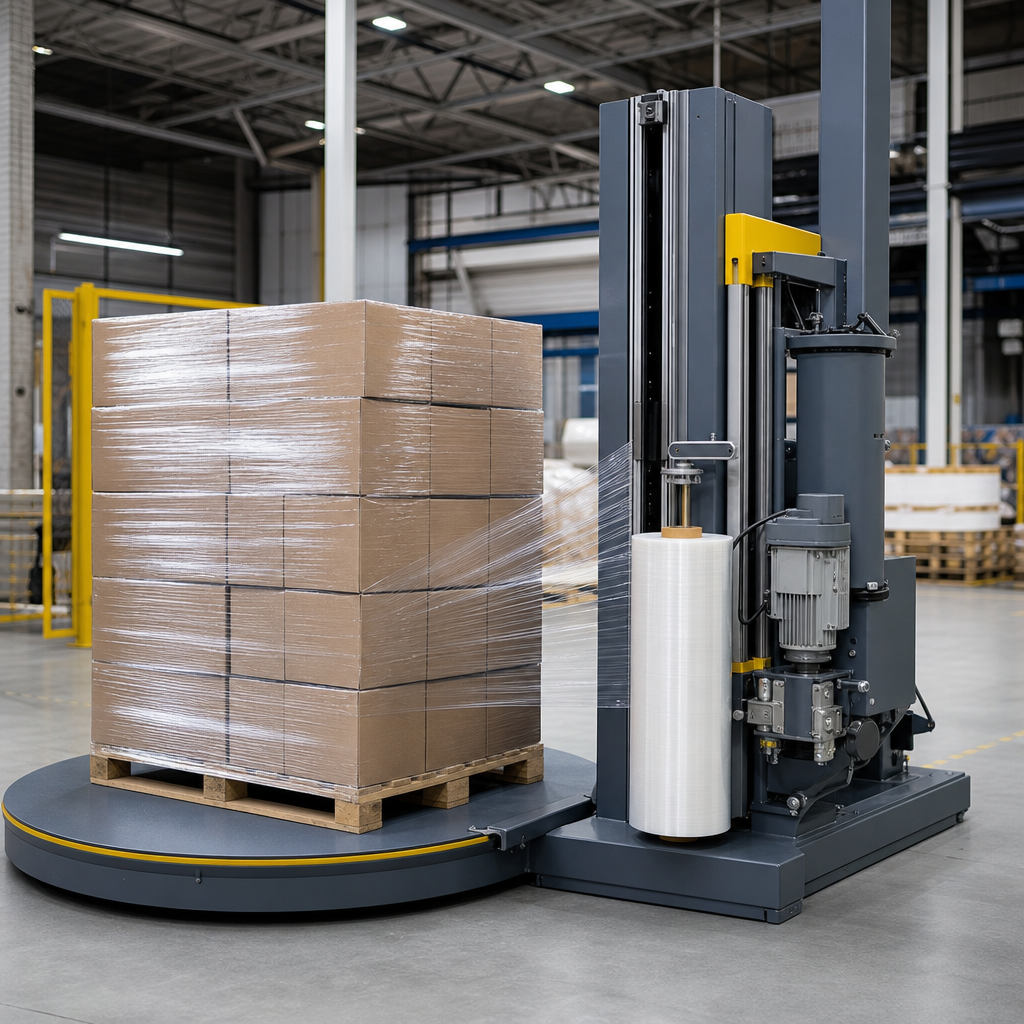
a modern stretch film machine on a factory floor, showing the motor, rollers, and a roll of clear stretch film being applied to a pallet of…
Table of Contents
- Key Factors That Determine Stretch Film Machine Price
- Typical Price Ranges by Machine Type
- Cost‑Benefit Analysis: When Is a Higher Price Worth It?
- Comparison of Top Models in 2026
- Purchase Checklist for Decision Makers
- Frequently Asked Questions
Key Factors That Determine Stretch Film Machine Price
Understanding the variables that affect stretch film machine price lets you forecast total investment and avoid hidden costs.
- Automation Level: Manual hand‑wrap units are cheapest; semi‑automatic machines add sensors and motorized rollers; fully automatic lines include pallet detection, film cutting, and stacking.
- Production Capacity: Machines rated for 10 m/min cost far less than those handling 100 m/min or more.
- Film Width & Thickness Compatibility: Wider or thicker film requires sturdier frames and stronger tension control, raising price.
- Control System: Basic analog controls are inexpensive; PLC‑based or IoT‑enabled interfaces add premium.
- Brand & Warranty: Established manufacturers like VNPLAST, FlexiWrap, and SML offer longer warranties and service contracts, influencing upfront cost.
- Optional Accessories: Pre‑stretch rollers, film tension sensors, automatic bag loading (e.g., for Hand Stretch Film), and safety guards each add $1,000‑$5,000.
- Regulatory Compliance: Machines meeting CE, ISO 9001, or local safety standards may carry certification fees.
Typical Price Ranges by Machine Type
| Machine Type | Typical Capacity | Price Range (USD) | Best For |
|---|---|---|---|
| Hand Stretch Film Wrapper | Up to 5 m/min, 0.5‑1 mm film | 3,500 – 7,500 | Small warehouses, manual operators |
| Semi‑Automatic Rotary Wrapper | 5‑15 m/min, 0.8‑1.2 mm film | 12,000 – 25,000 | Mid‑size distribution centers, limited automation budget |
| Fully Automatic Linear Wrapper | 15‑30 m/min, 1‑1.5 mm film | 45,000 – 85,000 | High‑volume e‑commerce fulfillment |
| High‑Speed Integrated System (with bag handling) | 30‑60 m/min, 1‑2 mm film | 90,000 – 120,000 | Large manufacturers of plastic bags, food packaging, hazardous waste containment |
Cost‑Benefit Analysis: When Is a Higher Price Worth It?
Investing more than the baseline price makes sense when you can quantify savings in labor, film consumption, or throughput.
- Labor Reduction: Automated machines can cut labor costs by 30‑50 % compared with manual hand‑wrap.
- Film Efficiency: Pre‑stretch technology reduces film usage by 10‑15 %, translating into annual savings of $5,000‑$20,000 depending on volume.
- Throughput Gains: A 20 m/min line processes roughly 1,200 pallets per hour versus 300 pallets with a hand‑wrap, enabling higher order fulfillment rates.
- Downtime & Maintenance: Premium models often include predictive maintenance alerts, reducing unexpected downtime by up to 40 %.
Comparison of Top Models in 2026
The following matrix highlights three leading machines that VNPLAST frequently recommends for different business sizes.
| Feature | VNPLAST HandWrap 2000 | VNPLAST SemiAuto 4500 | VNPLAST AutoLine 9000 |
|---|---|---|---|
| Price (USD) | 5,200 | 18,900 | 78,500 |
| Max Speed (m/min) | 4 | 12 | 45 |
| Film Width (mm) | 300‑800 | 400‑1200 | 500‑2000 |
| Control Interface | Analog dial | PLC with touchscreen | IoT‑enabled HMI with remote monitoring |
| Warranty | 12 months | 24 months | 36 months + on‑site service |
| Ideal Use Case | Hand‑wrap of small pallets, manual labor | Medium‑scale packaging of Hand Stretch Film, Die Cut Bag Plastic | High‑volume Food Plastic Bag, Hazardous Plastic Garbage wrapping |
Purchase Checklist for Decision Makers
Use this checklist to verify that you have covered all critical aspects before signing a contract.
- Define Production Volume – Estimate pallets per shift and required film width.
- Automation Needs – Choose manual, semi‑automatic, or fully automatic based on labor cost.
- Space & Power – Verify floor space (minimum 2 × machine footprint) and 380 V three‑phase power availability.
- Film Compatibility – Ensure the machine can handle your specific Hand Stretch Film grade (e.g., 0.8 mm low‑density polyethylene).
- Safety & Compliance – Check CE marking, emergency stop locations, and lock‑out/tag‑out procedures.
- Service & Spare Parts – Confirm local service support, parts inventory, and response time.
- Total Cost of Ownership (TCO) – Include installation, training, maintenance contracts, and expected film savings.
Real‑World Use Cases
Manufacturers across Southeast Asia have leveraged different price points to solve specific challenges:
- Plastic Bag Producer – A mid‑size die‑cut bag factory installed the VNPLAST SemiAuto 4500 at $19,000. Film waste dropped 12 % and labor hours fell from 3 shifts to 2.
- Food Packaging Co. – Using the AutoLine 9000, the company increased pallet output by 250 % and met strict food‑grade hygiene standards thanks to stainless‑steel rollers.
- Hazardous Waste Collector – The HandWrap 2000 proved sufficient for low‑volume, high‑risk garbage plastic bag wrapping, staying under $6,000 while providing a reliable manual safety system.
Conclusion
The stretch film machine price you pay today reflects more than just the hardware—it encodes your production goals, labor strategy, and long‑term savings. By evaluating automation level, capacity, film compatibility, and total cost of ownership, you can choose a solution that aligns with your budget while delivering measurable ROI. Whether you start with a hand‑wrap unit for a small operation or invest in a fully integrated line for high‑volume food packaging, the right machine will protect your products, reduce waste, and keep your packaging line competitive.
Frequently Asked Questions
- What is the average ROI period for a fully automatic stretch film machine?
Most users see payback within 12‑24 months due to labor savings and reduced film consumption. - Can I use the same machine for both Hand Stretch Film and Recycle Plastic Bag wrapping?
Yes, provided the machine’s film width and tension settings match the specifications of each film type. - Do I need a special foundation for a high‑speed machine?
High‑speed units (>30 m/min) typically require a reinforced concrete pad to dampen vibration. - Is training included in the purchase price?
Most reputable suppliers, including VNPLAST, provide on‑site training as part of the standard package. - How often should I service the rollers and tension sensors?
Routine inspections every 3 months and full service annually are recommended for optimal performance.
{ “@context”: “https://schema.org”, “@type”: “Article”, “headline”: “Understanding Stretch Film Machine Price: A Complete Buying Guide for 2026”, “description”: “A comprehensive guide covering stretch film machine price, factors influencing cost, comparison of top models, and a purchase checklist for businesses looking to invest in packaging equipment.”, “author”: { “@type
Table of Contents
stretch film machine price: practical overview
Compare stretch film machine price options using total application cost, not unit price alone.
stretch film machine price specifications should always be confirmed before mass production.
Sourcing and support
Explore VN Plastic packaging products, review independent information from an authoritative environmental resource, or contact VN Plastic for a tailored specification and quotation.