Sea Freight Rates Are Rising Rapidly
The global logistics industry is once again facing strong pressure as sea freight rates continue to rise rapidly. Many importers and exporters are beginning to compare the current situation to the Covid-19 period, when ocean shipping costs surged, vessel schedules became unstable, and supply chains were heavily disrupted.
Although today’s market conditions are not exactly the same as during the pandemic, the impact on international trade can still be significant. Rising ocean freight costs are affecting product pricing, delivery timelines, and business profitability across many industries.
Why Are Sea Freight Rates Increasing Again?
In recent months, global shipping costs have increased sharply due to several market factors, including:
- Limited vessel capacity on key trade routes
- Port congestion in major international ports
- Increased demand for container transportation
- Geopolitical tensions affecting shipping routes
- Higher fuel and operational costs for carriers
As a result, many businesses are experiencing unstable freight quotations and difficulty planning shipments in advance.
How Rising Ocean Freight Rates Affect Businesses
Higher sea freight rates create multiple challenges for importers, exporters, and manufacturers worldwide.
1. Increased Total Landed Cost
When shipping costs rise, the final landed cost of products also increases. Businesses importing raw materials or finished goods may face reduced competitiveness in their markets.
2. Unstable Freight Pricing
Freight rates can change quickly within a short period, making it difficult for companies to provide stable quotations to customers or maintain accurate cost forecasting.
3. Longer Supply Chain Planning
Businesses now need to confirm orders earlier to secure production schedules, container availability, and vessel space. Delayed booking can result in higher costs or shipment postponements.
4. Delivery Delays and Schedule Uncertainty
Transit times and vessel schedules have become less predictable, creating additional pressure on inventory management and customer commitments.
5. Reduced Profit Margins
If companies cannot adjust selling prices quickly enough, increasing logistics expenses may directly reduce overall profitability.
Why the Current Situation Feels Similar to the Covid Era
During the Covid-19 pandemic, businesses worldwide faced:
- Extremely high container freight rates
- Container shortages
- Port congestion
- Delayed shipments
- Unstable global supply chains
Today, while the causes may differ, many companies are once again realizing how critical logistics planning and supply chain flexibility have become in international trade.
Modern buyers are no longer focusing only on product price. They are also paying close attention to:
- Sea freight costs
- Production lead times
- Vessel schedules
- Delivery reliability
- Overall supply chain stability
How Businesses Can Prepare for Rising Shipping Costs
To minimize risks during periods of freight market volatility, companies should take proactive logistics planning measures.
Monitor Freight Rates Frequently
Shipping prices can fluctuate rapidly. Regularly checking ocean freight rates helps businesses make faster and more informed decisions.
Book Shipments Earlier
Early booking can help secure vessel space and reduce the risk of delays or unexpected cost increases.
Confirm Production and Delivery Schedules in Advance
Close communication between suppliers, manufacturers, and logistics partners is essential to maintain stable delivery performance.
Calculate Total Landed Cost
Businesses should evaluate the full landed cost of products instead of focusing only on manufacturing prices.
Maintain Supply Chain Flexibility
Flexible shipping plans and alternative routing options can help companies respond more effectively to changing market conditions.
VN Plastic Continues Monitoring Global Logistics Trends
At VN Plastic, we continue monitoring global shipping and logistics market developments closely to provide timely updates and support for our customers. Maintaining stable delivery schedules and transparent communication remains our priority during periods of market uncertainty.
Conclusion
The rapid increase in sea freight rates is a strong reminder that logistics plays a critical role in global trade and supply chain management. While the current market may not fully mirror the Covid-19 era, many businesses are once again facing similar operational pressures.
Companies that plan early, monitor freight market trends closely, and maintain flexible supply chain strategies will be better positioned to manage rising shipping costs and maintain stable international operations.
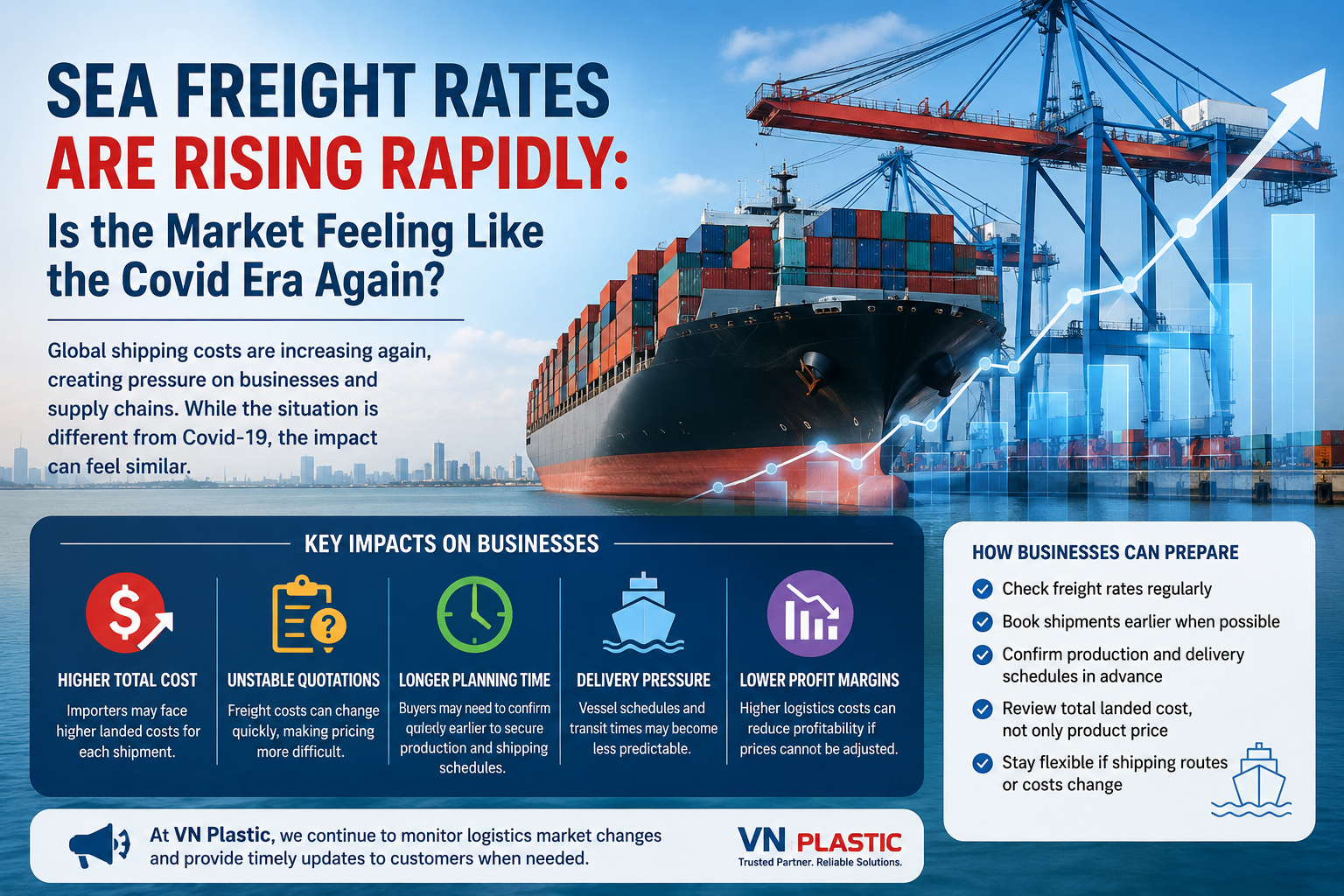
Table of Contents
Sea Freight Rates: practical overview
Ask for a representative Sea Freight Rates sample when testing a new application.
Sourcing and support
Explore VN Plastic packaging products, review independent information from an authoritative environmental resource, or contact VN Plastic for a tailored specification and quotation.