When a customer orders a meal, the plastic bag for food delivery becomes the first physical touchpoint with your brand. Selecting the proper bag ensures food stays hot, prevents leaks, complies with safety regulations, and projects a professional image. This guide explains the essential factors—material type, size, sealing method, and sustainability—so you can make an informed purchase that balances cost, performance, and environmental responsibility.
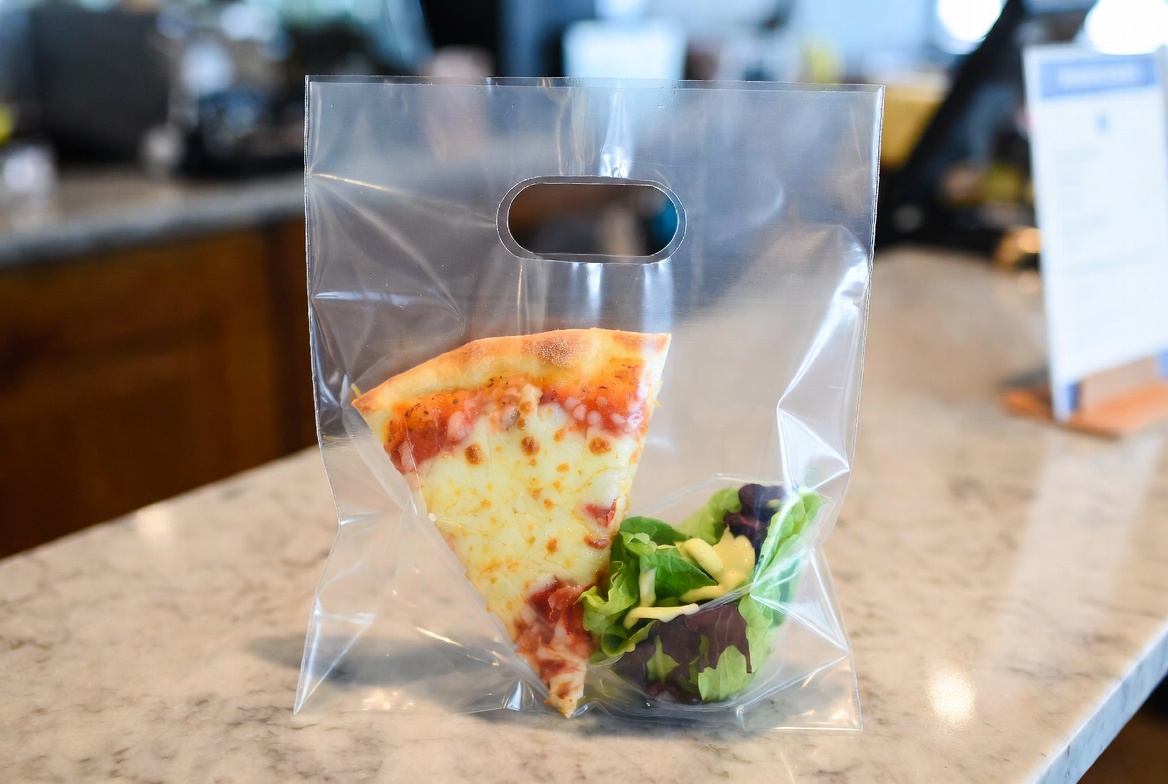
a clear polyethylene food delivery bag with a sealed top, showing a hot pizza slice and a side of salad inside, placed on a restaurant coun…
Why Restaurants Prefer Plastic Bags for Food Delivery
- Food safety: Food‑grade polyethylene resists moisture and contaminants, keeping meals hygienic.
- Thermal retention: Thick, low‑density bags trap heat, maintaining temperature for 30‑45 minutes.
- Convenient sealing: Heat‑seal or zip‑lock options allow quick, leak‑proof closure.
- Cost efficiency: Bulk purchasing of standard sizes reduces per‑unit cost compared to custom containers.
- Brand visibility: Printable surfaces turn each bag into a mobile advertisement.
Key Material Characteristics to Evaluate
Polyethylene (PE) vs. Polypropylene (PP)
- Low‑density polyethylene (LDPE): Flexible, excellent for heat‑seal bags, ideal for hot meals.
- High‑density polyethylene (HDPE): Stiffer, offers higher puncture resistance for heavy or wet items.
- Polypropylene (PP): Higher melting point, suited for microwave‑safe bags but less flexible.
Thickness and Strength
Bag thickness is measured in mils (1 mil = 0.001 in). For food delivery, 2 – 4 mil is standard. Thicker bags (4 mil) provide better leak protection and can support heavier loads such as pizza boxes or multiple containers.
Sealing Options
- Heat‑seal: Most common; requires a sealing machine but creates a tamper‑evident closure.
- Zip‑lock: Re‑closable, useful for multi‑item orders that may be opened during transport.
- Self‑adhesive flap: Quick manual seal, suitable for low‑volume operations.
Choosing the Right Size and Shape
Match bag dimensions to your most‑sold containers. A typical fast‑food chain uses 12 × 12 in square bags for burgers, while a pizza delivery service prefers 16 × 12 in rectangular bags with a gusset to accommodate large boxes.
Standard Size Cheat Sheet
- 8 × 8 in – Small desserts, sauces, or side dishes.
- 10 × 10 in – Single sandwich or burger.
- 12 × 12 in – Dual burgers, tacos, or small salads.
- 16 × 12 in – Pizza slices, family meals, or bulk orders.
Environmental Considerations
Consumers increasingly demand sustainable packaging. VNPLAST offers a range of recyclable and biodegradable options that maintain performance while reducing landfill impact.
Recyclable Plastic Bags
Made from HDPE or LDPE that meets local recycling codes (e.g., #2 or #4). Ensure your waste stream can separate these bags for proper processing.
Compostable Alternatives
Plant‑based polymers (PLA) decompose under industrial composting conditions. They are slightly less heat‑resistant than traditional PE, so test with hot meals before full rollout.
Cost Comparison: Standard vs. Sustainable Options
| Bag Type | Typical Cost per 1,000 | Heat Retention | Recyclability | Compostability |
|---|---|---|---|---|
| Standard LDPE (2 mil) | $45 | Good | Yes (Code 4) | No |
| HDPE Recyclable (3 mil) | $55 | Very Good | Yes (Code 2) | No |
| PLA Compostable (2 mil) | $70 | Fair | No | Yes (Industrial) |
Implementation Checklist for Restaurants
- Identify primary container sizes used in your menu.
- Select material based on temperature range and local recycling capabilities.
- Choose sealing method that aligns with staff workflow.
- Order a sample batch to test heat retention and leak resistance.
- Train staff on proper sealing technique to avoid spills.
- Set up waste segregation for recyclable bags.
- Monitor customer feedback for any packaging issues.
Real‑World Use Cases
Below are three scenarios illustrating how different bag choices affect operations.
Case 1: Urban Fast‑Food Chain
Uses 12 × 12 in LDPE heat‑seal bags (2 mil). The thin material speeds up sealing, reduces labor time, and keeps burgers hot for 30 minutes. The chain recycles bags through a city‑wide program, achieving a 60 % waste diversion rate.
Case 2: Mid‑Size Pizza Delivery Service
Adopts 16 × 12 in HDPE gusset bags (3 mil) with a reinforced seal. The extra thickness prevents sauce leaks during longer rides, and the gusset accommodates large pizza boxes without folding.
Case 3: Eco‑Focused Café
Switches to PLA compostable bags for cold salads and desserts. While the bags lose some rigidity with hot soup, the café limits them to cold items, maintaining brand sustainability messaging.
Pros and Cons of Plastic Bags for Food Delivery
- Pros:
- Lightweight and inexpensive.
- Excellent moisture barrier.
- Easy to print branding.
- Compatible with heat‑seal equipment.
- Cons:
- Single‑use generates waste.
- Standard PE bags are not biodegradable.
- Heat‑seal machines require maintenance.
- Thicker bags increase material cost.
Frequently Asked Questions
What thickness is ideal for hot food delivery?
For hot meals, a 2 – 4 mil LDPE or HDPE bag offers a balance of flexibility and leak protection. Thicker (4 mil) bags are preferable for items with sauces or soups.
Can I use the same bag for both hot and cold items?
Yes, but consider a dual‑layer design: an inner LDPE layer for heat retention and an outer HDPE layer for strength. This prevents condensation from affecting cold foods.
Are heat‑seal bags safe for microwaving?
Only bags specifically labeled “microwave safe” (usually made from polypropylene) should be used. Standard LDPE or HDPE bags melt at high temperatures.
How do I verify that a bag is recyclable in my region?
Check the resin identification code printed on the bag (e.g., #2 HDPE, #4 LDPE). Cross‑reference with local recycling guidelines or contact your waste‑management provider.
What is the best way to reduce plastic waste without switching to expensive compostable bags?
Implement a reusable bag program for regular customers, or use a mix of recyclable HDPE bags for high‑volume orders while reserving compostable options for premium or eco‑focused menu items.
Conclusion
The plastic bag for food delivery remains a cornerstone of fast, safe, and cost‑effective meal transport. By evaluating material type, thickness, sealing method, and sustainability options, restaurants can choose a bag that protects food quality, aligns with brand values, and meets regulatory standards. VNPLAST’s extensive catalog—including Hand Stretch Film, Die Cut Bag Plastic, and specialized Food Plastic Bags—provides the flexibility to tailor packaging to any operation size. Use the checklist above to audit your current setup, test alternatives, and implement a solution that satisfies both customers and the bottom line.
Table of Contents
plastic bag for food delivery: practical overview
Document the approved plastic bag for food delivery requirements for repeat orders.
Compare plastic bag for food delivery options using total application cost, not unit price alone.
plastic bag for food delivery specifications should always be confirmed before mass production.
Ask for a representative plastic bag for food delivery sample when testing a new application.
Document the approved plastic bag for food delivery requirements for repeat orders.
Compare plastic bag for food delivery options using total application cost, not unit price alone.
Sourcing and support
Explore VN Plastic packaging products, review independent information from an authoritative environmental resource, or contact VN Plastic for a tailored specification and quotation.