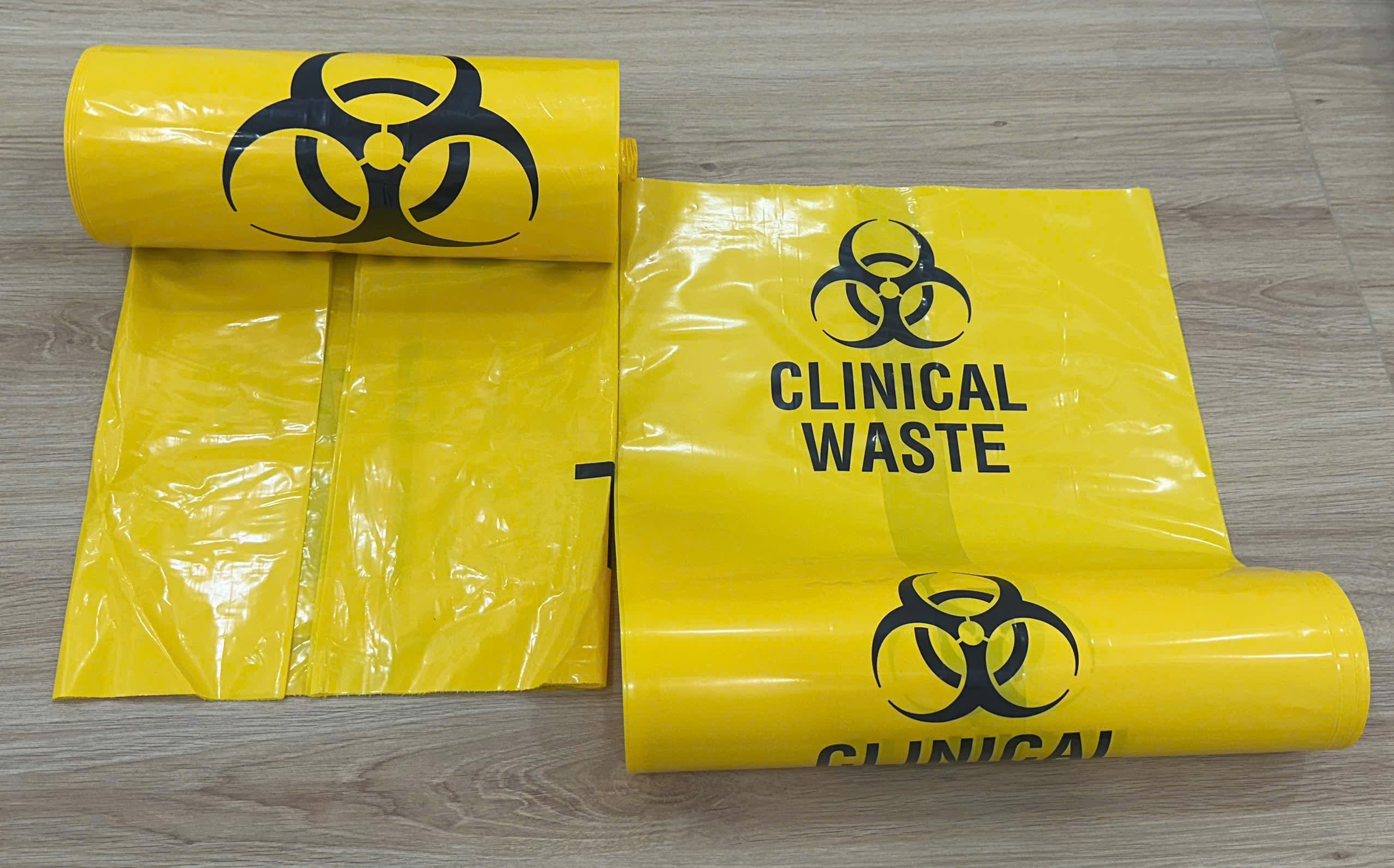
When you search for a garbage bag for recycling, you need a solution that keeps recyclable materials separate, prevents contamination, and complies with local regulations. This guide explains how to select the best recycling bag, compares common options, and provides a step‑by‑step checklist so you can implement an efficient recycling system today.
We’ll cover material types, durability, size options, and how VNPLAST’s range of plastic bags—including Hand Stretch Film, Die Cut Bag Plastic, and Recycle Plastic Bag—fits into a sustainable waste‑management strategy.
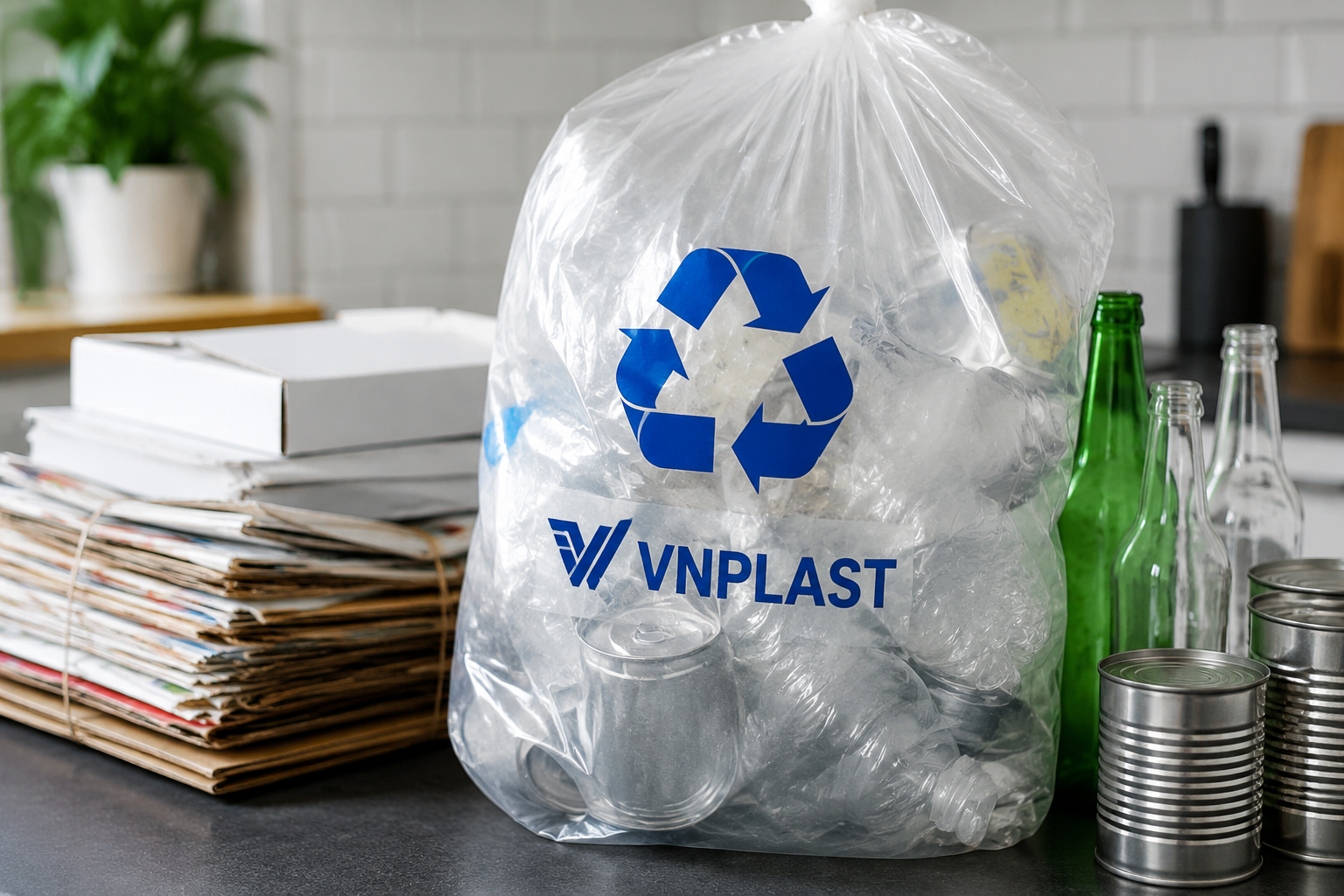
Close‑up of a clear, recyclable garbage bag with a blue recycling symbol and the VNPLAST logo, placed on a countertop beside sorted paper, …
Why a Dedicated Garbage Bag for Recycling Matters
Using a bag specifically designed for recyclables reduces cross‑contamination, improves collection efficiency, and can lower disposal costs. The right bag also protects workers from sharp edges and moisture, especially when handling hazardous plastic garbage or food plastic bag waste.
Key Benefits of Dedicated Recycling Bags
- Contamination control: Separate bags prevent food residue from mixing with paper or metal.
- Regulatory compliance: Many municipalities require labeled recycling containers.
- Durability: Reinforced seams and thicker gauges handle heavy loads without tearing.
- Brand visibility: Custom printing (e.g., VNPLAST logo) reinforces sustainability branding.
Material Types and Their Best Uses
Not all recycling bags are created equal. Below is a quick reference for the most common materials.
Low‑Density Polyethylene (LDPE) – “Plastic Bag”
Lightweight, flexible, and inexpensive. Ideal for low‑weight recyclables such as paper, cardboard, and clean plastics.
High‑Density Polyethylene (HDPE) – “Recycle Plastic Bag”
Stronger and more puncture‑resistant. Suitable for heavier items like glass bottles, metal cans, and bulk plastics.
Linear Low‑Density Polyethylene (LLDPE) – “Hand Stretch Film”
Provides excellent stretch and tear resistance. Often used for wrapping large loads before placing them in a refuse sack plastic bag.
Polypropylene (PP) – “Die Cut Bag Plastic”
Rigid, heat‑resistant, and can be die‑cut for custom sizes. Great for hazardous plastic garbage that requires extra protection.
Size and Capacity: Matching the Bag to Your Workflow
Choosing the right size prevents over‑filling and tearing. Consider the volume of recyclables generated daily and the collection frequency.
| Bag Size (Liters) | Typical Use | Recommended for |
|---|---|---|
| 30–50 | Office paper, light plastics | Small offices, home use |
| 75–100 | Mixed recyclables, glass, metal | Mid‑size businesses, schools |
| 150–200 | Bulk plastics, construction waste | Factories, warehouses |
Decision Checklist: Selecting the Perfect Garbage Bag for Recycling
- Material compatibility: Match bag material to the heaviest recyclable you’ll collect.
- Load capacity: Ensure the bag’s volume exceeds your average daily load by at least 20%.
- Seal type: Choose drawstring, twist‑tie, or heat‑seal based on handling preferences.
- Color coding: Use blue for paper, green for glass, and clear for mixed plastics to aid sorting.
- Regulatory markings: Verify that the bag bears the required recycling symbols and any local compliance labels.
- Branding opportunity: Opt for printed VNPLAST logos to reinforce corporate sustainability messages.
Pros and Cons: VNPLAST Recycling Bag Options
| Product | Pros | Cons |
|---|---|---|
| VNPLAST Recycle Plastic Bag (HDPE, 100 L) | High tensile strength, puncture‑resistant, recyclable material. | Higher cost than standard LDPE bags. |
| VNPLAST Hand Stretch Film (LLDPE, 75 L) | Excellent stretch, reduces need for over‑filling. | Requires proper sealing equipment. |
| VNPLAST Die Cut Bag Plastic (PP, custom size) | Custom dimensions, heat‑resistant, ideal for hazardous waste. | Longer lead time for custom orders. |
Real‑World Use Cases
Below are three scenarios that illustrate how different businesses use VNPLAST garbage bags for recycling.
1. Office Campus – Paper and Plastic Separation
The campus installs blue 50 L LDPE bags for paper and clear 75 L HDPE bags for clean plastics. Employees place bags in designated bins, reducing contamination to less than 2%.
2. Manufacturing Plant – Heavy Glass and Metal
Using 150 L HDPE bags with reinforced seams, the plant collects broken glass and metal cans. The bags are placed on palletized racks, allowing forklift handling without tearing.
3. Food Service Facility – Food Plastic Bag Waste
Food‑grade 30 L LLDPE bags with a drawstring seal contain used food‑service plastic bags. The stretch film prevents spills and keeps the waste hygienic until it reaches a recycling processor.
Implementation Guide: From Purchase to Full‑Scale Rollout
- Assess volume: Track daily recyclable weight for at least two weeks.
- Select bag specs: Use the decision checklist to pick material, size, and seal type.
- Order samples: Request VNPLAST sample packs to test durability.
- Train staff: Conduct a short workshop on proper bag handling and labeling.
- Monitor performance: Record tear incidents and contamination rates for the first month.
- Adjust inventory: Refine bag sizes or quantities based on observed data.
Frequently Asked Questions
What is the best garbage bag for recycling glass bottles?
Choose a high‑density polyethylene (HDPE) bag with a minimum thickness of 30 mil. VNPLAST’s 100 L HDPE Recycle Plastic Bag offers the puncture resistance needed for heavy glass.
Can recycling bags be recycled after use?
Yes, if the bag is made from recyclable material (LDPE, HDPE, LLDPE, or PP) and is free of contamination. Check local recycling guidelines for acceptable bag types.
How do I prevent bag tears when collecting sharp metal cans?
Use a reinforced die‑cut PP bag with extra stitching, such as VNPLAST’s Die Cut Bag Plastic, and avoid over‑filling beyond 80% of its capacity.
Is there a difference between “refuse sack plastic bag” and “garbage plastic bag”?
Both terms refer to general waste bags, but “refuse sack plastic bag” often denotes a larger, heavier‑duty bag used for mixed waste, while “garbage plastic bag” can be any size for regular trash. For recycling, select bags labeled “Recycle Plastic Bag” to ensure appropriate material strength.
Do I need special labeling for hazardous plastic garbage?
Yes. Hazardous plastic garbage must be clearly marked with the appropriate hazard symbols and contain a bag that meets regulatory standards for puncture resistance and leak prevention.
Conclusion
Selecting the right garbage bag for recycling is a strategic decision that impacts cost, compliance, and environmental performance. By evaluating material strength, size, seal type, and branding options—such as VNPLAST’s specialized plastic bags—you can build a recycling system that minimizes contamination, protects workers, and showcases your commitment to sustainability.
Start with the checklist, test a few VNPLAST products, and refine your approach based on real‑world data. The result will be a streamlined, compliant, and eco‑friendly recycling program that adds value to your organization.
Table of Contents
garbage bag for recycling: practical overview
Ask for a representative garbage bag for recycling sample when testing a new application.
Document the approved garbage bag for recycling requirements for repeat orders.
Compare garbage bag for recycling options using total application cost, not unit price alone.
garbage bag for recycling specifications should always be confirmed before mass production.
Sourcing and support
Explore VN Plastic packaging products, review independent information from an authoritative environmental resource, or contact VN Plastic for a tailored specification and quotation.