When you search for a t shirt bag with logo, you want a packaging solution that showcases your brand, protects the product, and stays within budget. This guide explains exactly what a t‑shirt bag with logo is, why it matters for apparel retailers, and how to select the right style, material, and printing method. By the end of the first two paragraphs you’ll know the key decision factors and can order a custom bag that boosts brand visibility and customer satisfaction.
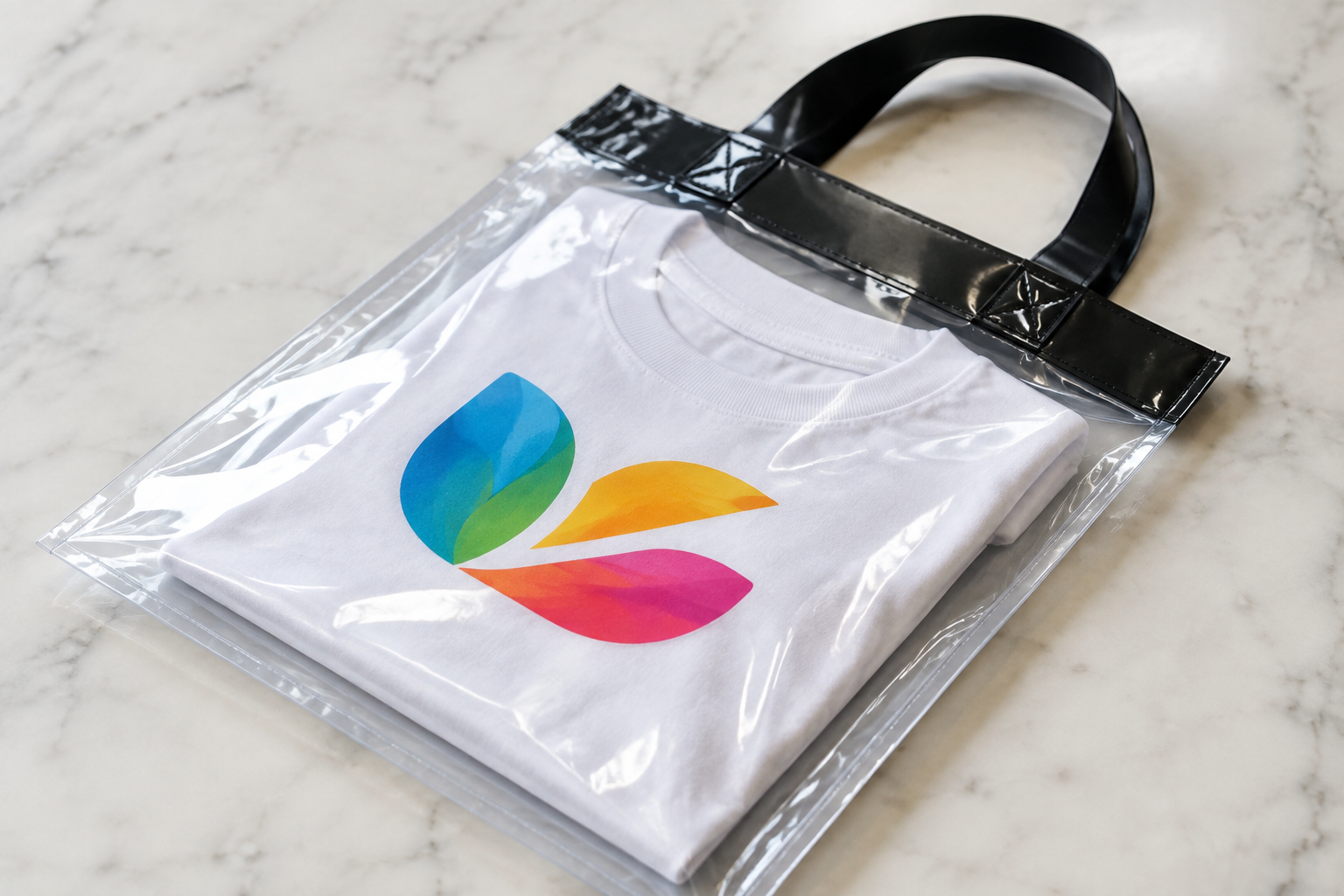
close‑up of a custom printed t‑shirt bag with a vibrant company logo, showing the bag’s clear window, reinforced handles, and high‑gloss fi…
What Is a T Shirt Bag with Logo?
A t shirt bag with logo is a lightweight, usually transparent or semi‑transparent plastic pouch designed to hold a single t‑shirt. The bag features a printed or embossed brand logo on the front, back, or both sides. Most manufacturers use polyethylene (PE) or polypropylene (PP) film because these materials are flexible, cost‑effective, and recyclable.
Key Components
- Material: Clear PE, matte PP, or recycled plastic.
- Size: Standard dimensions (e.g., 30 cm × 40 cm) or custom cuts.
- Closure: Heat‑seal, zip‑lock, or self‑adhesive flap.
- Logo Application: Flexographic printing, screen printing, digital UV, or embossing.
- Handles: Integrated die‑cut handles, sewn-in fabric loops, or plastic pull tabs.
Why a Branded T Shirt Bag Boosts Your Business
Branding a t‑shirt bag does more than look good—it creates a tangible marketing touchpoint. Customers see your logo at the point of sale, during shipping, and even when they store the bag at home. This repeated exposure drives brand recall and can justify a higher price point.
Benefits at a Glance
- Professional Presentation: A clean, sealed bag protects the garment from dust and moisture.
- Brand Visibility: Logos printed on the bag act as mini billboards.
- Customer Experience: Easy‑to‑carry handles improve perceived value.
- Sustainability: Recycled‑plastic options align with eco‑friendly branding.
- Regulatory Compliance: Certain markets require clear labeling of garment content; a transparent bag meets that need.
Material Choices and Their Trade‑offs
Selecting the right plastic material influences cost, durability, and environmental impact. Below is a quick comparison of the most common options.
Material Comparison Matrix
| Material | Clarity | Strength | Recyclability | Typical Cost (per 1,000 bags) |
|---|---|---|---|---|
| Clear Polyethylene (PE) | High | Medium | Widely recyclable | $120‑$150 |
| Matte Polypropylene (PP) | Low‑Medium | High | Recyclable in most programs | $130‑$160 |
| Recycled Plastic Blend | Medium | Medium | Up to 90% recycled content | $140‑$170 |
Decision tip: If your brand emphasizes sustainability, the recycled blend adds credibility without a large cost penalty.
Printing Techniques: Which One Suits Your Logo?
Your logo’s complexity, color palette, and order volume dictate the optimal printing method.
- Flexographic Printing: Ideal for large runs, up to 4 colors, fast drying.
- Screen Printing: Best for bold, solid colors and thick inks; limited to 6‑8 colors.
- Digital UV Printing: Handles full‑color photographs, gradients, and short runs.
- Embossing/Debossing: Creates a tactile, premium feel without ink.
Example: A street‑wear brand with a multicolor graffiti logo typically chooses digital UV printing for its ability to reproduce fine gradients.
Customization Checklist for Your Order
Use this checklist to ensure no detail is missed when you place a quote with VNPLAST or any other supplier.
- Define bag dimensions (length, width, depth).
- Select material (clear PE, matte PP, recycled blend).
- Choose closure type (heat‑seal, zip‑lock, flap).
- Decide on handle style (die‑cut, sewn‑in, pull‑tab).
- Confirm logo artwork resolution (minimum 300 dpi, CMYK).
- Select printing method (flexo, screen, digital UV, emboss).
- Specify quantity tiers (e.g., 1‑999, 1,000‑4,999, 5,000+).
- Request a pre‑production sample.
- Verify compliance with local recycling codes.
- Set delivery timeline and packaging requirements.
Real‑World Use Cases
Understanding how other brands use t‑shirt bags can inspire your own strategy.
Case Study 1: Boutique Apparel Store
A boutique in Ho Chi Minh City ordered 3,000 matte PP bags with a matte‑black logo. The bags featured a zip‑lock closure, allowing customers to reseal the bag for travel. Sales increased 12 % because shoppers appreciated the reusable nature and premium feel.
Case Study 2: Online Streetwear Brand
An e‑commerce streetwear label chose clear recycled PE bags with digital UV printed logos. The transparent design let the t‑shirt’s graphic show through, while the recycled content aligned with the brand’s “green” messaging. The brand reported a 9 % reduction in return rates, attributing it to better product presentation.
Cost‑Saving Strategies Without Compromising Quality
- Bulk Ordering: Prices drop significantly after 5,000 units.
- Standard Sizes: Using industry‑standard dimensions avoids custom die‑cut fees.
- Single‑Color Flexo: If your logo is monochrome, a single‑color flexographic run is the cheapest option.
- Combine Orders: Coordinate with other product lines (e.g., plastic bag, hand stretch film) to leverage shared printing plates.
Common Mistakes to Avoid
Even experienced buyers can slip up. Here are pitfalls to watch for.
- Low‑Resolution Artwork: Leads to blurry logos; always provide vector files.
- Ignoring Recycling Symbols: Missing the “#1 PET” or “#2 HDPE” marks can cause compliance issues.
- Over‑customizing: Too many variations increase setup cost; stick to 2‑3 core designs.
- Underestimating Thickness: Thin bags may tear during shipping; aim for at least 30 µm for t‑shirts.
FAQ – Quick Answers to Your Most Asked Questions
What is the typical turnaround time for a custom t shirt bag with logo?
Standard production runs (1,000‑5,000 units) take 10‑14 business days after artwork approval. Rush orders may be completed in 5‑7 days with an additional fee.
Can I order a sample before committing to a large quantity?
Yes. Most suppliers, including VNPLAST, offer a single‑piece sample for a nominal cost plus shipping. This helps verify print quality, bag dimensions, and handle comfort.
Are the bags recyclable in Vietnam?
Clear PE and PP bags are accepted by most municipal recycling programs. Recycled‑content bags carry the appropriate recycling symbol, making them easier to sort.
How do I ensure the logo colors match my brand guidelines?
Provide Pantone or CMYK color codes in the artwork file. Request a printed color proof before full production.
Is it possible to add a QR code to the bag?
Absolutely. QR codes can be printed alongside the logo using any of the standard printing methods. Ensure the code size is at least 10 mm × 10 mm for reliable scanning.
Conclusion
Choosing the right t shirt bag with logo blends practical packaging needs with brand storytelling. By evaluating material, size, closure, handle, and printing method, you can create a bag that protects the garment, reinforces your visual identity, and supports sustainability goals. Use the checklist above to brief VNPLAST or any trusted supplier, request a sample, and start turning every t‑shirt sale into a branded experience.