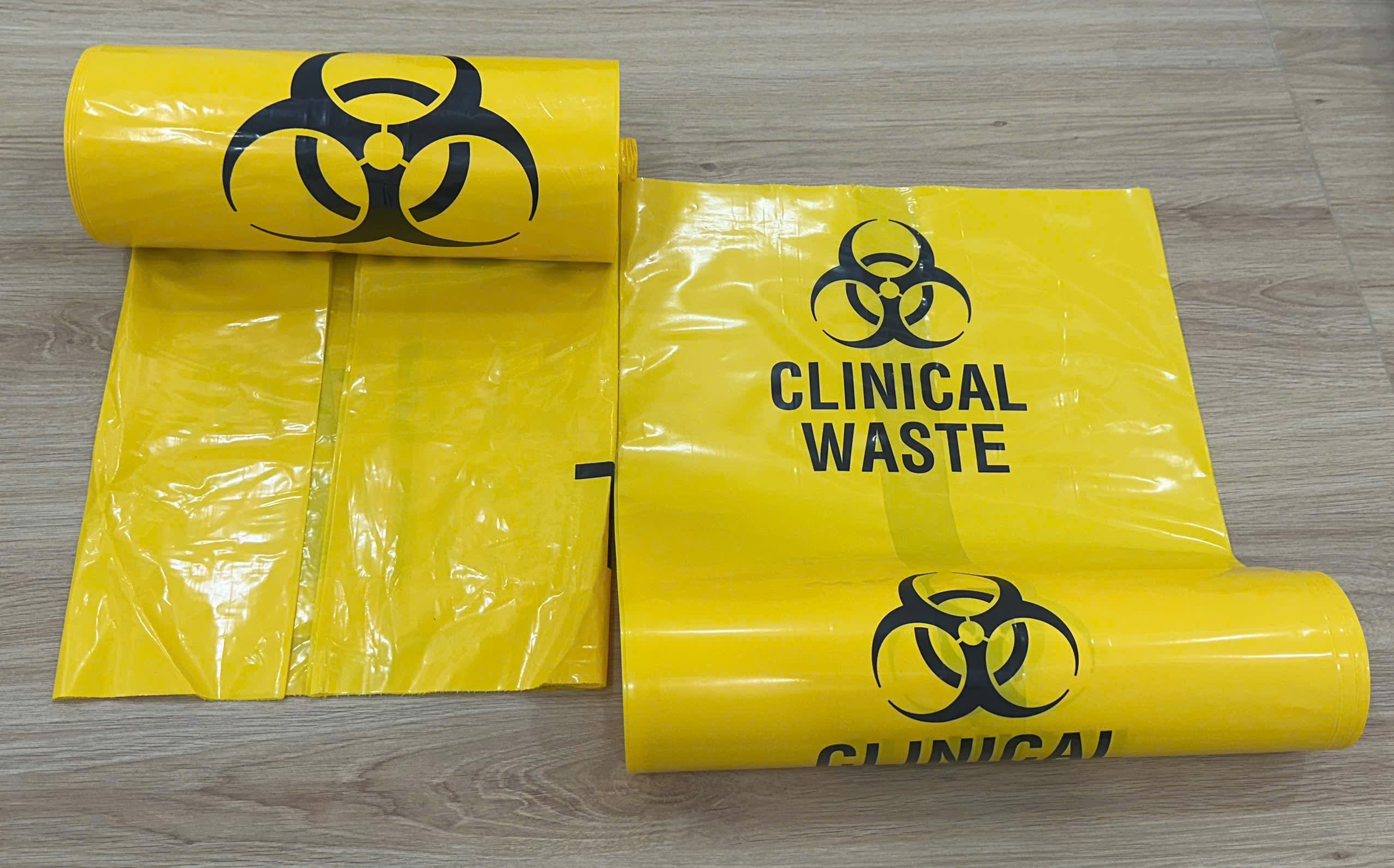
When you search for a plastic bag header block supplier, you need more than a price quote—you need a partner who guarantees consistent quality, fast delivery, and technical support for your production line. VNPLAST, a leading supplier of block header plastic bags, offers a full range of solutions from standard garbage bags to hazardous waste containers. This guide explains how to evaluate suppliers, what specifications matter, and how to integrate block header technology into your existing workflow.
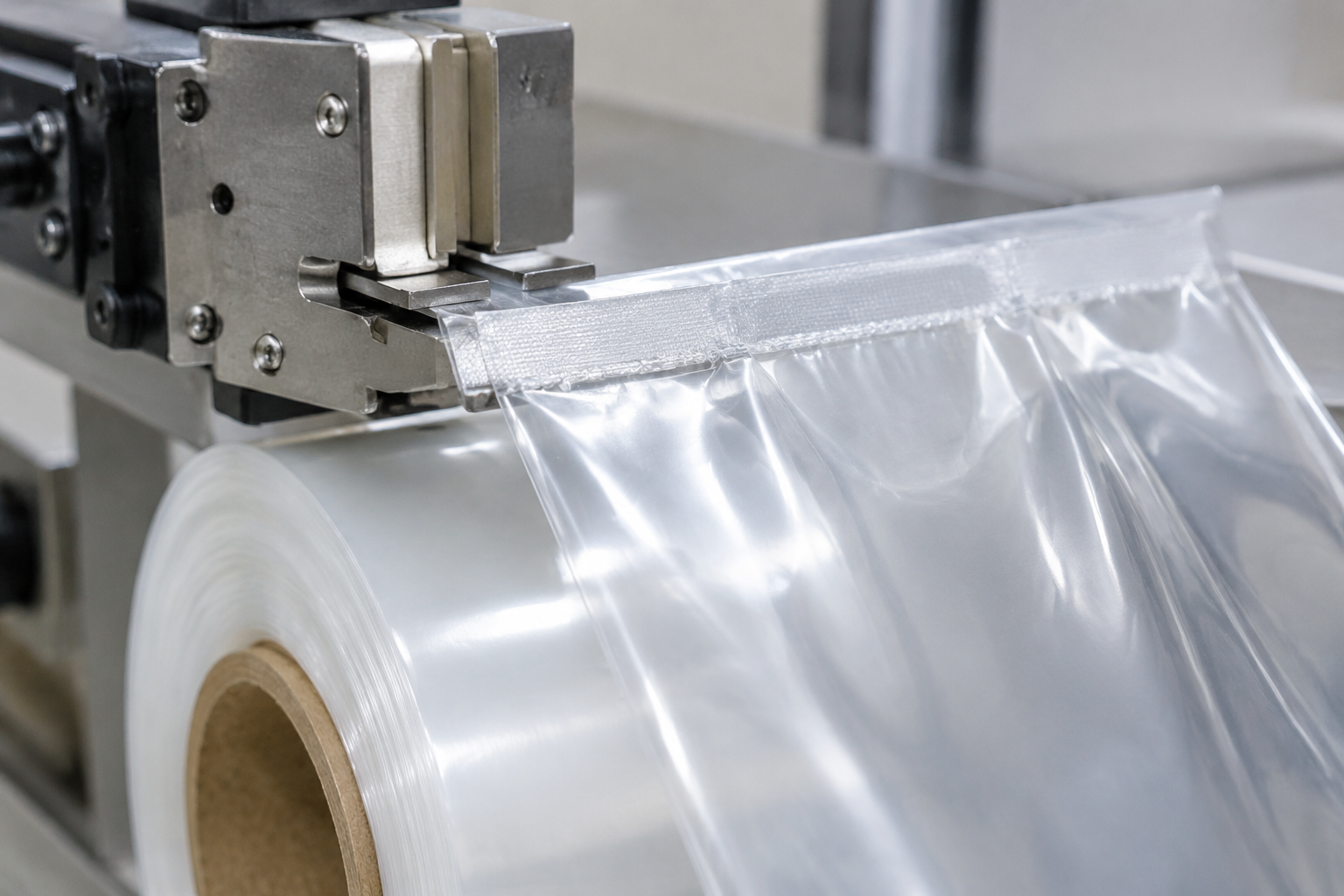
close‑up view of a plastic bag header block being attached to the leading edge of a roll of stretch film, showing the metal block, sealing …
What Is a Plastic Bag Header Block?
A plastic bag header block is a metal or composite component that creates a sealed, reinforced edge at the start of a bag roll. This block provides:
- Strength: Prevents tearing during unwinding.
- Consistency: Guarantees uniform bag dimensions.
- Automation: Enables high‑speed feeding into bag-making machines.
Key Types of Header Blocks
- Standard Metal Block: Used for general‑purpose bags such as refuse sacks and food bags.
- Heavy‑Duty Composite Block: Ideal for hazardous plastic garbage bags that require extra reinforcement.
- Adjustable Block: Allows quick change‑over between different bag widths, perfect for manufacturers with mixed product lines.
Why VNPLAST Stands Out as a Plastic Bag Header Block Supplier
VNPLAST combines decades of experience in polymer processing with a dedicated R&D team. Here are the concrete advantages you get when you partner with them:
- Custom Engineering: Tailor block dimensions to match your specific bag thickness, from 12 µm hand stretch film to 30 µm die‑cut bag plastic.
- Quality Assurance: ISO‑9001 certified production, 100 % batch testing, and traceable material certificates.
- Supply Chain Reliability: On‑time delivery from Vietnam to major Asian and European ports, with inventory buffers for rush orders.
- Technical Support: On‑site training for block header installation and troubleshooting.
Decision Checklist: Selecting the Best Supplier
Use this checklist to compare potential suppliers and ensure you cover every critical factor.
- ✅ Does the supplier provide ISO‑9001 certification and material safety data sheets?
- ✅ Can they produce custom block sizes for your bag width and thickness?
- ✅ What is the lead time for standard vs. custom orders?
- ✅ Are there after‑sales technical services such as installation assistance?
- ✅ Is the supplier capable of handling high‑volume orders (e.g., >1 million bags per month) without compromising quality?
- ✅ Do they offer a sample program before full production?
Pros and Cons of Different Header Block Materials
| Material | Pros | Cons |
|---|---|---|
| Stainless Steel | Corrosion‑resistant, long lifespan, ideal for hazardous waste bags | Higher upfront cost |
| Aluminum Alloy | Lightweight, good for food plastic bags, easy to machine | Less durable under heavy loads |
| Composite (Fiber‑Reinforced Polymer) | Excellent strength‑to‑weight ratio, resistant to chemicals | Requires specialized tooling |
Real‑World Use Cases
Manufacturers across Southeast Asia rely on block header technology to streamline bag production. Below are three illustrative scenarios:
- Municipal Waste Management: VNPLAST’s heavy‑duty metal block enables 200 µm refuse sack plastic bags to be sealed without tearing, reducing bag failure rates by 18 %.
- Food Packaging: Adjustable composite blocks allow a snack producer to switch between 30 µm food plastic bags and 12 µm hand stretch film on the same line, cutting change‑over time from 45 minutes to 12 minutes.
- Hazardous Material Transport: Specialized blocks with chemical‑resistant coatings meet UN packaging regulations for hazardous plastic garbage bags.
How to Integrate a Block Header Into Your Production Line
Follow these steps to ensure a smooth installation:
- Assess Compatibility: Verify that the block’s width matches the feed rollers of your bag‑making machine.
- Mount the Block: Secure the block using the supplied clamps; tighten to the torque specifications in the manual.
- Adjust Tension: Set the film tension so the header forms a clean seal without stretching the film.
- Run a Test Batch: Produce a short run (≈500 bags) and inspect for uniformity, edge strength, and seal integrity.
- Fine‑Tune Settings: Adjust block height and pressure based on test results; document the final settings for repeatability.
Cost Considerations and ROI
While the initial purchase price of a block header can range from $1,200 to $3,500 depending on material and customization, the return on investment is realized through:
- Reduced bag waste (average 12 % decrease).
- Lower machine downtime (change‑over time cut by up to 70 %).
- Extended equipment life due to smoother film feeding.
For a mid‑size plant producing 800,000 bags per month, the payback period is typically under six months.
Frequently Asked Questions
What is the typical lead time for a custom block header?
Standard metal blocks are shipped within 2‑3 weeks. Custom dimensions or composite materials usually require 4‑6 weeks, including prototype testing.
Can a block header be retrofitted onto existing bag‑making machines?
Yes. Most modern machines have universal mounting plates. VNPLAST provides retrofit kits and on‑site installation guidance.
How do I maintain a block header for long‑term performance?
Regularly clean the sealing jaws with a soft brush, lubricate moving parts with food‑grade oil, and inspect for wear every 10,000 bags.
Are block headers compatible with recycled plastic films?
Absolutely. VNPLAST offers blocks specifically calibrated for the lower tensile strength of recycled plastic bag material, ensuring consistent sealing.
Do you supply spare parts?
All critical components—jaws, clamps, and adjustment screws—are stocked and can be shipped within 48 hours of request.
Conclusion
Choosing the right plastic bag header block supplier can transform your bag production efficiency, quality, and compliance. VNPLAST’s combination of custom engineering, rigorous quality control, and dedicated support makes it a top choice for manufacturers of garbage plastic bags, food packaging, and hazardous waste containers. Use the decision checklist, evaluate material options, and follow the integration steps outlined above to ensure a seamless transition to block header technology and achieve measurable ROI within months.