When you search for an industrial stretch film machine, you expect a clear answer: what it does, how it improves your packaging line, and which model fits your operation. In the first few seconds of reading, you’ll learn that an industrial stretch film machine automatically wraps pallets with high‑performance stretch film, reducing labor, waste, and product damage. It integrates with conveyors, can handle a range of film widths, and is essential for businesses that ship large volumes of goods—from food plastic bags to hazardous waste containers. This guide delivers the decision factors, real‑world examples, and a practical checklist to help you choose the right system for VNPLAST’s product line.
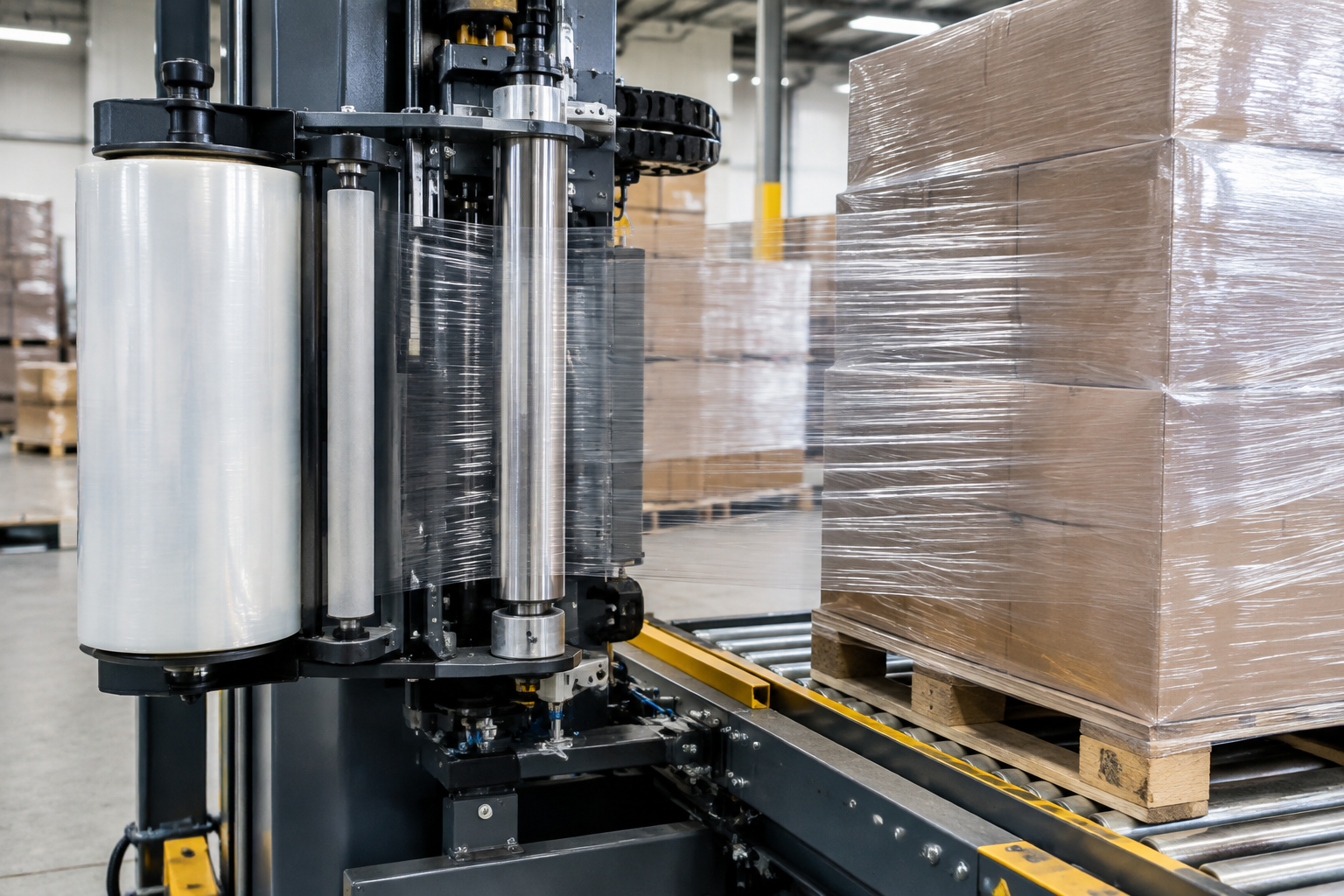
Close‑up view of an industrial stretch film machine in a warehouse, showing the film roll, tension rollers, and a pallet being wrapped on a…
What Is an Industrial Stretch Film Machine?
An industrial stretch film machine is a mechanized device that applies stretch film—a thin, elastic polyethylene film—around pallets or bundles of products. The machine stretches the film to a predetermined tension, ensuring a tight, protective seal that secures loads during transport and storage.
Core Components
- Film Roll Holder: Holds the bulk roll of stretch film (commonly 1,000 m to 2,500 m).
- Pre‑Stretch Unit: Uses rollers or a pneumatic system to elongate the film before it contacts the load.
- Tension Control System: Sensors and controllers maintain consistent stretch force.
- Wrap Arm or Rotary Head: Guides the film around the pallet in a spiral pattern.
- Drive Mechanism: Motorized system that rotates the pallet or moves the wrap arm.
- Control Panel: Interface for setting film width, tension, wrap speed, and number of turns.
How Does an Industrial Stretch Film Machine Work?
The process follows a repeatable sequence:
- Load the pallet: Place the product stack on a conveyor or turntable.
- Film feeding: The roll feeds film into the pre‑stretch unit.
- Pre‑stretching: The film is elongated 100‑200 % of its original length.
- Wrapping: The stretched film is wrapped around the pallet in overlapping layers, typically 2‑3 mm per turn.
- Cut & seal: An automatic cutter trims the film, and a heat seal may be applied for extra security.
- Release: The wrapped pallet exits the machine ready for shipment.
Key Decision Factors When Choosing an Industrial Stretch Film Machine
Not all machines are created equal. Use the checklist below to match features with your operational needs.
Decision‑Making Checklist
- Throughput Requirement: Determine pallets per hour (e.g., 30‑120 p/h). Higher throughput needs a fully automatic system.
- Film Compatibility: Verify support for hand stretch film, recycled plastic film, and specialty films for hazardous waste.
- Space Constraints: Measure floor space; semi‑automatic models are more compact.
- Automation Level: Choose between manual, semi‑automatic, or fully automatic based on labor costs.
- Control Precision: Look for PLC‑based controllers that allow fine‑tuning of tension and wrap count.
- Energy Consumption: Compare motor ratings; efficient drives lower operating costs.
- Maintenance Accessibility: Easy‑access rollers and quick‑change film holders reduce downtime.
- Safety Features: Emergency stop, light curtains, and compliant guarding are mandatory.
- Integration Capability: Ability to sync with existing conveyor systems or warehouse management software.
Automatic vs. Semi‑Automatic vs. Manual Machines
Understanding the trade‑offs helps you avoid over‑ or under‑investing.
| Feature | Manual | Semi‑Automatic | Fully Automatic |
|---|---|---|---|
| Labor Requirement | Operator loads film and starts each wrap | Operator loads film; machine handles wrap cycle | No operator needed for each pallet |
| Throughput (pallets/hour) | 10‑30 | 30‑80 | 80‑150+ |
| Initial Cost | Low (USD 5‑10 k) | Medium (USD 15‑30 k) | High (USD 40‑80 k) |
| Film Waste | Higher (5‑7 % over‑wrap) | Moderate (3‑5 %) | Lowest (2‑3 %) |
| Maintenance Complexity | Simple | Moderate | Complex (requires PLC service) |
Real‑World Use Cases for VNPLAST Products
Below are three scenarios where an industrial stretch film machine adds measurable value.
1. Bulk Shipping of Hand Stretch Film Rolls
- Product: Hand stretch film (large rolls for retail distribution).
- Challenge: Manual wrapping leads to inconsistent tension, causing film breakage.
- Solution: A semi‑automatic machine pre‑stretches film to 150 % and wraps at 60 p/h, reducing film waste by 30 % and cutting labor time by half.
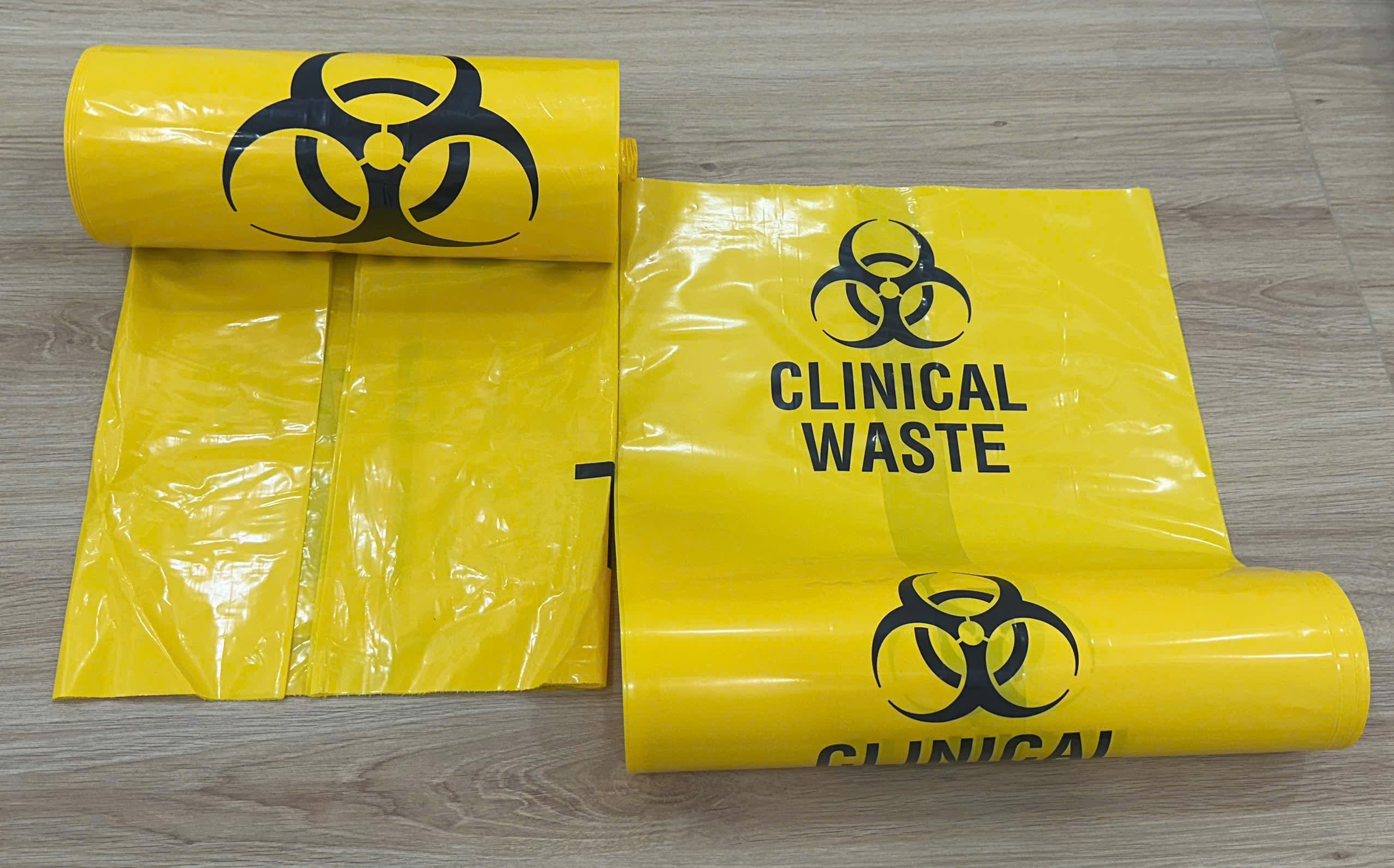
2. Securing Hazardous Plastic Garbage Bags
- Product: Hazardous plastic garbage bags for medical waste.
- Challenge: Regulations require tamper‑evident sealing and minimal exposure.
- Solution: A fully automatic machine with integrated heat‑seal and barcode printing ensures compliance and speeds up processing of up to 120 pallets per hour.
3. Protecting Food Plastic Bags on Export Pallets
- Product: Food‑grade plastic bags (e.g., block header bags).
- Challenge: Moisture and puncture risk during long sea voyages.
- Solution: Using a machine with adjustable tension (2‑5 kg) and a double‑wrap mode adds an extra barrier, extending shelf life and reducing product loss by 15 %.
Pros and Cons of Implementing an Industrial Stretch Film Machine
- Pros
- Consistent tension improves load stability.
- Reduced labor costs and lower injury risk.
- Lower film consumption through precise pre‑stretch.
- Enhanced compliance for hazardous or food‑grade shipments.
- Cons
- High upfront capital expense for fully automatic models.
- Requires skilled maintenance personnel.
- Space allocation may be challenging in older facilities.
Implementation Checklist: From Planning to Go‑Live
- Assess Current Volume: Record average pallets per shift.
- Define Film Types: List all VNPLAST film products to be wrapped.
- Select Machine Class: Match throughput and automation level.
- Layout Design: Sketch floor plan, include clearance for loading/unloading.
- Electrical & PLC Integration: Verify voltage, communication protocols (e.g., Modbus).
- Safety Review: Conduct risk assessment, install emergency stops.
- Operator Training: Schedule hands‑on sessions for start‑up and routine checks.
- Pilot Run: Run a 2‑week trial, track film waste, cycle time, and downtime.
- Fine‑Tune Settings: Adjust tension, wrap count, and pre‑stretch based on pilot data.
- Full Deployment: Integrate with warehouse management system and commence regular operation.
Frequently Asked Questions
What film width can an industrial stretch film machine handle?
Most machines accept rolls from 500 mm up to 1,200 mm. Choose a model that matches the widest roll you use for hand stretch film or recycled plastic film.
How much film waste can be reduced?
Automatic pre‑stretch reduces waste by 2‑5 % compared with manual wrapping. For high‑volume lines, this translates to savings of several hundred meters per month.
Is a dedicated machine required for hazardous waste bags?
No, but the machine should support heat‑seal or tamper‑evident features to meet regulatory standards for hazardous plastic garbage.
Can the machine be integrated with existing conveyors?
Yes. Most modern units have modular mounting plates and PLC interfaces that synchronize with conveyor speeds and stop/start signals.
What maintenance schedule is recommended?
Perform a visual inspection and clean rollers weekly, replace tension rollers every 12‑18 months, and schedule a full service check annually.
Conclusion
An industrial stretch film machine is a strategic investment for any operation that handles large volumes of VNPLAST’s plastic bags, from hand stretch film rolls to hazardous waste containers. By automating the wrapping process, you gain consistent load stability, lower film consumption, and compliance with safety standards. Use the decision‑making checklist, compare automation levels, and follow the implementation steps to ensure a smooth transition. The right machine will not only protect your products but also improve your bottom line.