When you search for plastic t shirt packaging, you expect a solution that protects the garment, showcases the brand, and meets sustainability targets—all without inflating costs. This guide explains how plastic t‑shirt packaging works, why it outperforms alternative materials, and which factors to consider when selecting the right option for your business. From clear poly bags to custom die‑cut designs, we break down the benefits, drawbacks, and real‑world use cases so you can make an informed decision that aligns with VNPLAST’s product range and your market strategy.
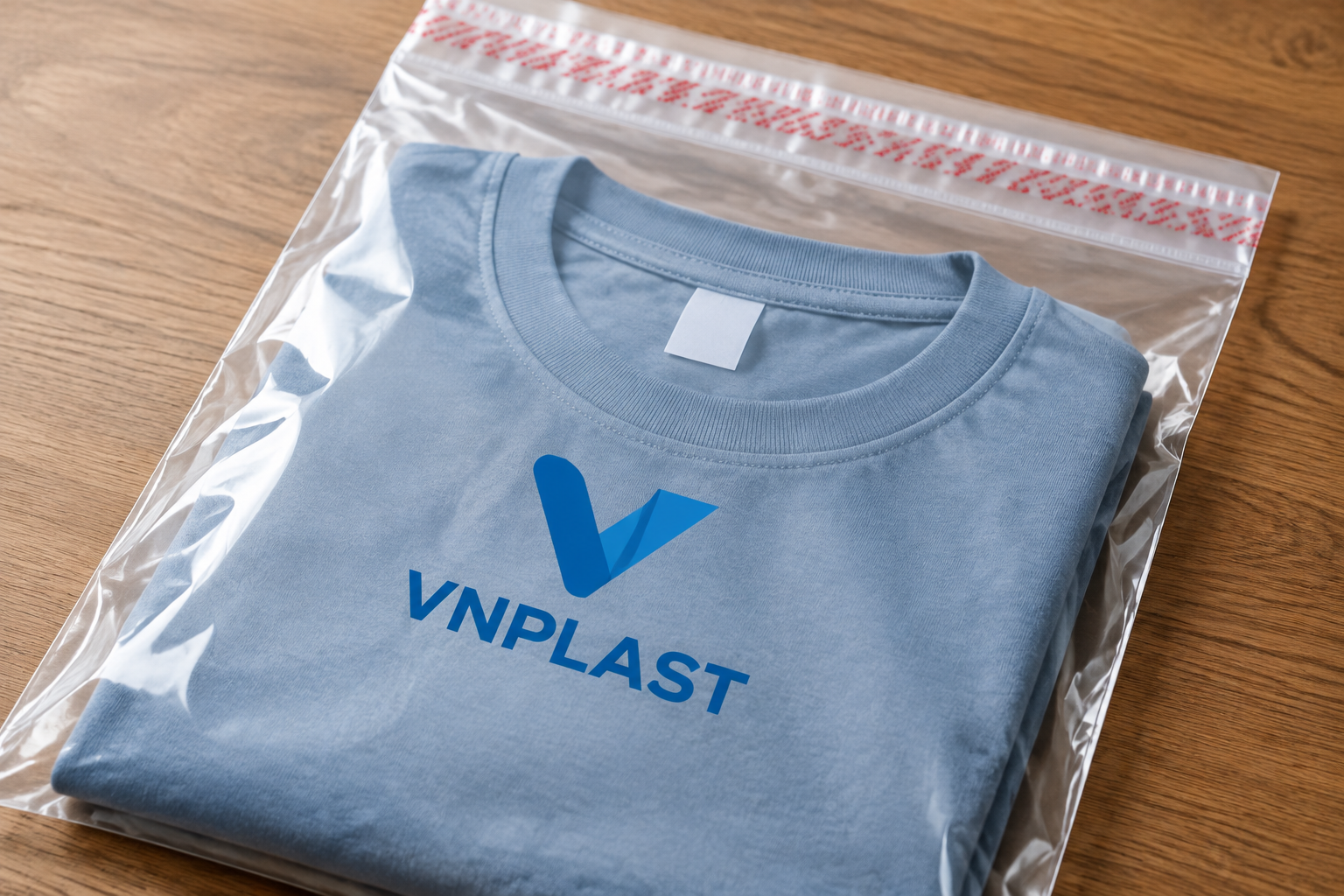
A close‑up of a clear plastic t‑shirt bag sealed with a tamper‑evident strip, showing a folded cotton t‑shirt inside, with the VNPLAST logo…
What Makes Plastic T‑Shirt Packaging the Preferred Choice?
Plastic remains the dominant material for apparel packaging because it delivers a unique blend of protection, visibility, and cost efficiency. Below are the core advantages that set plastic t shirt packaging apart from paper, fabric, or biodegradable alternatives.
- Barrier Protection: Polyethylene (PE) and polypropylene (PP) films shield garments from moisture, dust, and UV exposure, preserving color and fabric integrity.
- Product Visibility: Transparent films let shoppers see the t‑shirt without opening the package, boosting confidence and reducing handling time.
- Lightweight & Compact: Plastic bags add minimal weight, lowering shipping costs and enabling tighter pallet stacking.
- Customizable Printing: Brands can print logos, care instructions, or QR codes directly on the film, turning packaging into a marketing asset.
- Recyclability: When sourced from recycled plastic, bags can re‑enter the circular economy, aligning with sustainability goals.
Key Material Options Within Plastic T‑Shirt Packaging
VNPLAST offers several polymer types that suit different retail environments. Choose the one that matches your product’s risk profile and brand aesthetic.
- Clear Polyethylene (PE) Bag: Ideal for everyday apparel, low cost, high clarity.
- Polypropylene (PP) Block Header Bag: Sturdy, resistant to punctures, perfect for high‑value or heavy‑weight t‑shirts.
- Hand Stretch Film: Provides a snug fit that conforms to the garment’s shape, reducing movement during transit.
- Die Cut Bag Plastic: Pre‑scored for easy opening, often used for premium collections.
- Recycle Plastic Bag: Made from post‑consumer waste, suitable for eco‑focused brands.
Decision Checklist: Selecting the Right Plastic T‑Shirt Packaging
Use this checklist to evaluate options against your specific needs. Tick each item to ensure no critical factor is overlooked.
- ✅ Product Protection Level: Does the bag protect against moisture, dust, and tearing?
- ✅ Brand Visibility: Is the bag transparent enough for the design to be visible?
- ✅ Printing Capability: Can you add custom graphics or QR codes?
- ✅ Regulatory Compliance: Does the material meet local safety and recycling standards?
- ✅ Cost per Unit: Does the price fit within your packaging budget?
- ✅ Environmental Impact: Is the bag recyclable or made from recycled content?
- ✅ Ease of Use: Is the bag easy to seal, open, and reseal if needed?
Real‑World Use Cases
Understanding how other brands implement plastic t shirt packaging helps you anticipate performance and ROI.
Fast‑Fashion Retailer
A large fast‑fashion chain switched to VNPLAST’s clear PE bags with tamper‑evident strips. The result was a 12% reduction in damaged returns and a 5% increase in sales conversion because shoppers could instantly assess product quality.
Premium Streetwear Brand
For limited‑edition drops, the brand chose custom die‑cut PP bags featuring a matte finish and embossed logo. The tactile experience reinforced the premium perception, justifying a 20% higher price point.
Sustainable Online Store
An e‑commerce platform focused on sustainability opted for 100% recycled PP block header bags. The bags carried a “Made from Recycled Plastic” badge, which boosted repeat purchases among eco‑conscious customers by 8%.
How to Integrate Plastic T‑Shirt Packaging Into Your Supply Chain
Seamless integration minimizes disruption and maximizes efficiency. Follow these steps:
- Assess Volume: Determine average units per SKU to estimate bag quantity.
- Choose Supplier: VNPLAST provides bulk pricing, custom printing, and fast lead times.
- Design Artwork: Create print files in CMYK, 300 dpi, with bleed for edge‑to‑edge graphics.
- Order Samples: Verify clarity, seal strength, and printing fidelity before full production.
- Update Packing SOPs: Train staff on sealing methods—heat seal, zip lock, or tamper‑evident strip.
- Track Sustainability Metrics: Record recycled content percentages and end‑of‑life disposal pathways.
Cost Comparison: Plastic vs. Alternative Materials
Below is a quick cost snapshot (USD per 1,000 units) for common packaging choices. Prices are indicative and may vary by order size and customization.
- Clear PE Bag: $45 – $60
- PP Block Header Bag: $55 – $70
- Die Cut Bag Plastic: $70 – $90
- Paper Sleeve: $90 – $120
- Reusable Fabric Bag: $150 – $200
Pros and Cons of Plastic T‑Shirt Packaging
- Pros:
- High protection and visibility
- Low weight reduces shipping costs
- Custom printing enhances brand exposure
- Recyclable options support sustainability goals
- Cons:
- Perceived environmental impact if not recycled
- Potential for static cling on certain fabrics
- Limited breathability compared to fabric bags
Frequently Asked Questions
What thickness is ideal for protecting t‑shirts during transit?
A film thickness of 0.8 mm to 1.2 mm (30–45 mil) balances durability with flexibility. Thicker films (1.5 mm) are recommended for high‑value or heavy‑weight garments.
Can I print QR codes on plastic t‑shirt bags?
Yes. VNPLAST’s digital printing supports high‑resolution QR codes that remain scannable after sealing.
Are plastic t‑shirt bags recyclable in most municipalities?
Clear PE and PP bags are accepted in most curb‑side recycling programs, provided they are clean and free of labels. Recycle‑content bags carry a “#2” or “#4” resin code.
How do I reduce static cling on polyester t‑shirts?
Use anti‑static additives in the polymer blend or opt for a low‑static PE film. Adding a small amount of surfactant during manufacturing can also mitigate static buildup.
What is the best sealing method for high‑volume operations?
Heat sealing offers the fastest line speed and consistent seal integrity. For lower volumes, tamper‑evident strips provide a quick manual solution.
Conclusion
Choosing the right plastic t shirt packaging hinges on balancing protection, brand presentation, cost, and sustainability. By evaluating material options, leveraging VNPLAST’s custom printing capabilities, and following a clear integration roadmap, you can enhance product appeal while keeping logistics lean. Whether you prioritize clear visibility, premium feel, or recycled content, plastic t‑shirt packaging remains a versatile, cost‑effective solution that meets modern retail demands.