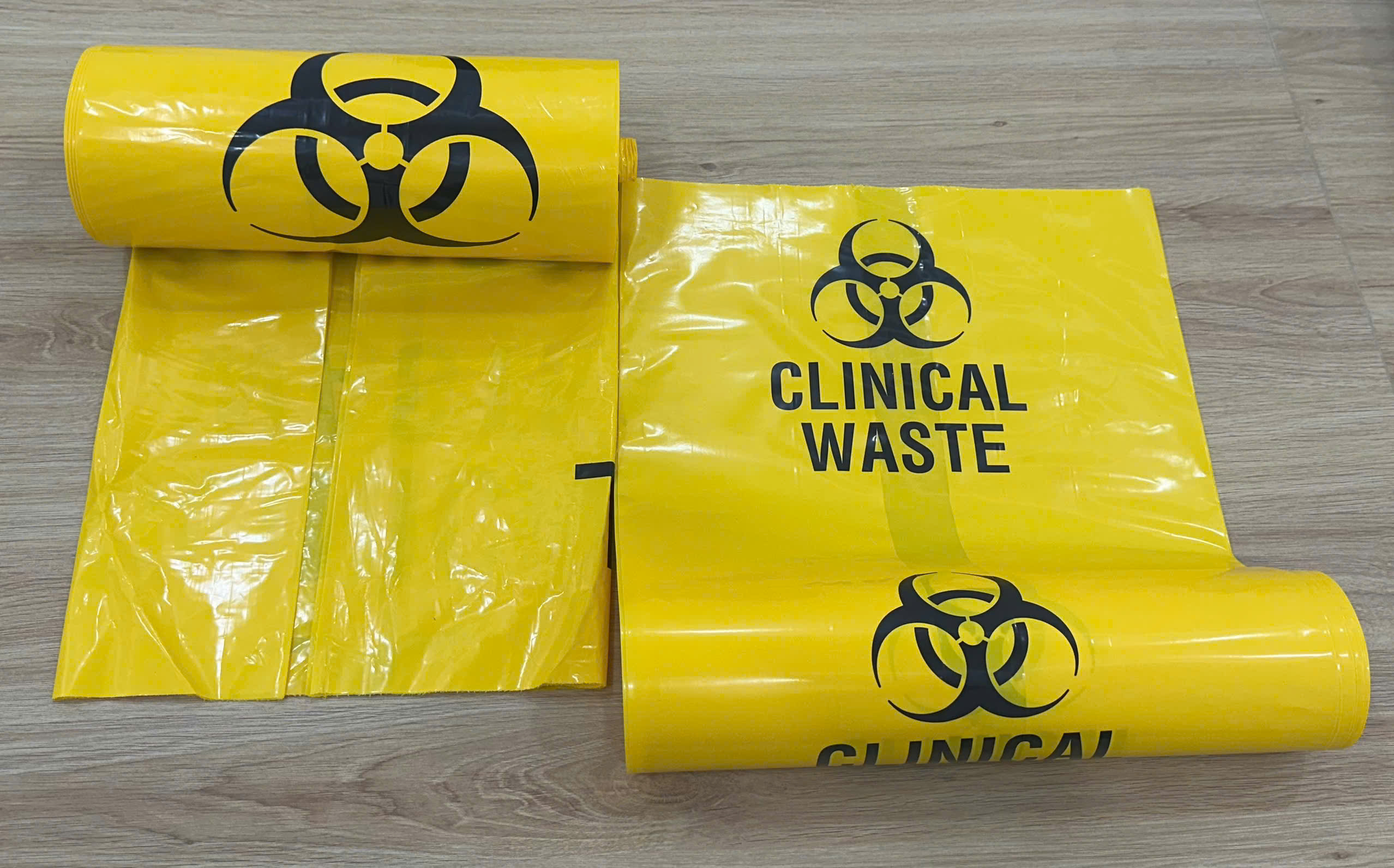
Regarding heavy duty garbage bags factory direct: The procurement of municipal-grade refuse sacks has shifted decisively from commoditized purchasing to stringent engineering specifications. Securing large-scale municipal waste tenders requires a nuanced understanding of international trade architecture, polymer chemistry, and environmental compliance frameworks.
1. Global Market Dynamics & Non-Tariff Regulatory Barriers
The procurement of municipal-grade refuse sacks has shifted decisively from commoditized purchasing to stringent engineering specifications. Securing large-scale municipal waste tenders requires a nuanced understanding of international trade architecture, polymer chemistry, and environmental compliance frameworks. As global municipal authorities mandate higher diversion rates and stricter containment standards, procurement desks increasingly source heavy duty garbage bags factory direct to bypass multi-layered intermediary margins and secure absolute supply chain traceability.
Simultaneously, non-tariff regulatory barriers have proliferated across North American and European Union jurisdictions. Extended Producer Responsibility (EPR) laws, alongside stringent ecotax structures, penalize virgin-heavy films lacking verified post-consumer recycled (PCR) content integration. Concurrently, technical compliance demands robust adherence to carbon-footprint disclosure mandates and stringent anti-dumping duties targeting Asian plastic converters. For export-oriented manufacturers like Vnplast Global, success hinges on deploying advanced co-extrusion technology capable of blending certified PCR resins with virgin polymers without sacrificing the tensile strength demanded by automated municipal compactors.
2. Quantitative Impact on Operational Margins & Freight Cost Structures
Raw material pricing dictates up to 65% of the total cost of goods sold (COGS) in high-volume blown film extrusion. Polymer price volatility—driven by fluctuations in Brent crude and regional steam cracker capacities—requires sophisticated hedging models and variable-index pricing formulas linked to ICIS or Platts polymer benchmarks. When structuring long-term municipal supply agreements, procurement strategists must account for resin volatility by integrating monthly or quarterly indexing mechanisms into Master Service Agreements (MSAs). (Compliance verified under International ISO Trade Quality Standards).
Logistics efficiency remains the primary lever for defending operational margins against erratic ocean freight spot rates. Heavy-duty garbage bags are susceptible to volumetric inefficiencies if packaging optimization is neglected. By engineering high-compression baling systems and optimizing master carton dimensions, Vnplast Global achieves high container loadability indices across both 40-foot high-cube (40HC) and 40-foot standard dry containers.
| Container Type | Maximum Payload Capacity | Volumetric Efficiency Ratio | Average Ocean Freight Cost Variance | Target Payload Threshold |
|---|---|---|---|---|
| 40′ Dry Standard | 26,000 kg | 78% | Baseline (Index 100) | 22,500 kg |
| 40′ High-Cube (40HC) | 28,500 kg | 92% | -8% to -12% per CBM | 25,800 kg |
| 45′ High-Cube | 29,000 kg | 95% | +5% vs 40HC | 26,500 kg |
3. Mandatory Inspection Standards & Compliance Documentation Protocols

Municipal waste contracts mandate rigorous quality assurance protocols to eliminate on-site failure risks during automated lifting and collection cycles. Independent laboratory validation against recognized international benchmarks is non-negotiable. Quality control frameworks rely heavily on ASTM and ISO testing methodologies to certify physical performance attributes under stress.
- ASTM D1709 (Dart Drop Impact Test): Measures energy-to-failure under impact, determining the film’s resistance to sharp refuse punctures.
- ASTM D882 (Tensile Properties of Thin Plastic Sheeting): Evaluates ultimate tensile strength and elongation at break in both machine direction (MD) and transverse direction (TD).
- ASTM D1922 (Propagation Tear Resistance – Elmendorf Tear): Quantifies the force required to propagate an existing tear through multi-layered heavy-duty films.
Documentation compliance must be managed with absolute precision to clear customs without incurring costly demurrage fees. Exporters must provide comprehensive Certificates of Analysis (COA) per production lot, alongside legally verified Certificates of Origin (C/O Form E, Form AK, or RCEP variants) to optimize preferential tariff treatments. Furthermore, supply chain transparency mandates complete traceability of resin feedstock, backed by Global Recycled Standard (GRS) or ISCC PLUS certifications when PCR claims are embedded in tender specifications.
4. Shop-Floor Production Realignment & End-to-End Logistics Optimization
Achieving municipal-grade performance requires precise control over raw material inputs and extrusion line parameters. Standard low-density polyethylene (LDPE) is increasingly replaced by sophisticated multi-layer co-extrusion recipes incorporating metallocene-catalyzed linear low-density polyethylene (mLLDPE). Metallocene resins offer a narrow molecular weight distribution, resulting in superior dart impact resistance and tensile elongation, allowing converters to down-gauge film thickness by 15% to 20% while maintaining or exceeding structural integrity.
The mechanical integration of the draw-tape mechanism presents unique shop-floor engineering challenges. Automated inline draw-tape insertion units must align precisely with perimeter folding mechanisms, ensuring consistent hem formation tolerances within a strict $\pm 0.5\ ext{ mm}$ window. Deviations in seal integrity or tape insertion tension lead to catastrophic failure during high-speed extraction from municipal waste bins.
“`
[Resin Blending (mLLDPE + PCR)]
│
▼
[5-Layer Co-Extrusion Blown Film Line]
│
▼
[Inline Corona Treatment & Cooling Calibration]
│
▼
[Automated Perimeter Folding & Draw-Tape Insertion]
│
▼
[Rotary Die Cutting & Thermal Sealing Grid]
│
▼
[High-Speed Coreless Perforation & Baling Press]
“`
5. Commercial Contract Negotiation & Cross-Border Risk Mitigation
Global procurement desks executing municipal contracts must mitigate foreign exchange (FX) exposure, regulatory shifts, and geopolitical supply chain disruptions. Contracts should incorporate clearly defined Incoterms 2020 frameworks—typically DDP (Delivered Duty Paid) or FOB (Free on Board) depending on the buyer’s internal logistics capabilities. For DDP arrangements, comprehensive liability matrices must assign customs clearance delays, port congestion surcharges, and local warehousing overhead explicitly to the vendor.
Force majeure clauses require careful drafting, specifically distinguishing between standard natural disruptions and localized regulatory embargoes or unexpected tariff impositions. Risk mitigation is further reinforced by establishing safety stock buffer inventories (VMI – Vendor Managed Inventory) held in regional destination hubs, insulating municipal buyers from sudden oceanic shipping bottlenecks or regional port lockouts.
6. Strategic Recommendations & Operational Roadmap from Vnplast Global
To capture and successfully execute high-volume municipal refuse contracts, industrial procurement teams must transition from transactional bidding to total cost of ownership (TCO) partnerships. Vnplast Global recommends a structured four-phase operational roadmap for international buyers:
1. Technical Benchmarking & Pilot Qualification: Request certified third-party lab test reports (ASTM D1709 and D882) prior to sample dispatch, matching resin blend ratios directly to municipal refuse density profiles.
2. Index-Linked Sourcing Integration: Structure raw material pricing models using a transparent sliding scale connected to regional polymer indices, eliminating extreme pricing shocks for both buyer and manufacturer.
3. Logistics Consolidation: Mandate 40HC container optimization with high-density hydraulic baling to reduce freight cost per metric ton by up to 12%.
4. Traceability & Compliance Audit: Implement end-to-end digital lot tracking to verify PCR content claims and guarantee seamless C/O and customs clearance execution.
Technical & Quality Compliance Advisory from Vnplast Global
For international procurement directors, supply chain partners, and B2B buyers, rigorous pre-shipment sample testing (CoA/CoC) and accredited independent inspection (SGS/Intertek) are paramount prior to contract execution. Contact our technical desk for complete engineering datasheets and tailored FOB/CIF quotation schedules.
Frequently Asked Questions (FAQ) Regarding Heavy Duty Garbage Bags Factory Direct
Question 1: What is the standard production manufacturing lead-time for heavy duty garbage bags factory direct export orders?
Answer: Under standard factory operating capacity, production and loading for heavy duty garbage bags factory direct container consignments are completed within 10 to 14 business days from deposit or L/C confirmation.
Question 2: Are pre-shipment evaluation samples of heavy duty garbage bags factory direct provided with official laboratory test reports?
Answer: Yes, complimentary sample kits of certified heavy duty garbage bags factory direct accompanied by full Certificate of Analysis (CoA) reports are dispatched internationally within 3 to 5 business days via DHL/FedEx.
Question 3: Which Incoterms 2020 terms and payment methods are supported for heavy duty garbage bags factory direct orders?
Answer: We provide standard FOB Cát Lái/Hải Phòng as well as CIF worldwide gateway ports for all heavy duty garbage bags factory direct shipments, supported by Irrevocable Letters of Credit (L/C at sight) or T/T payment terms.